Economy
US-Iran escalation shakes markets: oil jumps, Wall Street falls
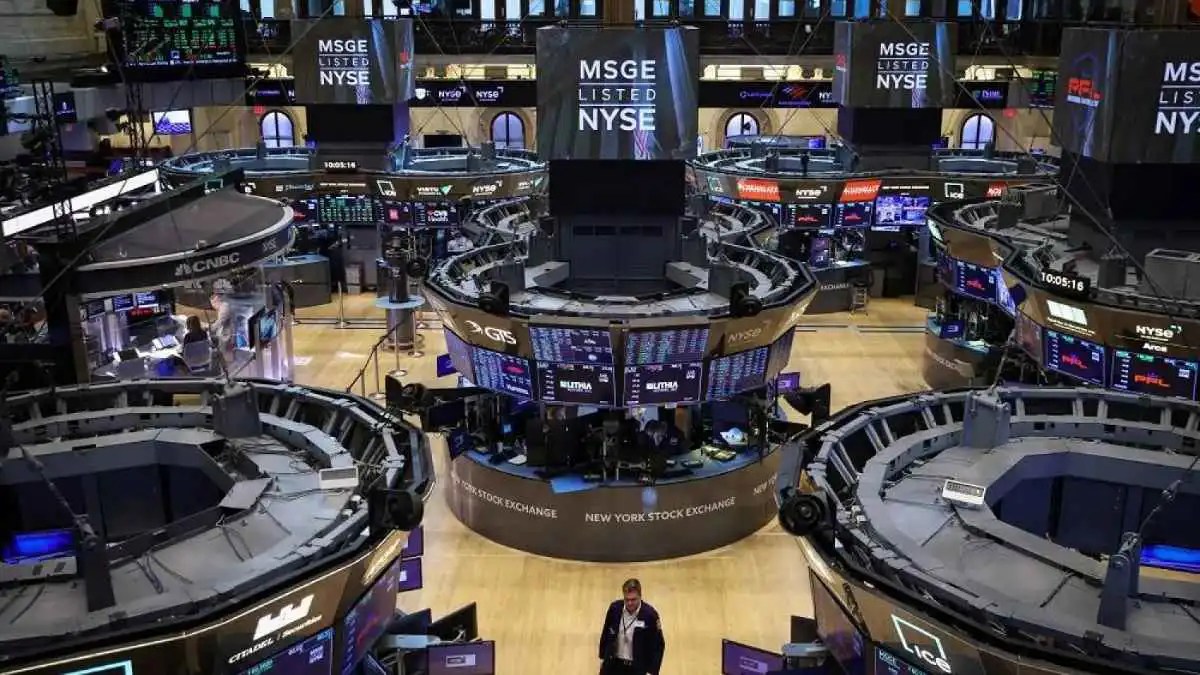
Oil prices rose while US stocks fell on Tuesday, as the deadline set by President Trump regarding his threats to destroy Iranian power stations and bridges drew near.
The S&P 500 index fell 0.7%, after Trump threatened that "an entire civilization will die tonight and will never come back" if Iran did not comply with the 8 PM Eastern Time deadline to open the Strait of Hormuz.
According to the Associated Press, the Dow Jones Industrial Average fell about 210 points, or 0.5%, by 10:30 AM Eastern Time, while the Nasdaq Composite fell 1.1%.
These cautious moves were a continuation of the state of anticipation dominating markets since the war with Iran erupted, amid uncertainty about whether fighting would end soon. In the first hour alone of Tuesday's trading, the Dow Jones fluctuated between gains of 74 points and losses of 425 points.
In contrast, moves were sharper in the oil market, where prices jumped dramatically due to the closure of the Strait of Hormuz, which Iran had blocked from supplying global markets.
US WTI crude rose 3.9% to $116.83 per barrel, while Brent — the global benchmark — rose 0.7% to $110.55 per barrel, far above approximately $70 before the war broke out in late February.
The key concern is that prolonged supply disruptions could keep oil prices high, potentially triggering a sharp wave of inflation hitting the global economy.
Trump issued a series of threats to bomb Iranian power stations if the Strait of Hormuz were not opened, but repeatedly delayed their execution. Nevertheless, the possibility of backing down remains, alongside other scenarios, keeping uncertainty high in markets.
Paul Christopher, head of global investment strategy at Wells Fargo Investment Institute, believes investors will remain on edge, with difficulty identifying clear market trends, at least until later in the day when developments become clearer — whether through reaching an agreement, escalating US-Israeli strikes, or Iran's response turning into a larger escalation rather than a proportional response.
On Wall Street, companies with heavy fuel dependence suffered notable losses as pressure from rising oil prices intensified. Norwegian Cruise Line Holdings fell 4.3%, and United Airlines shares dropped 3.7%.
Companies whose customers might struggle to absorb higher gasoline prices also came under additional pressure, with Dollar Tree falling 4.8% and Dollar General declining 1.8%.
The average price of a gallon of regular gasoline in the United States hit $4.14, according to the American Automobile Association (AAA), compared to under $3 just days before the US and Israeli attacks began, signaling the start of the war in late February.
Losses extended to the cryptocurrency sector, with Bitcoin declining; Coinbase Global shares fell 4.6% and Strategy fell 4.1%.
Conversely, health insurance stocks helped limit market losses after the Centers for Medicare and Medicaid Services (CMS) announced that Medicare Advantage payments are expected to increase by a net average of 2.48% in 2027, exceeding some investor expectations according to UBS analysts led by A.J. Rice.
UnitedHealth Group shares jumped 8%, while Humana shares rose 5.5%.
Universal Music Group also helped reduce losses in global stock indices, after Bill Ackman's Pershing Square Capital Management offered to buy the music production company behind stars like Taylor Swift and Bad Bunny in a cash-and-stock deal valued at approximately $64 billion.
The proposed deal would move the company to Nevada and list it on the New York Stock Exchange instead of Amsterdam. Universal Music Group shares in Amsterdam jumped 10.8%, though still below the proposed valuation, reflecting investor doubts about completion of the deal.
On global markets, indices declined in most European exchanges, while Asian markets posted limited positive performance, with South Korea's KOSPI rising 0.8%, achieving one of the largest gains globally.
In the bond market, US Treasury yields rose slightly ahead of the deadline, with the 10-year yield climbing to 4.36% from 4.34% at the close of Monday's trading.
This level is significantly higher than its level before the war started, when it stood at 3.97%, leading to increased borrowing costs, including mortgage rates and other loans for households and businesses, thereby weighing on economic growth.
Related articles
Washington Pumps 92.5 Million Barrels from Oil Reserves to Lower Prices.. and Crude Exceeds $126

Between Rise and Fall.. How Have Gasoline and Diesel Prices Changed in the New Table?
Brent crude barrel rises to 125 dollars