·
·

Tech & Science
A German technology spin-off has unveiled innovative photoreactor panels capable of producing hydrogen fuel directly from water and sunlight, bypassing electricity-dependent electrolysis.
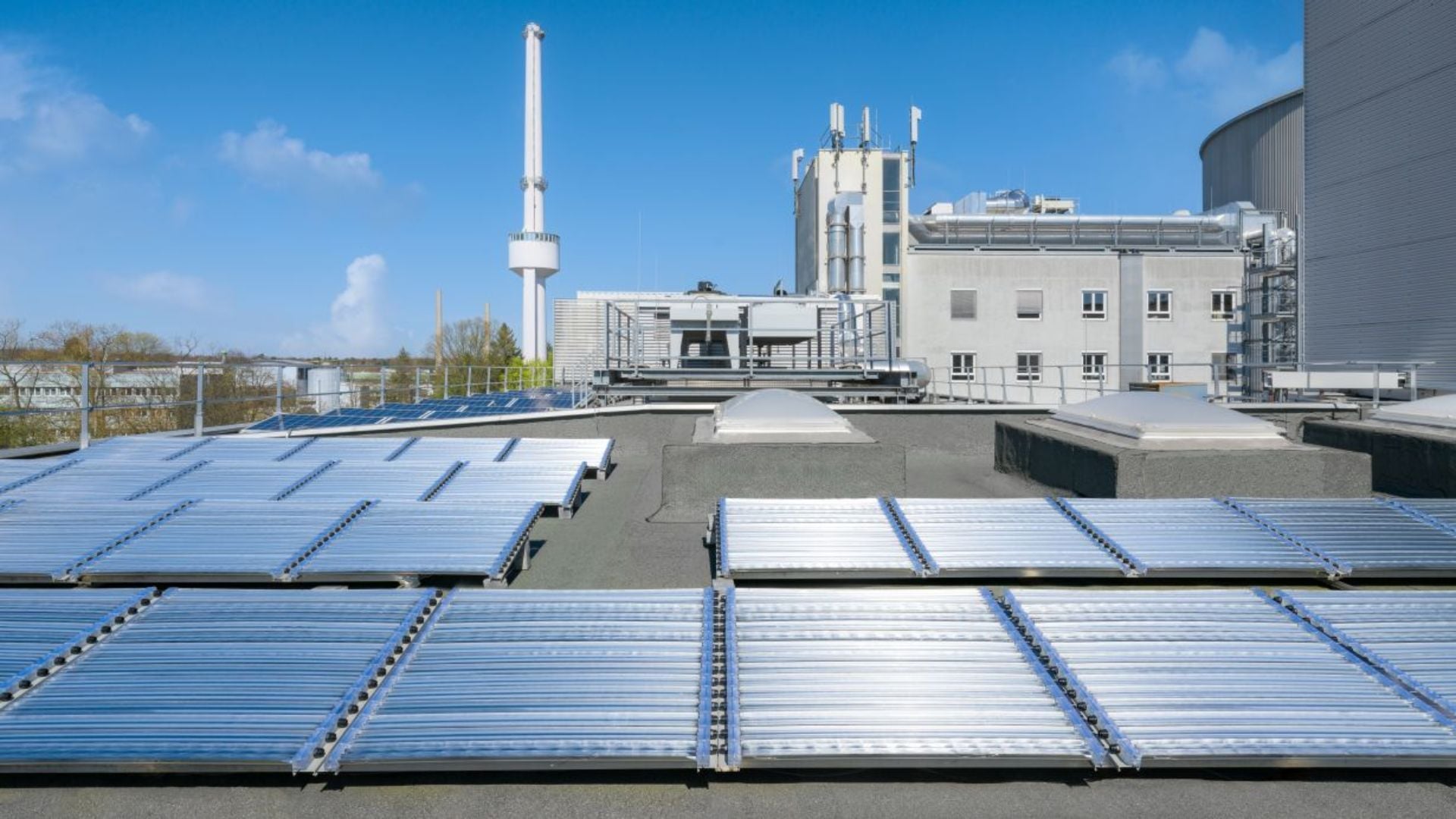
Photreon, a spin-off from the Karlsruhe Institute of Technology (KIT), recently garnered significant attention at the Hannover Messe event, where it showcased a groundbreaking photoreactor panel for hydrogen production.
The innovation features a one-square-meter prototype designed to generate hydrogen fuel exclusively from water and sunlight, completely circumventing the need for electricity or traditional electrolyzers. This system operates independently of the electrical grid, offering a potentially lower barrier to entry for decentralized hydrogen infrastructure.
Standard methods for producing green hydrogen typically involve a two-stage process: capturing solar energy via photovoltaic panels, then using that electricity to power an electrolysis unit. Photreon's approach streamlines this by employing photocatalysis, a single, direct conversion process.
We avoid the detour through electrically powered electrolysis, producing chemical energy from sunlight and water.
Stated Paul Kant, co-founder of Photreon. This method utilizes specially designed, light-sensitive materials that absorb solar energy, exciting electrons to directly split water molecules into hydrogen and oxygen. This direct conversion aims to reduce the technical complexity and high system costs that have historically limited widespread adoption of hydrogen fuel.
The mechanical design of the panels emphasizes scalability and efficient gas removal. KIT has filed a patent for the reactor's internal geometry, which is specifically engineered to optimize the interplay between light transport and chemical reactions while ensuring the efficient separation of hydrogen gas.
We designed the reactor geometry to optimize the interplay of light transport, chemical reaction, and removal of the reaction products, and we’re demonstrating that with our one-square-meter prototype.
Added Kant.
Designed for mass production, the panels utilize common materials and standard manufacturing processes, making them cost-effective and widely deployable. The modular nature of the technology allows for flexible installation, ranging from small rooftop units to expansive solar hydrogen farms in regions with abundant solar exposure, such as the Middle East and North Africa (MENA).
The panels can be used where supplying hydrogen has previously been too expensive or logistically difficult, for instance in medium-sized companies wanting to cover their future needs on-site (e.g. specialty chemicals, food production, or metalworking) or in large-scale solar projects in regions with abundant sunlight.
The Photreon team highlighted, emphasizing the potential for businesses to produce fuel on-site, thereby reducing their dependence on external energy networks. This offers a significant advantage for industries in our region, fostering greater energy independence.
In places without connections to power grids or a hydrogen network, our technology opens up new possibilities for local production.
Concluded Maren Cordts, also a co-founder. By enabling local production, the system provides a functional alternative for industrial sites previously considered geographically or economically unfeasible for green hydrogen projects. As the energy sector moves toward decarbonization, this direct-to-fuel method offers a new trajectory for the hydrogen economy, focusing on making clean energy production more direct and less reliant on complex, centralized infrastructure, according to Interesting Engineering.