Culture & Society
Study links Göbekli Tepe bone damage to erosion, not ritual
New research suggests natural forces disturbed burials at the 11,600-year-old site, challenging skull cult theories.

Hundreds of fragmented human bones recovered from rubble around the towering T-shaped pillars at Göbekli Tepe have long fueled speculation about a Neolithic "skull cult." However, a new study published in PLOS One proposes that natural erosion and slope slides may account for much of this scattered debris, offering a more mundane explanation than deliberate ritual dismemberment.
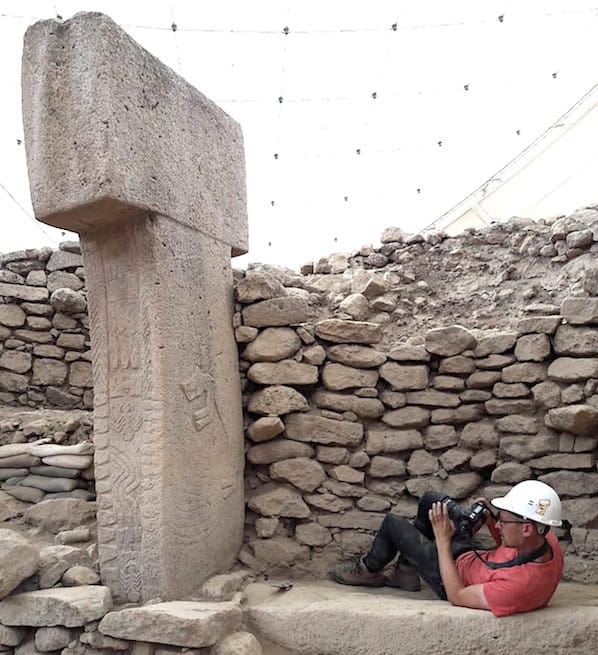
Researcher lying on the ground and photographing a pillar at Göbekli Tepe
Erosion explains bone fragmentation
Julia Gresky and Lee Clare of the German Archaeological Institute compared two newly documented subfloor burials with 928 loose human-bone fragments found elsewhere at the site. The analysis revealed identical signs of postmortem damage across both groups: heavy fragmentation, calcium-rich crusts, and occasional rodent gnawing. The researchers argue that these patterns suggest burials located higher on the mound were disturbed by geological processes, carrying their remains downhill into the monumental structures below.
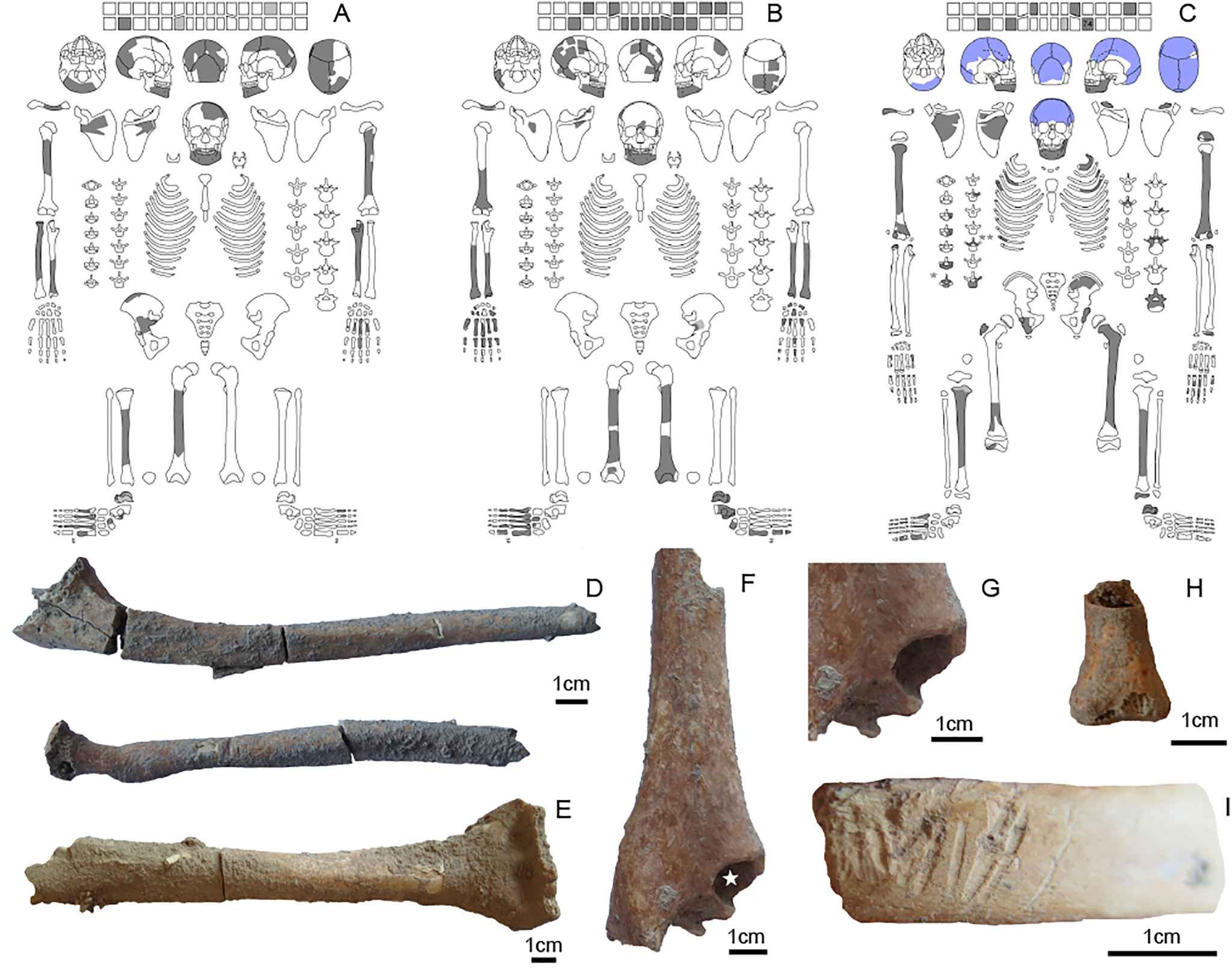
Illustrations and images of skeletons and bones found at Göbekli Tepe
This finding does not entirely dismiss evidence of unusual treatment of the dead, particularly regarding carved skulls, but it shifts the focus away from widespread ritual violence. Instead, the study reinforces the conclusion that people buried their dead within the settlement itself rather than incinerating them, a common practice during that era. It also indicates that skull removal was not universal upon death.
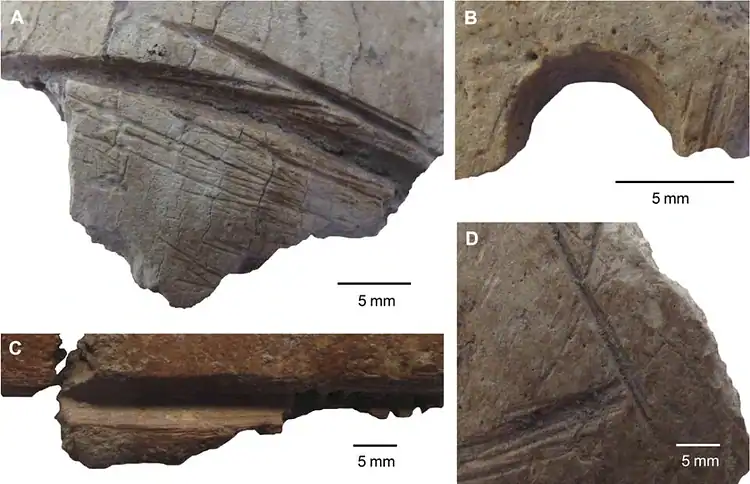
Close up images of areas of skulls found at Göbekli Tepe with signs of artificial markings
Göbekli Tepe’s domestic reality
Located in southeastern Türkiye, Göbekli Tepe was active for approximately 1,600 years, spanning from roughly 9,600 to 8,000 B.C.E. This period coincided with a significant transition as communities shifted from mobile hunting and gathering toward settled life and eventual farming. Despite its ceremonial reputation, the site predates Stonehenge by thousands of years and was constructed before the widespread adoption of metal tools, pottery, or fully developed agriculture.
Builders quarried and moved massive limestone pillars, some exceeding 5 meters in height, arranging them within circular and rectangular buildings. These pillars feature striking reliefs of wild animals such as snakes, foxes, boars, and birds, alongside stylized human figures. While archaeologists previously viewed the site primarily as a ceremonial center where hunter-gatherers gathered periodically for rituals, recent excavations reveal smaller buildings and evidence of everyday activities, suggesting a complex blend of domestic routines, communal gatherings, and symbolic art.
Details of the subfloor graves
The first burial, discovered in 2017, was cut into a plaster floor and contained at least three individuals: a woman aged 35 or older, a man between 20 and 30, and a girl between 11 and 14. Researchers noted no cut marks, indicating complete bodies were originally placed there. The skulls had been gathered in one corner while other bones were moved aside, likely when the grave was reopened for subsequent interments.
The second burial, found in 2012 and fully excavated in 2022, held a woman aged approximately 20 to 30. She lay curled on her left side facing east atop fist-sized stones. Although her skeleton remained largely in place, her long bones were badly fractured and coated with mineral deposits. The damage occurred inside the grave without intentional smashing, pointing to natural phenomena as the cause.
Unresolved questions on skull modifications
Not all anomalies can be attributed to erosion. A 2017 Science Advances study by Gresky, Clare, and Juliane Haelm described three skulls with deliberate deep grooves, one of which had also been drilled. The current study notes that similarly modified remains are now known from five individuals. However, the loose bones are scattered across about 3,000 square meters and several meters of deposits, representing both sexes, all ages, and many parts of the skeleton. The researchers argue that deliberately selected ritual deposits would not typically result in such widespread and varied distribution.
Latest news

Rutte: No imminent threat from Russia to NATO countries

Between Warnings and Regulation: Trump Meeting Reignites AI Safety Battle

Army Commander Discusses Developments with US Congress Members