·
·


Culture & Society
The U.S. and China are competing to commercialize “digital immortality,” with American veterans’ groups launching AI-driven humanoid robots to preserve identity posthumously, while Chinese firm Ubtech unveils the UWorld U1—a $18,000 emotionally aware humanoid—amid forecasts of a $5 trillion humanoid robot market by 2050.

“Digital immortality” has emerged as a new arena of strategic competition between the United States and China, propelled by advances in artificial intelligence enabling the creation of digital and physical replicas of deceased individuals. Washington is advancing an economy centered on “digital legacy,” whereas Beijing is heavily investing in ultra-realistic humanoid robots designed to lay the groundwork for increasingly sophisticated human simulacra.
AI systems and robots that simulate the deceased—dubbed “Deadbots”—intersect three rapidly expanding markets: the digital legacy market, the social AI companion market, and the humanoid robot market.
The digital legacy market—tied to the growing volume of personal data and digital assets requiring postmortem management and protection—was valued at $12.9 billion in 2024. It is projected to grow from $17.2 billion in 2026 to $30.8 billion by 2030, driven by rising awareness of digital wills, inheritance of digital assets, and the importance of safeguarding digital identities.
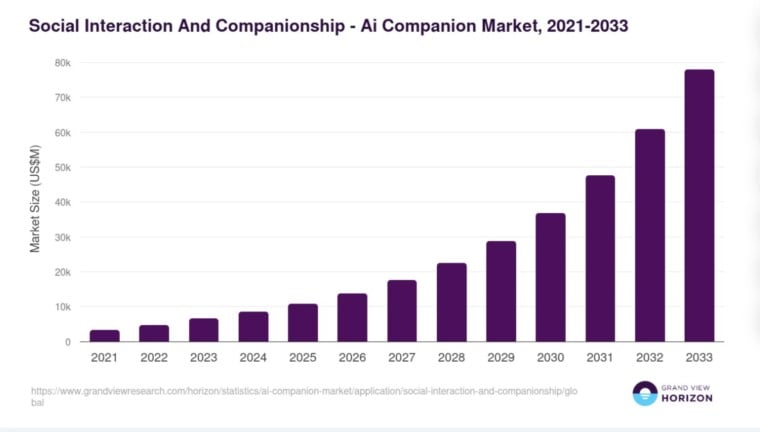
The social AI companion market—which includes AI-powered digital assistants—reached $36.8 billion in 2025. Its value is expected to rise from $48.0 billion in 2026 to $318.0 billion by 2033.
Morgan Stanley forecasts the humanoid robot market will reach $5 trillion by 2050, with more than one billion such robots projected to be operational worldwide.
The U.S.-based organization Veterans First for America has launched a new robotics initiative named “QAIAx4E HRR,” aimed at preserving individual identity after death by transferring a person’s “digital DNA” into humanoid robots.
The project originated from an AI technology initially developed to provide legal assistance to military veterans, within a proposed framework for clinical trials in mental and behavioral health. It envisions deploying a decentralized network of 300 “small cities” located inside U.S. federal and military enclaves, as well as selected international sites, operating under a “hybrid workforce model.”
A core component is the concept of “digital footprint”: individuals wear a suit equipped with 40 tactile sensors that record movement, physiological responses, vital signs, and professional skills. These data are used to construct a digital profile simulating aspects of the individual’s identity, knowledge, and capabilities.
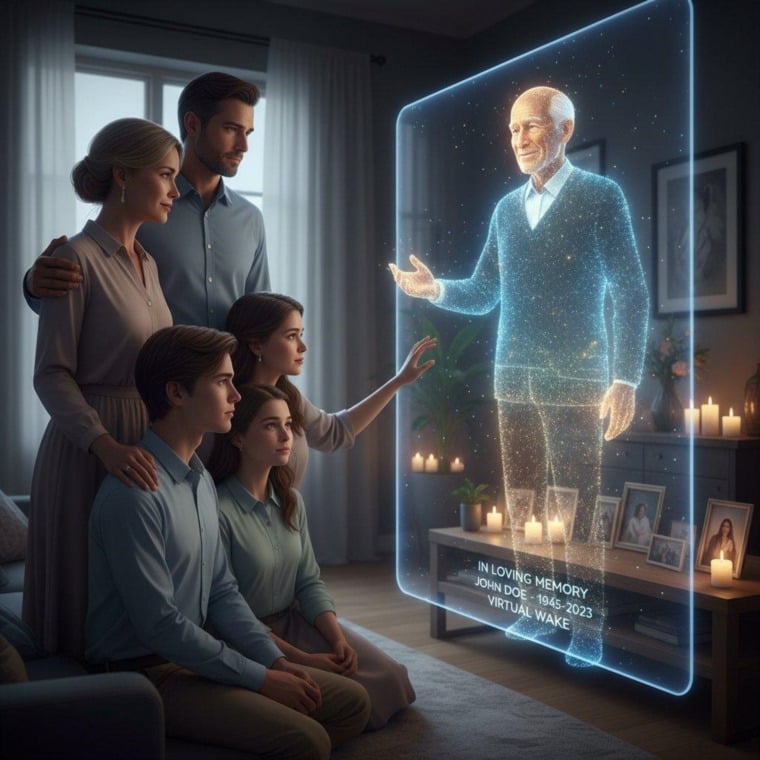
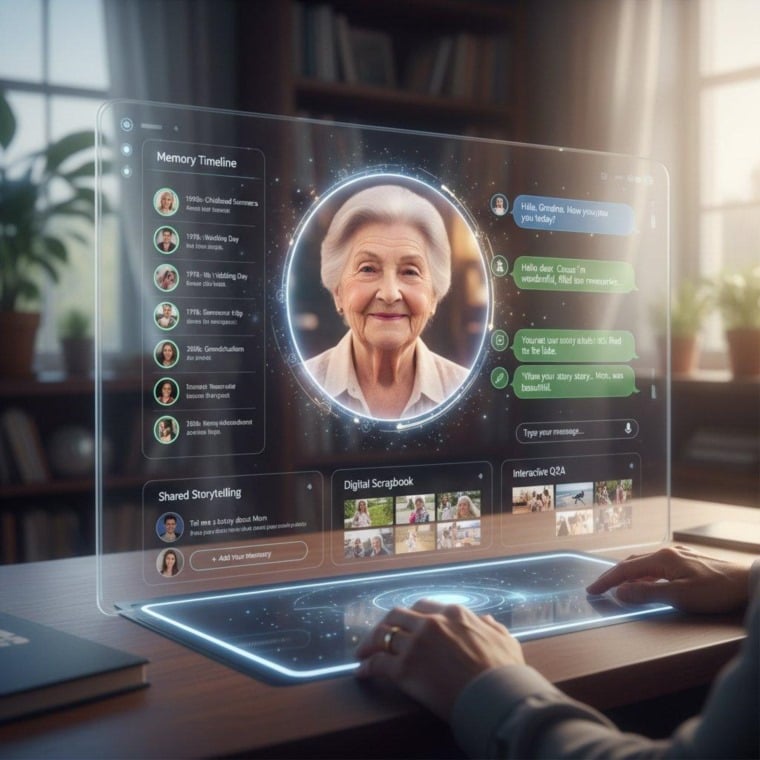
Ultimately, these personal profiles may be transferred to humanoid robots or rendered as three-dimensional avatars. Families and institutions can retain the digital files via trusts or estates, enabling the deceased to continue teaching, working, or interacting with future generations.
The company offers two preservation plans: one valid for 100 years at $300,000, and another for 500 years at $1 million. Registration is scheduled to begin in October next year.
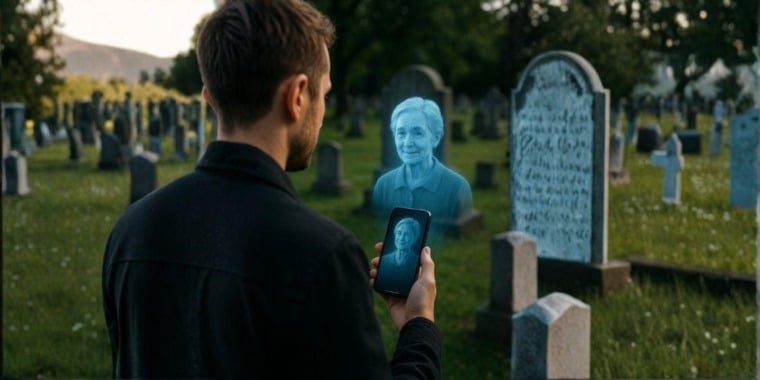
Concurrently, China’s Ubtech has introduced the UWorld U1—the first ultra-bionic humanoid robot capable of mimicking voices and movements of the deceased. The robot features silicone skin, a lifelike face with eye-tracking capability and natural-looking eyelashes, and 88 degrees of freedom across its full-size robotic body. It incorporates a “biomimetic dual-axis cervical spine” to replicate human-like motion.
The UWorld U1 operates using an “emotionally aware LLM system” designed to recognize “subtle emotional states” and respond in real time—enabling proactive companionship and human-robot interaction within fractions of a second.
Ubtech is developing a new technology set for release this year that will reconstruct 3D facial models and replicate identity using voice biometrics. This system integrates emotion-based interaction models and customized long-term memory architectures to generate robots modeled specifically on deceased individuals—or on living persons such as children residing abroad from their families.
The UWorld U1 is being produced for commercial use and is slated for sale this year at $18,000.
Stephanie Link, Chief Investment Strategist at wealth management firm High Tower—which oversees $353 billion in assets—confirmed she has recently begun allocating capital to this sector. She noted that the number of robots will increase substantially over the long term and that the market is poised for unprecedented growth in the near future.