Lebanon
Arab League Secretary-General Visits South Lebanon
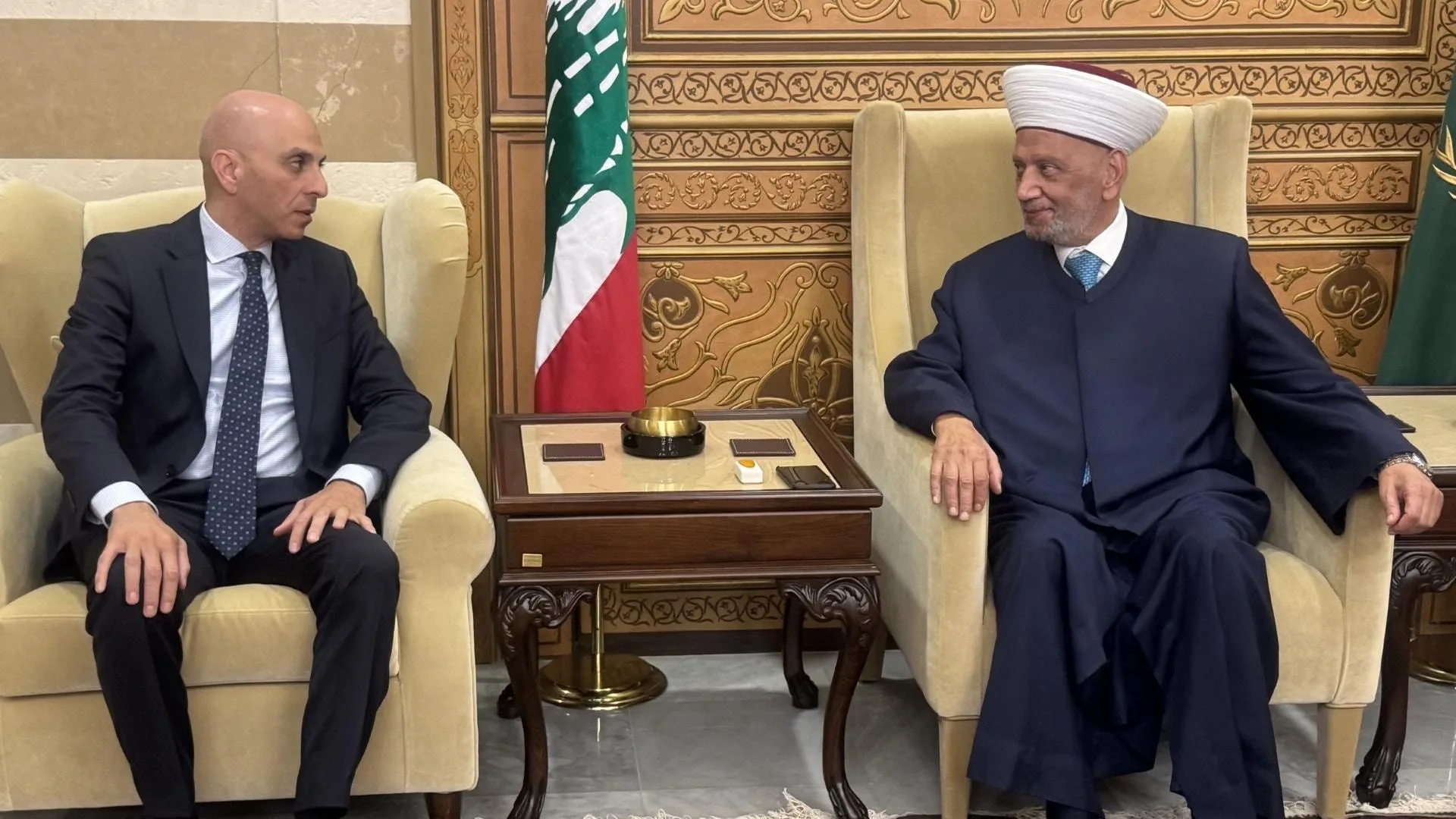
Arab League Secretary-General Nabil Fahmy visited south Lebanon, meeting with Lebanese Army commanders and emphasizing the need for international support to ensure stability and reconstruction.

Arab League Secretary-General Nabil Fahmy continued his southern tour, accompanied by Minister of Social Affairs Haneen Al-Sayed. He visited the Bnaw Barakat barracks in the city of Tyre and met with the commander of the sector south of the Litani River, Brigadier General Nicola Thabet, and senior army officers.
In a speech before a closed-door meeting away from the media, Brigadier General Nicola Thabet highlighted "the political and national significance of the Arab delegation's visit," affirming "the depth of Arab ties and the importance of solidarity with Lebanon in facing challenges that threaten its security, stability, and sovereignty."
He noted that "South Lebanon has witnessed great tragedies over the years due to Israeli aggressions, which left destruction among stones and people and led to the displacement of thousands of Lebanese, in addition to humanitarian suffering beyond Lebanon's capacity to contain." He affirmed that "the continuation of occupation and security risks still prevent the safe return of residents to their villages and the restoration of their normal lives, as they also hinder the deployment of the Lebanese Army across all southern territories up to the internationally recognized borders."
Brigadier General Thabet stressed "the necessity of effective Arab and international action to ensure the cessation of Israeli aggressions, complete withdrawal from Lebanese territory, and respect for Lebanon's sovereignty and international legitimacy resolutions," pointing out that "non-compliance with agreements and understandings related to the cessation of hostilities and ceasefire requires serious action to ensure stability and protect Lebanon."
He affirmed that "the Lebanese Army continues to perform its national duty despite difficult conditions and limited capabilities, making sacrifices to enhance stability and extend state authority," noting that "the trust placed in the military institution by the Lebanese, especially the sons of the South, constitutes a major national responsibility that the Army strives to meet."
He indicated that "the conscious and professional performance of the Army embodies its commitment to preserving civil peace, protecting all Lebanese, and adhering to the unity of the homeland, the authority of its legitimate institutions, and the exclusivity of weapons, in accordance with the constitution, laws, and relevant national decisions, thereby preserving Lebanon's stability and safeguarding its sovereignty."
Thabet expressed hope that "the Arab League would play an active role in mobilizing political and diplomatic support for Lebanon, enhancing the capabilities of its army, and contributing to the reconstruction of the South and affected areas, alongside working with the United Nations and international partners to find sustainable arrangements for the phase following the end of UNIFIL's mandate, preventing any security vacuum and its repercussions, in implementation of International Resolution 1701."
He said: "Arab countries have never spared efforts in standing by Lebanon, which today is in dire need of support from its brothers through practical steps that strengthen its resilience, support its institutions, and allow its people to safely return to their land within the framework of the Arab peace process."
He described the Arab delegation's visit to the region as "a rare event worthy of appreciation," "for the message of hope it carries amidst regional developments and the approaching end of UNIFIL's mandate, confirming that Lebanon is not abandoned to its fate but enjoys the embrace and solidarity of its Arab brothers."
Thabet concluded by affirming that "the Army will remain committed to its national responsibilities," pledging: "My comrades and I in the Army pledge before you that we will sacrifice everything precious to preserve Lebanon."
In turn, Arab League Secretary-General Nabil Fahmy affirmed that "what citizens in south Lebanon are subjected to regarding Israeli aggressions and violations is unacceptable," stressing "the responsibility of the Arab and international communities to support Lebanon, enhance the capabilities of its institutions, enable it to face challenges, and facilitate the return of its children to their homes."
Fahmy indicated that he "came to Lebanon out of his sense of responsibility and integrity towards Arab states and peoples without exception," noting that he "has been keen since taking office to strengthen cooperation with various parties and translate joint Arab work into specific political and practical steps."
He clarified that "the first decision issued by the Council of the Arab League at the ministerial level last September addressed the Lebanese issue comprehensively, through an approach targeting the causes and roots of the crisis, particularly repeated Israeli aggressions on the Lebanese border, which violate international resolutions, and the targeting of Lebanese citizens and resources."
He stressed that "the Arab orientation is based on supporting the Lebanese state and its ability to provide services to citizens, and enhancing the capabilities and national role of the Lebanese Armed Forces," affirming that "supporting Lebanon constitutes a political commitment from the Arab community and the Arab League, based on addressing the roots of the crisis and providing the necessary resources for Lebanese institutions to perform their tasks."
Fahmy pointed out that he "intended for his visit to Lebanon to be among his first foreign trips after assuming office, given the special place Lebanon holds for him, and out of concern to closely observe the scale of challenges faced by the Lebanese and their ability to endure and build under difficult circumstances."
He indicated that "his choice to visit the South carried a political message to its residents, namely that the Arab world, along with the international community, recognizes the magnitude of the suffering they endure and is ready to stand by them through positive and tangible steps."
He also affirmed that "his presence in the South aims to send a clear message abroad that what citizens in this area face and the Israeli violations against them are unacceptable, and that there is a political, moral, and security responsibility requiring action to confront these developments, enhance the capabilities of Lebanese institutions, and facilitate the return of citizens to their villages and homes, enabling them to build their present and future."
Fahmy announced that "the Arab League's commitment to Lebanon marks the beginning of a continuous path rather than the end of the road," confirming that "the League will build upon what has been achieved and continue consulting with Lebanese authorities and working with them to enable the government, the people, and the army to perform their duties to the fullest extent possible, despite the difficulties and challenges witnessed in the region."
He concluded by affirming that the Arab League will remain by Lebanon's side, its institutions, and its people, and that its doors will always remain open for communication and cooperation," expressing his "gratitude to the Lebanese Army for the warm hospitality and the opportunity to visit the South and witness the difficult conditions it undergoes."
In response to journalists' questions, Fahmy affirmed the League's support for Lebanon, hoping that "Arab efforts would contribute to consolidating stability and achieving development," saying: "We are supportive of you, and we wish you all the best."
Commenting on the field situation in Zoutar and the city of Nabatieh, Fahmy described what he saw as "regrettable," considering that it "reflects an Israeli methodology based on demolishing residential gatherings, seizing land, and attempting to displace citizens, paving the way for the possibility of Israeli occupation."
He expressed confidence in "the Lebanese people's adherence to their land," pointing to "the importance of supporting the Lebanese Army," and said: "The Arab League follows developments and studies what can be done in cooperation with the Lebanese government to rebuild Lebanon, consolidate security and stability, and enhance the capabilities of the Lebanese Army."
Regarding the reconstruction file, Fahmy clarified that "this file is linked to multiple commitments and requires work in various sectors," affirming that "this does not diminish the responsibility of the Arab League nor change its commitment to Lebanon."
He indicated the existence of renewed Arab movement to cooperate with the Lebanese government at political, organizational, and national levels, alongside working to provide support, particularly for the Lebanese Armed Forces, expressing hope for offering more assistance in the upcoming phase."
In response to a question, Fahmy stressed that "Arab positions should not be limited to condemnation and denunciation, although they are necessary in the face of rejected Israeli practices against Lebanon, but must be translated into practical and constructive steps."
He clarified that "his personal presence in the South came to confirm the existence of the Arab League and Arab states alongside Lebanon," noting that he "will convey this message from south Lebanon to Arab countries and the international community, reflecting the Arab commitment to standing by Lebanon and supporting its security and stability."
Latest news

Lebanese Kataeb Party Demands Dismantling of Hezbollah's System
Health Minister Opens National Osteoporosis Day and Reactivates Technical Committee

Marqas: New Plan for Lebanon TV and Public Media Development