Lebanon
Economic Bodies Discuss Private Sector Financing with World Bank
Lebanese economic bodies met with a World Bank and IFC delegation to discuss financing solutions for the private sector, focusing on access to credit and new funding mechanisms.

The Economic Bodies held a meeting with an expanded delegation from the World Bank and the International Finance Corporation (IFC), led by Esfandyar Zaman Khan, Director of Finance, Competitiveness, and Investment for the Middle East, North Africa, Afghanistan, and Pakistan region, at the headquarters of the Beirut and Mount Lebanon Chamber of Commerce.
According to a statement by the "Economic Bodies," the discussion centered on ways to help Lebanese private companies and institutions access funding sources, including letters of credit, guarantees, and others, enabling them to obtain the necessary financial facilities to develop their businesses and expand investments.
Initially, Secretary General of the Economic Bodies, Nicolas Chammas, welcomed the fund's delegation on behalf of its president, former Minister Mohammad Chaqir, saying: "We are honored and pleased that the Lebanese Economic Bodies are hosting the World Bank and IFC delegation at our headquarters, which we rightly consider the home of the Lebanese economy and the comprehensive reference representing the Lebanese private sector across its various sectors and activities."
He added: "The importance of this meeting stems from the fact that it constitutes a real opportunity to convey the voice of Lebanese institutions and companies, express their concerns, challenges, and priorities, and highlight their actual needs during this critical phase the Lebanese economy is going through."
For his part, Chammas pointed out that "Lebanese private institutions have faced exceptional challenges and unprecedented difficulties over the past six years, due to successive crises affecting all pillars of the economy. The absence of financing, or rather its significant interruption, has been one of the most prominent factors exacerbating these crises, restricting the ability of institutions to continue, recover, and expand, weakening their productive and export potential, and preventing the investment of many available opportunities. Its repercussions extended to the ability of institutions to meet their operational and social commitments, as numerous companies and institutions, especially in the last two years amid the war's fallout, faced great difficulties in securing the necessary liquidity, even to pay employee salaries and maintain business continuity."
He clarified that "we view today's meeting as a ray of hope and an important step towards addressing one of the most urgent issues for the Lebanese economy, namely restoring financing to the private sector, as it is the primary engine of economic activity, investment, job creation, and growth," emphasizing that "the importance of this approach increases given the exceptional circumstances facing the Lebanese banking sector and its limited capacity to finance the private sector. This forces us to seriously think about finding alternative financing channels, developing innovative support and guarantee mechanisms, and leveraging the capabilities and expertise provided by international financial institutions, foremost among them the World Bank and the IFC."
Chammas affirmed that "the Lebanese private sector, despite all the crises and hardships it has gone through, has demonstrated exceptional resilience and persistence. Today, it does not need sympathy as much as it needs the tools, opportunities, and capabilities that allow it to restore its natural role in building the economy and relaunching growth."
He concluded: "We are confident that cooperation between the Economic Bodies, the World Bank, and the IFC can form a fundamental lever in this direction and contribute to transforming existing challenges into real opportunities for recovery and economic revival."
The discussion focused on a fund that the IFC is studying establishing to finance private sector companies with loans smaller than those the institution usually provides, i.e., less than $15 million, with the value of financing provided per company ranging between $500,000 and $5 million.
They also discussed the possibility of engaging representatives from funds operating in Lebanon to form an entity responsible for managing the evaluation process of companies nominated to benefit from these loans, whereby each company would undergo a study of its requirements and conditions before approval for granting financing.
Additionally, there was a request for the World Bank to assist in financing end-of-service indemnities, particularly given the private sector's inability to bear the financial burdens required for the National Social Security Fund.
Latest news
Aoun briefed on results of foreign minister's visits to four countries and Europe
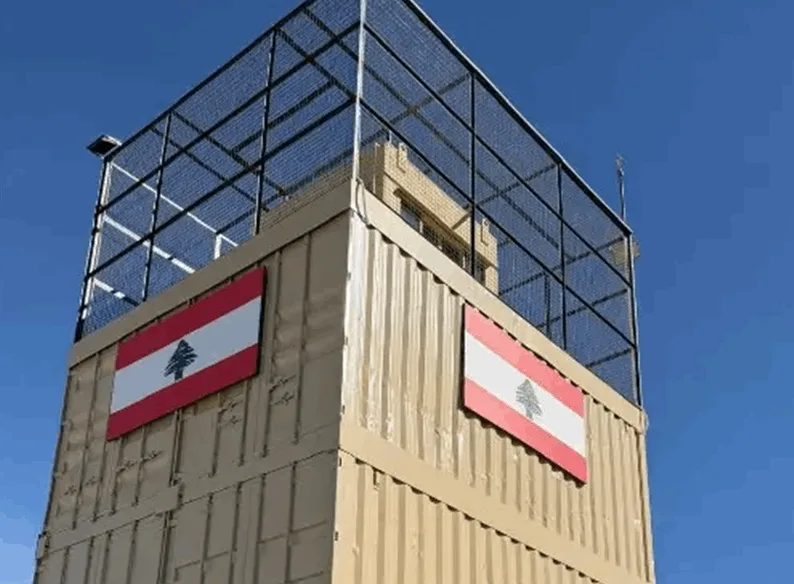
From Aita Al-Fakhar to Ain Al-Mzarab: UK Bolsters Lebanese Army Capabilities on the Lebanese-Syrian Border

Security Measures to Accompany Holidays, Enhance Stability, and Control Borders