Lebanon
Full Text of Prime Minister Nawaf Salam's Speech Before the UN General Assembly
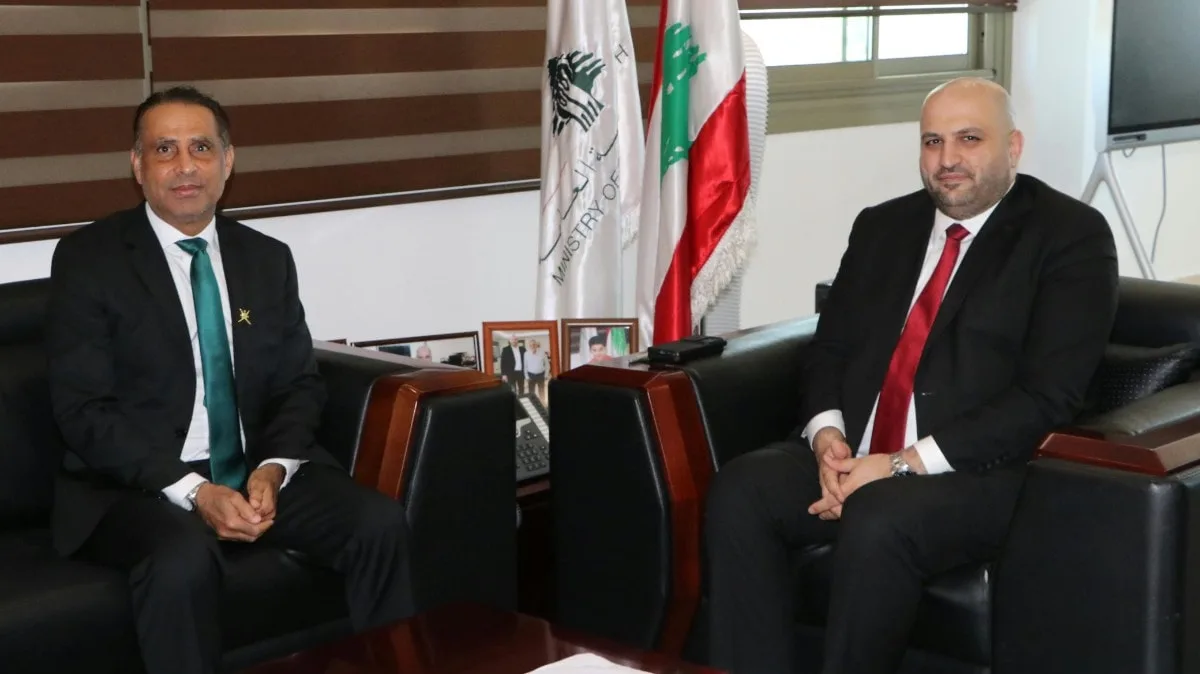
Lebanese Prime Minister Nawaf Salam delivered a speech at the 81st session of the United Nations General Assembly in New York, emphasizing trust restoration, conflict prevention, and national sovereignty.

Prime Minister Nawaf Salam delivered a speech on behalf of Lebanon before the 81st session of the United Nations General Assembly in New York. Here is the full text:
Mr. President,
Honorable Secretary-General,
The more I reflect on the theme of this General Assembly session—"Restoring Trust, Managing Transformation: A United Nations That Delivers for All"—the more convinced I become of its wisdom. Without mutual trust, peace and security cannot take root among nations, nor can cooperation between them flourish.
More than eighty years ago, the United Nations was established on the promise that the rule of law would replace the law of force. Yet we still live in a world where wars and conflicts are increasing, where spending on armaments exceeds investment in development, and where civilians remain the first victims, facing displacement, hunger, and deprivation.
The problem is not the absence of rules, but their selective or even non-application. It is unacceptable for state sovereignty to be inviolable in one place and negotiable in another, or for international law to be applied to some while ignored by others.
Restoring trust requires respecting international law, investing in conflict prevention before crises erupt, and prioritizing development before poverty and deprivation turn into sources of violence, extremism, and terrorism.
Development is also a matter of peace. There can be no sustainable peace in a world where economic disparities grow, and where countries spend more servicing their debts than on the health and education of their citizens.
This does not absolve developing countries from their responsibilities to reform, combat corruption, and build institutions. But such efforts require a more equitable and just international economic system that offers real opportunities for advancement.
Mr. President,
Our shared responsibility also lies in confronting the major transformations reshaping our world. Climate change threatens the lives and livelihoods of millions, while countries contributing least bear the worst consequences—necessitating fair financing for adaptation and technology transfer.
Meanwhile, the artificial intelligence revolution opens unprecedented avenues for progress across all areas of life, yet raises challenges regarding the future of work, human rights, and freedoms—requiring international governance that places human freedom and privacy at the heart of this transformation. Most importantly, we must not allow an AI divide to emerge alongside existing gaps in wealth and development.
Restoring trust means ensuring people feel protected by the law, included in development, and not left behind by progress.
Mr. President,
If restoring trust is a challenge facing our world today, for Lebanon it is not merely a slogan we raise, nor a choice we debate—it is the very essence of the mandate we undertook before our people, our Arab brothers, and the entire world when we assumed leadership of the Lebanese government.
We have taken on this responsibility as our country faces three existential challenges: restoring public trust after financial collapse and the Beirut port explosion and the tragedies they left behind; reclaiming national decision-making so that no authority stands above the state, no weapons exist outside the armed forces, and no decisions on war and peace lie beyond constitutional institutions; and regaining full control over our territory from Israeli occupation, asserting our sovereignty across our entire national territory through our own means in implementation of the Taif Agreement, and in genuine respect for relevant international resolutions concerning Lebanon—most notably Resolution 1701, which remains to this day a fundamental reference guiding relations between Lebanon and Israel.
Trust to be built, decision to be reclaimed, land to be liberated. This is Lebanon’s formula for renewal.
These are not three separate challenges, but three facets of one single issue: restoring a state that its citizens trust, that controls its own decisions, and that exercises full sovereignty over its entire territory.
Mr. President,
First, the trust we seek to restore is not trust in words, but in institutions that protect rights, in a judiciary that ensures justice, in an economy that restores prosperity to people and gives youth better futures.
We cannot speak of restoring trust without acknowledging the Beirut port explosion. The wound of August 4 remains open, and cannot heal without truth, justice, and accountability—these will come, inevitably.
Some may argue our government has not yet fulfilled all its commitments. We do not claim the task is complete. But fairness demands we not overlook the scale of the legacy we inherited: paralyzed institutions, diminished administrative effectiveness, an economy stripped of growth foundations, and a state weakened by accumulated crises and decades of external interference.
Yet we have not used difficult circumstances as an excuse to retreat from our commitments.
Lebanon has launched a reform agenda across multiple fronts: revitalizing administration, strengthening judicial independence, modernizing media law, and abolishing the death penalty. It is advancing toward completing financial reforms aimed at restoring order and recovering deposits, enabling a potential agreement with the IMF—a crucial lever for restoring international confidence in Lebanon and opening the door to essential funding from regional and international partners for economic recovery and reconstruction.
Our goal in reform is not merely to ask our people to renew their trust in the state—but to rebuild a state worthy of their trust.
Second, the state does not regain its citizens’ trust through reform alone, but through reclaiming its national decision-making authority.
From this standpoint, we did not limit ourselves to affirming the exclusive control of arms by the state and the exclusive right of constitutional institutions to decide on war and peace. We translated this commitment into concrete decisions adopted by the Council of Ministers, particularly in August and September of last year, and in March of this year, after Lebanon found itself thrust into a war it did not choose, but was imposed upon it despite our repeated warnings about the risks of being drawn in.
As the conflict expands regionally and various initiatives aim to end it, we remain steadfast in our non-negotiable principle: no one speaks or negotiates on behalf of Lebanon except the Lebanese state through its constitutional institutions.
True, Lebanon is affected by events in its surroundings, but this does not mean we accept becoming a battleground for others’ conflicts or a bargaining chip in their hands.
The future of Lebanon is not decided on its behalf, nor should its security and stability be the price of settlements made in its absence.
Third, our position on the war has been clear from the beginning: we want it ended, we want a lasting ceasefire, and Israel’s withdrawal from all Lebanese territory up to internationally recognized borders, in accordance with the 1949 Armistice Agreement, reaffirmed by Resolution 1701. We demand the release of all our prisoners, safe and dignified return of our displaced families to their villages and towns, and reconstruction of what the war destroyed.
Based on this, the Lebanese state entered negotiations with Israel, under the generous facilitation of the United States and its President, aiming to reach arrangements ensuring the end of the war and full restoration of Lebanon’s sovereignty.
The sovereignty we defend is indivisible: it demands Israel’s withdrawal from all Lebanese territory, and the exercise of full Lebanese state authority—through its own means—over all its territory, with arms exclusively under state control.
On these two principles, and based on reciprocity and phased implementation, the three-point framework reached in negotiations is built.
But the success of any agreement cannot be measured by stated intentions, but by actual implementation. Therefore, what is needed today is translating this framework into concrete steps within a clear timeline and a verification mechanism ensuring full execution of all its provisions.
Mr. President,
In this context, I must commend the role played by the United Nations Interim Force in Lebanon (UNIFIL), and the courage, dedication, and sacrifices of its leadership, personnel, and staff in maintaining stability, supporting the Lebanese Army, and implementing Resolution 1701.
To every country contributing to this mission, Lebanon extends its deepest gratitude and appreciation.
We have taken note of Security Council Resolution 2790 of 2025, which mandates the termination of UNIFIL operations by the end of this year, a gradual withdrawal, and requests the Secretary-General to explore options for continuing the implementation of Resolution 1701. What we emphasize here and now is the urgent need to avoid a vacuum resulting from UNIFIL’s departure without a new international force taking its place—one that ensures continuity of monitoring, reporting, communication, and integration with the requirements of implementing the three-point framework.
Mr. President,
Reclaiming land means not only the withdrawal of occupying forces, but also the return of its people and the revival of life in their villages and towns.
The war in Lebanon has caused a massive humanitarian crisis, extensive destruction of homes, public facilities, infrastructure, and productive sectors, and deprived large numbers of Lebanese of their homes and livelihoods.
While thanking UN agencies and our international partners for their humanitarian contributions, we call for continued funding to meet the basic needs of affected populations, especially the displaced, alongside early recovery, reconstruction, and development requirements.
Rebuilding the south is not merely a process of reconstructing buildings—it is rebuilding people’s lives, restoring their livelihoods, and securing their right to live safely and with dignity on their land.
Mr. President,
The Lebanon standing before you today does not shirk its responsibilities, nor does it ask others to fulfill what it must do itself.
We assume our responsibility for reform and for asserting state authority over our entire territory. But we have the right to expect the international community to likewise fulfill its responsibilities in ensuring respect for Lebanon’s sovereignty and the implementation of international legitimacy resolutions.
Mr. President,
No sustainable stability in Lebanon without sustainable stability in our region. And no stability there while this organization remains unable to enable the Palestinian people to exercise their inalienable right to self-determination—equal to that of all other peoples on Earth, neither less nor more. Despite dozens of resolutions adopted by this Assembly and the Security Council establishing clear foundations for this, not to mention the Arab Peace Initiative.
As for the ongoing tragedy in Gaza, it has placed the conscience of the world and the failure of its institutions before an unavoidable test.
I must stress here that cutting off or undermining funding to UNRWA does not erase the rights of Palestinian refugees—if that is the intent of some—but rather intensifies their suffering, jeopardizes prospects for a fair and lasting solution to their plight, and increases burdens on host countries, foremost among them Lebanon.
Regarding regional security, Lebanon renews its solidarity with Gulf states and Jordan in confronting Iranian attacks threatening regional security, maritime navigation safety, and freedom. These attacks do not remain confined to battlefields—they extend to supply chains, commodity prices, especially food and energy, and inflation rates.
Mr. President,
Allow me to conclude by returning once again to the theme of this General Assembly session: "Restoring Trust, Managing Transformation: A United Nations That Delivers for All".
Indeed, we cannot demand behavioral changes from world nations while failing to bring about the necessary transformation within our own organization to deliver on its intended results and regain the trust of global populations.
Reality is that the world has changed fundamentally since 1945.
The number of UN member states has quadrupled,
colonialism has ended, Africa has risen, Asia has transformed, new powers have emerged,
global economic balances have shifted,
yet the core structure of the Security Council remains trapped in a historical moment dating back to the end of World War II.
Africa and the Arab world cannot remain excluded from permanent representation on the Council, nor can small and medium-sized countries remain mere spectators to decisions affecting their security and future.
We know that reforming the Security Council is a complex matter.
But the difficulty of reform is no justification for avoiding its necessity. Reform of the United Nations must begin here—with the Security Council—where the primary responsibility for maintaining international peace and security rests.
Therefore, I reaffirm Lebanon’s voice joining the majority of our Organization’s members in calling for expanding the Security Council to achieve broader and fairer representation.
And because we are realistic, we do not call for abolishing the veto, but for restricting its use when it comes to genocide, war crimes, crimes against humanity, and serious violations of international humanitarian law.
Our insistence on reform within the United Nations stems from our desire for an organization that is more representative, more democratic, and more effective—one faithful to the principles and goals enshrined in its founding, yet constantly renewed to meet the rapidly changing challenges of our world and the aspirations of our peoples and future generations.
Thank you.
Latest news
Shahadeh Meets Jaber on Finance Matters Related to Displaced Ministry
Economy Ministry Continues Monitoring Pricing and Food Safety in All Regions
Trump After Meeting Chinese President: 'Great Things Will Happen'