

Lebanon
Lebanese Environment Minister Calls for International Environmental Emergency Fund to Support Lebanon's Recovery
Lebanese Environment Minister Tamara Al-Zein urged the creation of an international environmental emergency fund to finance post-war ecological recovery plans, emphasizing that nature damage directly impacts food security and public health.

Environment Minister Tamara Al-Zein called for "the establishment of an international environmental emergency fund that enables the mobilization and movement of financing to implement environmental recovery plans in the post-war phase," stressing that "addressing damages inflicted on nature is directly linked to people's health, their food security, and livelihoods, as well as communities' resilience and ability to restore the foundations of their lives." She emphasized "the necessity of translating international commitments into practical solutions and executable financing mechanisms that make environmental recovery an essential part of the reconstruction and economic revival path."
Al-Zein's remarks came during a panel discussion in Armenia titled "Political Necessity: Preserving Nature for Peace, Security, and Development," attended by Armenian Prime Minister Nikol Pashinyan, Tajik President Emomali Rahmon, European Commission Vice-President Teresa Ribera, Secretary-General of the International Organisation of La Francophonie Louise Mushikiwabo, Executive Director of the United Nations Environment Programme Inger Andersen, and Chief Executive of the Convention on Biological Diversity in Finland Marina von Weissenberg, alongside ministers, officials, and international experts concerned with environment, climate, and biodiversity.
Al-Zein presented the latest assessment of damages and losses incurred by Lebanon's environmental sector due to ongoing aggression, clarifying that "what was left behind by the wars of 2023–2024 and 2026 was not limited to collateral damage but included deliberate targeting of forests, woodlands, and natural reserves in southern Lebanon."
She paused at the repercussions of this destruction on ecosystems and biodiversity, and the resulting threats to food security and public health, weakening Lebanese people's capacity for resilience and recovery.
She noted that "Lebanon was among the first countries to submit its Nationally Determined Contribution plan and climate adaptation plan, alongside preparing a national strategy and action plan for biodiversity for the next five years, and implementing substantive reforms. However, these steps, despite their importance, place Lebanon before an urgent question: How do we move forward in times of war amid continuing aggressions and the losses they leave behind that undermine protection and recovery efforts?"
Al-Zein lamented "the limited international interest in environmental recovery," pointing out that "support still primarily flows toward social, educational, and health sectors, while the environment does not receive the priority it deserves." She affirmed that separating these paths ignores the close interconnection between ecosystem integrity and human health, and between restoring natural resources and reconstruction, economy, growth, and the right to live with dignity.
She stressed that "environmental recovery is not a luxury nor a file that can be postponed until after reconstruction, but rather a path that should accompany it and enhance its sustainability."
In this context, she proposed two practical measures: "The first is establishing the international environmental emergency fund to secure the necessary financing for implementing post-war recovery plans, and the second is sending a clear international message rejecting the weaponization of the environment and its use as a tool in conflicts, especially with the approach of the International Day for Preventing the Exploitation of the Environment in War and Armed Conflict."
Al-Zein concluded by emphasizing that "acknowledging the importance of nature in international discourse must translate into concrete commitments and effective financing tools that place the environment within priorities for security, recovery, and reconstruction, preventing affected communities from bearing alone the cost of destroying their natural resources and the burdens this leaves on their lives and their children's future."
Minister Al-Zein represented President Joseph Aoun at the Leaders' Summit on Biodiversity in Yerevan, capital of Armenia, where she delivered a speech focusing on the challenges Lebanon faces in protecting its environment and biological diversity, and priorities for addressing them to support recovery and reconstruction on sustainable foundations.
She also held a series of meetings with representatives of countries and stakeholders, discussing ways to enhance cooperation and secure the technical and logistical support Lebanon needs to overcome obstacles and accelerate the environmental recovery process.
Latest news
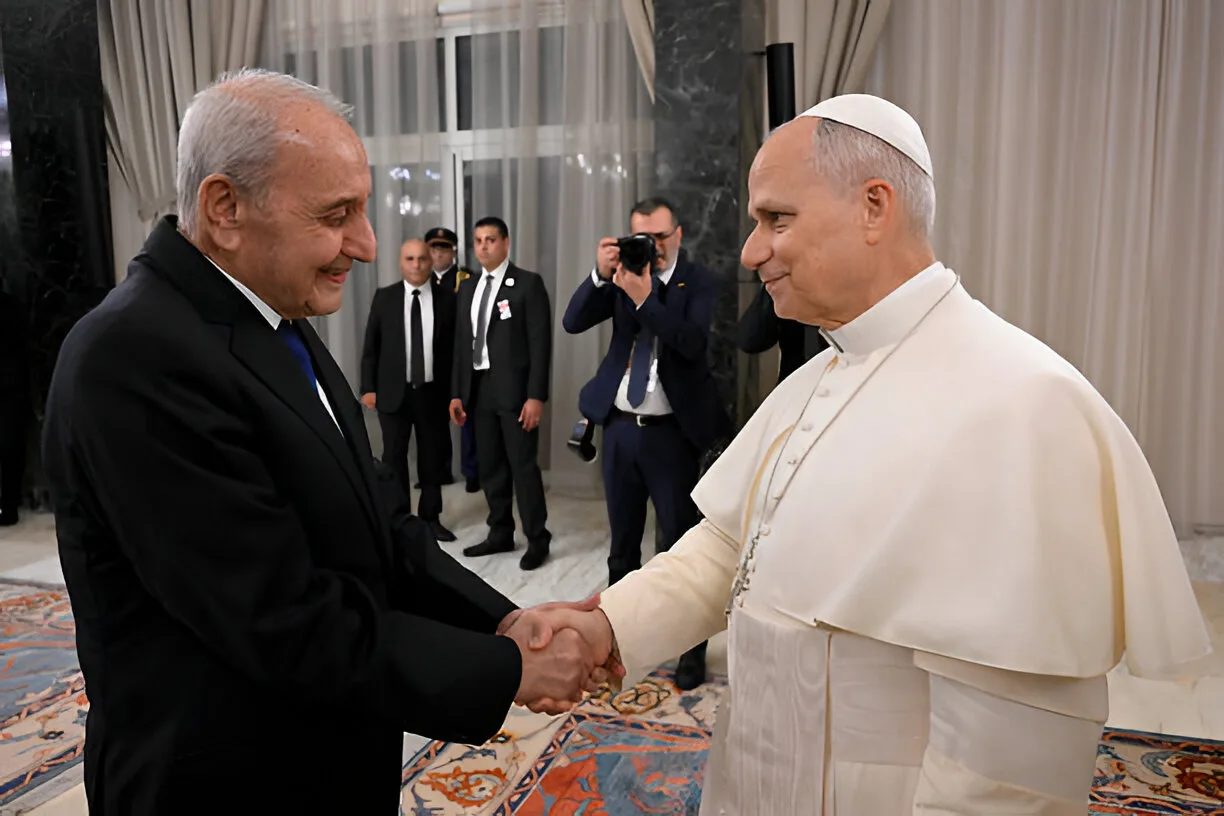
Berri Congratulates Pope Leo XIV on Successful Surgery

Herbal Drinks and Blood Sugar: What Studies Actually Show

UK Mental Health Crisis: NHS Faces Structural Collapse Amid Soaring Demand
