·
·


Lebanon
Lebanon's disappearance from Iranian officials' statements signals a regional shift following US-Lebanon diplomatic engagement and changing Iranian strategic focus.

In earlier years, any Iranian official discussing the Middle East would prominently include Lebanon in their remarks. Since the inception of Iran's regional project, Lebanon held a leading position in official statements, regarded as a forward base for the "Resistance Axis" and a key element of Iranian influence on the Mediterranean coast.
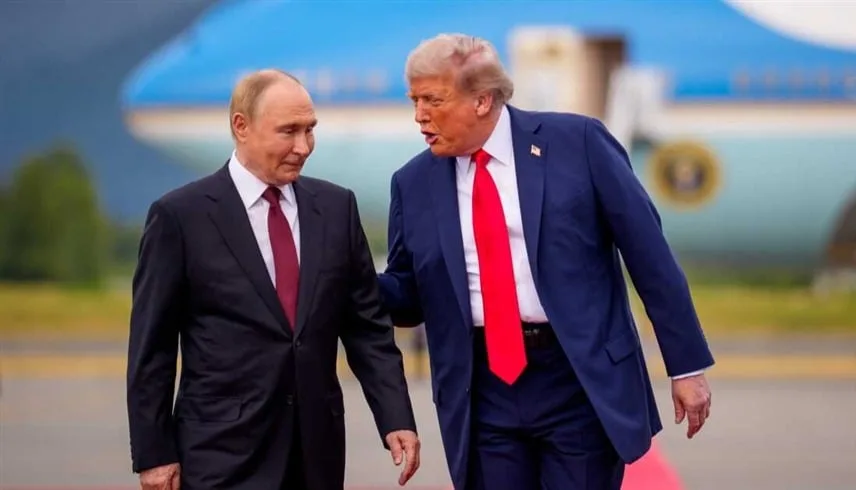
Currently, the situation has noticeably changed. Following the meeting between US President Donald Trump and Lebanese President Joseph Aoun at the White House, a new phase has emerged in both Lebanese and regional dynamics. This phase extends beyond US and international diplomatic efforts supporting the Lebanese state, reflecting also in the Iranian discourse itself, where references to Lebanon have declined to an unprecedented degree compared to previous years.
This shift is not limited to Lebanon's name being omitted from some statements; rather, it reflects a reordering of priorities. Iranian officials now emphasize protecting Iran's domestic affairs, the nuclear program, US sanctions, and Gulf security, while Lebanon has receded from the forefront of political rhetoric that Tehran traditionally used to demonstrate its regional reach.
Although this may appear minor to some, in political terms it is significant. Nations reveal their priorities not only through what they say but also through what they omit. Lebanon's absence from Iranian discourse after years of constant presence constitutes a political message warranting attention.
This transformation aligns with new realities in the region. The supply networks underpinning Iran's influence have faced substantial pressure, complicating Tehran's ability to finance and manage external arenas. Consequently, Iran has shifted from expanding its influence to preserving what remains.
Conversely, Lebanon has begun reclaiming the language of statehood. Current dominant themes include sovereignty, exclusive state control over arms, support for the army, financial reform, and rebuilding relations with the Arab world and the international community. These themes sharply contrast with the political rhetoric that dominated Lebanese life for many years.
President Joseph Aoun's visit to Washington was more than a formal occasion; it marked a turning point in the international perspective on Lebanon. The message from the White House was explicit: "There is a decision to support the Lebanese state and its institutions, not to back any parallel project." Since then, Lebanon appears to be gradually transitioning from a regional pawn to a state whose stability and sovereignty are being reaffirmed.
While Iranian influence within Lebanon has not ended and Hezbollah remains a key player in the internal equation, the regional environment that enabled such influence to expand has altered. The dynamics governing the region after 2003 and then after 2011 are undergoing profound redefinition, focusing on reducing militia influence and strengthening state roles.
Therefore, Lebanon's removal from Iranian discourse may be an early sign of a broader change whose full characteristics are yet to be revealed. When Tehran ceases to present Lebanon as one of its most important political cards, it indicates that the value of this card in regional calculations has diminished.
Although no official declaration has stated that Lebanon has exited Iran's sphere of influence, politics is interpreted not only through formal statements but also through signals, silences, and priorities. In this context, Lebanon's absence from official Iranian discourse since the Trump-Aoun meeting stands as one of the clearest indicators that a new phase has begun—one marked by Lebanon's shift from an era of alliances to an era of statehood, moving from a battleground to a sovereign nation making its own decisions.