Lebanon
Rai: Concerned About Creating a Vacuum with Unknown Consequences Amid UNIFIL Withdrawal
Maronite Patriarch Cardinal Bechara Boutros al-Rai expressed concern over the potential vacuum resulting from UNIFIL's withdrawal, emphasizing the need for national unity around the Lebanese Army and calling for stable peace and institutional regularity.

Maronite Patriarch Cardinal Bechara Boutros al-Rai presided over the Sunday Mass at the Church of Our Lady in the Patriarchal Residence in Bkerke. He was assisted by Bishops Hanna Alwan and Antoine Aoukar, and the Secretary General of the Patriarchate, Father Fadi Tabat. The ceremony was attended by the family of martyrs Subhi and Nadimeh Al-Fakhri, led by their son Patrick, on the occasion of the thirteenth anniversary of their assassination; the Shemoun Family Association; and a crowd of believers.
After the Holy Gospel, Patriarch Rai delivered a sermon titled "Do not be afraid, Zechariah, for your prayer has been heard" (Luke 1:13). He said: "The Maronite Church celebrates today the Sunday of the Annunciation to Zechariah of the birth of John, with which the Christmas season begins. Today's Gospel speaks to us about the priest Zechariah and his wife Elizabeth, who lived in righteousness and faithfulness to God's commandments but were childless and advanced in age. While Zechariah was performing his priestly service in the temple, the Angel Gabriel appeared to him and announced that his prayer had been heard, and that Elizabeth would bear him a son whom he should name John, meaning 'God is merciful.' He will be great before the Lord and prepare a perfect people for Him. In the face of this responsibility, the Angel told him: 'Do not be afraid, Zechariah.'"
He continued: "The Universal Church observes today the 'Tenth World Day of the Poor,' which coincides with November 15. His Holiness Pope Leo XIV emphasized participation and solidarity in his message for this occasion, titled 'The Lord is the Refuge of the Poor,' so that the poor may find support in the Church and society that preserves their dignity and restores hope. It is our responsibility to work to alleviate the causes of fear from hunger, disease, unemployment, and poverty, and not to leave those in need alone. We appreciate every initiative that supports the poor, from the efforts of individuals and the Church through its dioceses, parishes, religious orders, social institutions, and endowments, as well as non-governmental charitable associations, foremost among them Caritas Lebanon, the Lebanese Red Cross, the Papal Mission, the Society of St. Vincent de Paul, Œuvre d’Orient, Knights of Malta, and others. We also thank friendly countries and donor agencies for providing medicines, food, clothing, blankets, and humanitarian aid. Every initiative, whether small or large, that alleviates pain, preserves dignity, or supports a family deserves thanks and appreciation."
He added: "I am pleased to welcome all of you, especially the Shemoun Family Association. I extend a special greeting to the family of the late Subhi and Nadimeh Al-Fakhri on the thirteenth anniversary of their assassination in front of their home in Batdouni, at the hands of known individuals in the area who were fleeing army pursuit and attempted to steal one of the victims' cars. We salute their sons, daughters, and families, who have decided, in the spirit of the Gospel, not to seek revenge but to leave the matter to justice, which has arrested some and continues to pursue the fugitives known by name. We remember them in this holy sacrifice and offer our condolences to their family. Here the value of prayer becomes evident: it is not merely a request we raise to God, but an encounter with Him, trust in His love, and submission to His will. Through prayer, we express our needs, thank and praise God, and listen to His voice, asking Him to guide us to what He wants from us and for us. Therefore, the Lord Jesus commanded us to 'pray always and do not lose heart' (Luke 18:1). Prayer strengthens our faith, calms our anxiety, grants us peace, patience, and strength to face difficulties, and opens the door of hope in our hearts. Prayer is never lost with God, even if its answer is delayed. In the dialogue between Zechariah and the Angel Gabriel, we see a salvific dialogue between God and man; God takes the initiative with His word and promise. Zechariah's silence became a time for listening and reflection, teaching us that prayer is not just words directed to God, but listening to God's voice and trusting His will."
He further stated: "'Do not be afraid, for your prayer has been heard.' In a time when causes of anxiety multiply and the wait for solutions drags on, this word opens before us the door of responsible hope that transforms fear into will, waiting into action, and concern for the homeland into clear national responsibility. At the forefront of what occupies Lebanon today is the transition from fear of war to working for lasting peace. Anxiety has returned strongly to the south with the continuation of Israeli strikes and military movements, and fears of establishing a long-term Israeli presence in some southern areas. Lebanon needs lasting peace, not for its people to live between temporary calm and constant fear of a new war. Lasting peace is directly linked to the clarity of the reference for national decision-making. Restricting weapons and decisions on war and peace are not passing slogans in political debate, but foundations of state regularity and stability. Unity of reference in security and peace protects the homeland from having its fate distributed among multiple decisions. Negotiations and political and diplomatic efforts remain subject to the test of results. Negotiations must not turn into successive rounds while reality remains unchanged—stopping attacks, consolidating stability, protecting the south, and keeping Lebanon out of the circle of war; this is what negotiations are expected to achieve. Financial and banking reform remains an urgent national priority after years of postponement and waiting. What is required is moving from promises to implementation, restoring confidence, preserving depositors' rights, and ensuring that citizens do not again bear the cost of crises they were not responsible for. Regularity of institutions remains an essential condition at this stage. Political disagreement is legitimate, and diversity of opinions is natural, but disagreement must not turn into obstruction, nor should institutions become hostages to tug-of-war. Political files are addressed within institutions, judicial issues remain under the judiciary, and the continuity of the state stands above disagreements. On the security side, protecting borders and the interior imposes itself forcefully. Attempts at smuggling, illegal entry, and the spread of weapons in some areas remind us that security cannot tolerate vacuums or laxity. Hence, we commend the role of the Lebanese Army, security forces, and the judiciary in maintaining internal security and borders, and demand strictness to prevent violations and assaults on persons and property. We also express our concern about creating a vacuum with unknown consequences amid the withdrawal of UNIFIL forces from southern Lebanon, and stress the necessity of national rallying around the Army, demanding that relevant parties support building its capacity so it can fulfill what is required of it."
Rai concluded: "Let us pray, asking God to make us steadfast in prayer and good conduct, and to bestow upon us permanent, just, and comprehensive peace, hoping that His will and salvific plan may be fulfilled in us. To Him be glory and thanks now and forever, Amen."
After the Mass, Patriarch Rai received the faithful participating in the Divine Sacrifice.
Latest news

Mossad Provides US with Intelligence on Iranian Plot to Assassinate Trump

Gemini links to Google Wallet for spending analysis
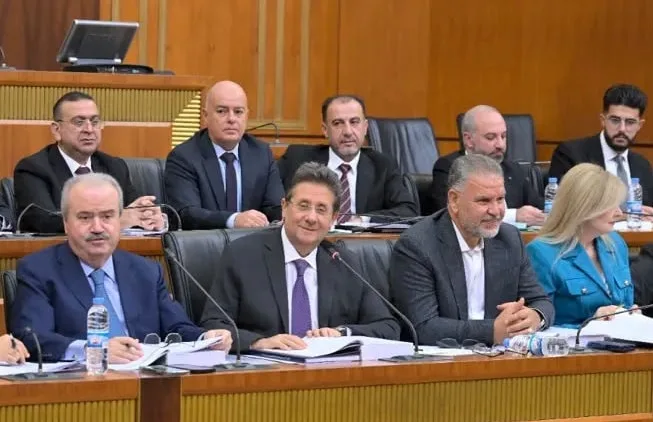
Finance Committee Continues Review of 2027 Budget, Dedicates Session to Security and Development Appropriations