Lebanon
Salameh Launches Ministry of Culture Project to Rehabilitate Around 60 Municipal Libraries
Minister Ghassan Salameh launched an ambitious project in partnership with Norway and UNESCO to rehabilitate approximately 60 municipal libraries across Lebanon, starting with Sin El Fil.

Minister of Culture Ghassan Salameh, from the public library of Sin El Fil, launched the Ministry of Culture's ambitious project to rehabilitate around 60 municipal libraries in various Lebanese regions, in partnership with the Norwegian Embassy and the UNESCO Regional Office in Beirut. He announced the selection of Sin El Fil as the first stop because it is a model municipality, pledging to meet all the needs of its library.
Minister of Culture Ghassan Salameh revealed his new project to revive public libraries that have struggled since 2000, emphasizing that "it does not rely on a one-size-fits-all recipe but rather detailed field reports on the specific needs of each library, ranging from books to computers to music lessons, with a special allocation for rebuilding the destroyed southern libraries in Bint Jbeil and Al-Taybeh."
The Minister's remarks came during the signing of a memorandum of understanding with the Mayor of Sin El Fil, Nabil Kahaleh, in the presence of the Norwegian Ambassador to Lebanon, Hilde Haraldstun, the Communication and Information Programs Officer at the UNESCO Regional Office, Georges Awad, and members of the municipal council.
Among the statements made by Minister Salameh: "I am very pleased to be in Sin El Fil with all of you; this visit has been in my mind for a long time. Let me say three things:
First: The Philosophy of the Project
"We chose Sin El Fil specifically because, as His Excellency the President stated, it is a model municipality, making it the first site where we will implement a project much more ambitious than it appears.
This project is built on international cooperation between the Ministry of Culture, the Norwegian Embassy, the UNESCO Regional Office, and two American institutions, Loops and MCN Build.
The Ministry managed to gather these resources to launch an ambitious project. We have dozens of municipal libraries across the country, many of which I personally established when I was minister in 2000, but the conditions of these libraries have deteriorated for numerous reasons. There are municipalities that no longer care for them, there was the COVID crisis, there was the financial and banking collapse in 2019, and most importantly, there is the technological revolution that changed reading habits.
Therefore, we developed an ambitious project to upgrade the capacity of all these municipal libraries—around sixty municipal libraries throughout the Lebanese Republic—but not arbitrarily. Instead, we visited these libraries and prepared reports on their actual needs, because no two libraries have the same requirements. Some libraries need computer equipment, others need books because they haven't purchased a single book for a long period due to the financial crisis, some need instructors for music, dance, and singing, and others need restoration of all their electronic devices.
Thus, we did not come with a single recipe for all libraries; rather, we prepared a scrutinized report for each library and its needs so that we could address them. I pledge to you that the needs identified in the Sin El Fil library will be met. Therefore, we start here and will move to other libraries. We have set aside a special quota for the libraries completely destroyed in the south, in Bint Jbeil and Al-Taybeh. When we can access them—and we will go there and contribute to their reconstruction and equipping—we cannot wait until then to launch the project. So, wherever we can go today, we will go, and the first stop is the Sin El Fil library."
Second: The Relationship Between the State and Municipalities
"As a member of the government, I strongly support respecting the relationship between the central state and municipalities. That is why, since the first libraries I established 25 years ago, they were based on written agreements between the ministry and the municipality, because we believe that in every town, city, and village, the closest natural interlocutor is the municipality. First, because it is elected and thus possesses legitimacy, and second, because it represents the entire city, unlike associations or other gatherings. The municipality is the legitimate institution at the local level; therefore, our ambition goes beyond culture. Our ambition is to give other ministries a model for civilized, legal interaction between the central authority and the municipality."
There are currently projects and draft laws being studied regarding decentralization in the Parliament. Extended administrative decentralization, as you know, exists in the Taif Agreement but has not yet been implemented. However, we must not wait for the law to pass in the coming years to begin implementing what can be done now.
Our decision that culture should not remain confined to Beirut while waiting for people to come to it, but rather that culture should go to the people in every location in the Lebanese Republic, is a preemptive implementation of what decentralization should be. At its core, services should not remain limited to the center but should go themselves to cities and villages.
Therefore, what we are doing today may seem simple, may seem small, but in reality, it is the key to an ambitious project. If this government continues and if I remain within it, I will implement it in its entirety."
In turn, the Norwegian Ambassador said: "We appreciate the efforts of the Ministry of Culture in strengthening and preserving public libraries as essential spaces for knowledge, learning, and community interaction in Lebanon. Norway is proud to support this project, which contributes to developing public services and enhancing the role of libraries as inclusive and open spaces for everyone, bringing together local communities and responding to their needs across Lebanon."
The project aims to consolidate the role of public libraries and cultural activation centers as vital spaces for knowledge, learning, and community interaction, by developing their infrastructure, equipment, and services, and enhancing the capabilities of their staff.
The first phase constituted a fundamental step in this path, through training library workers from various Lebanese regions and providing them with the skills and tools necessary to develop work methods and offer services and programs that respond to the needs of library patrons and their local communities.
In upcoming phases, efforts to develop beneficiary libraries will continue, including improving spaces, equipment, and services, enhancing their ability to attract readers, especially children and youth, and providing cultural and educational programs that make them vibrant and accessible spaces for all.
The Ministry of Culture, UNESCO, and their partners affirmed their commitment to continuing this work with municipalities, public libraries, and partner entities to develop the network of public libraries and enhance their role in facilitating access to knowledge, encouraging reading, and supporting cultural life in local communities.
The Sin El Fil Public Library falls within this trajectory, with efforts expected to continue in the next phase to include public libraries in various Lebanese regions, contributing to building more effective and sustainable libraries capable of responding to the needs of their communities and promoting a culture of lifelong reading and learning.
Latest news

European Gas Prices Top $1,000 for First Time Since September 2026
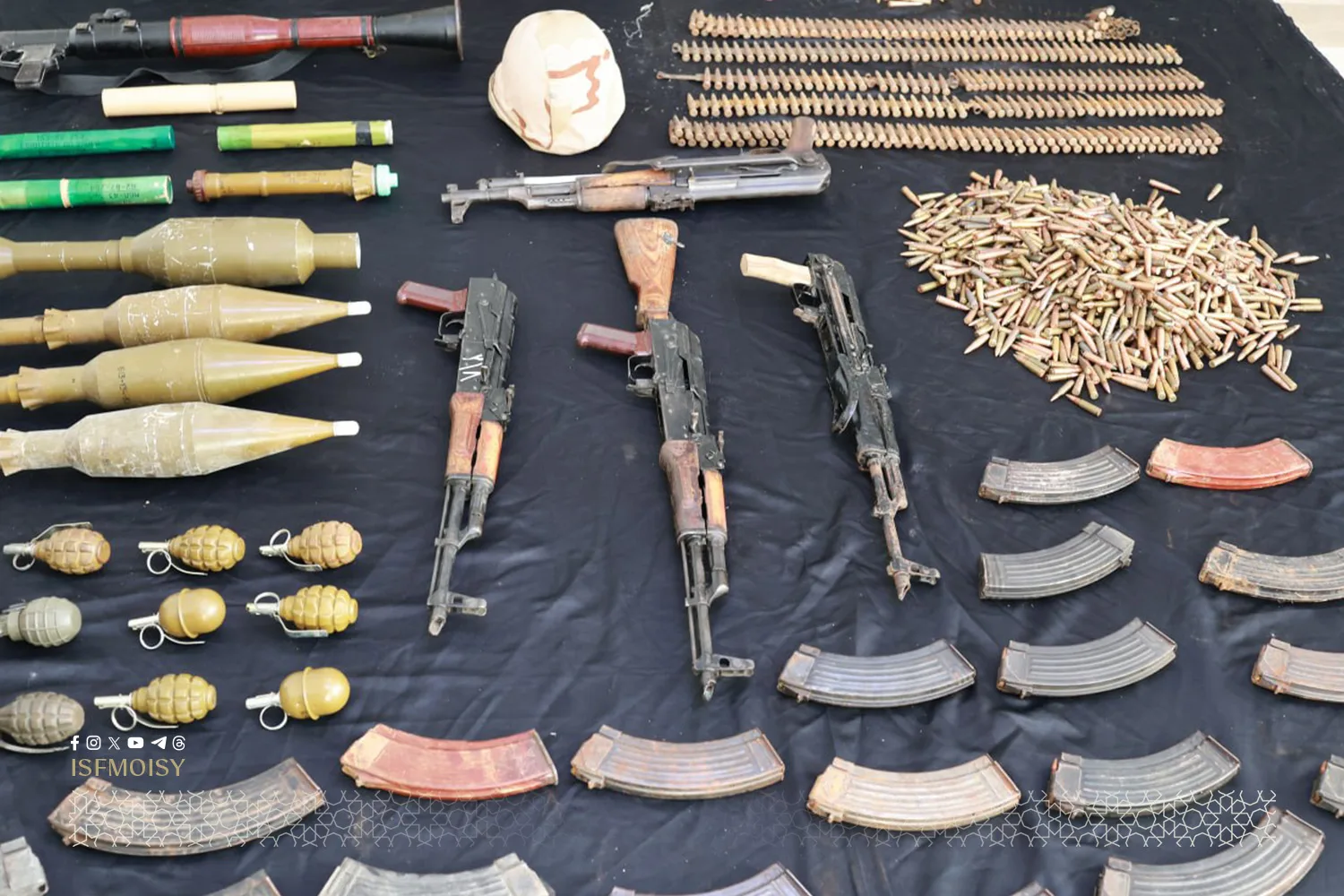
Syrian Security Seizes Weapons in Coast, Including Bombs and RPGs

New Truck Traffic Regulation in Al-Dinniyah with Sunday Ban