Lebanon
Tripoli Economic Forum Proposes Vision for Special Zone Integration with Port and Airport
The Tripoli Economic Development Forum, sponsored by Prime Minister Nawaf Salam, outlined a strategic vision to integrate the Special Economic Zone with the port and airport to boost sustainable growth in North Lebanon.

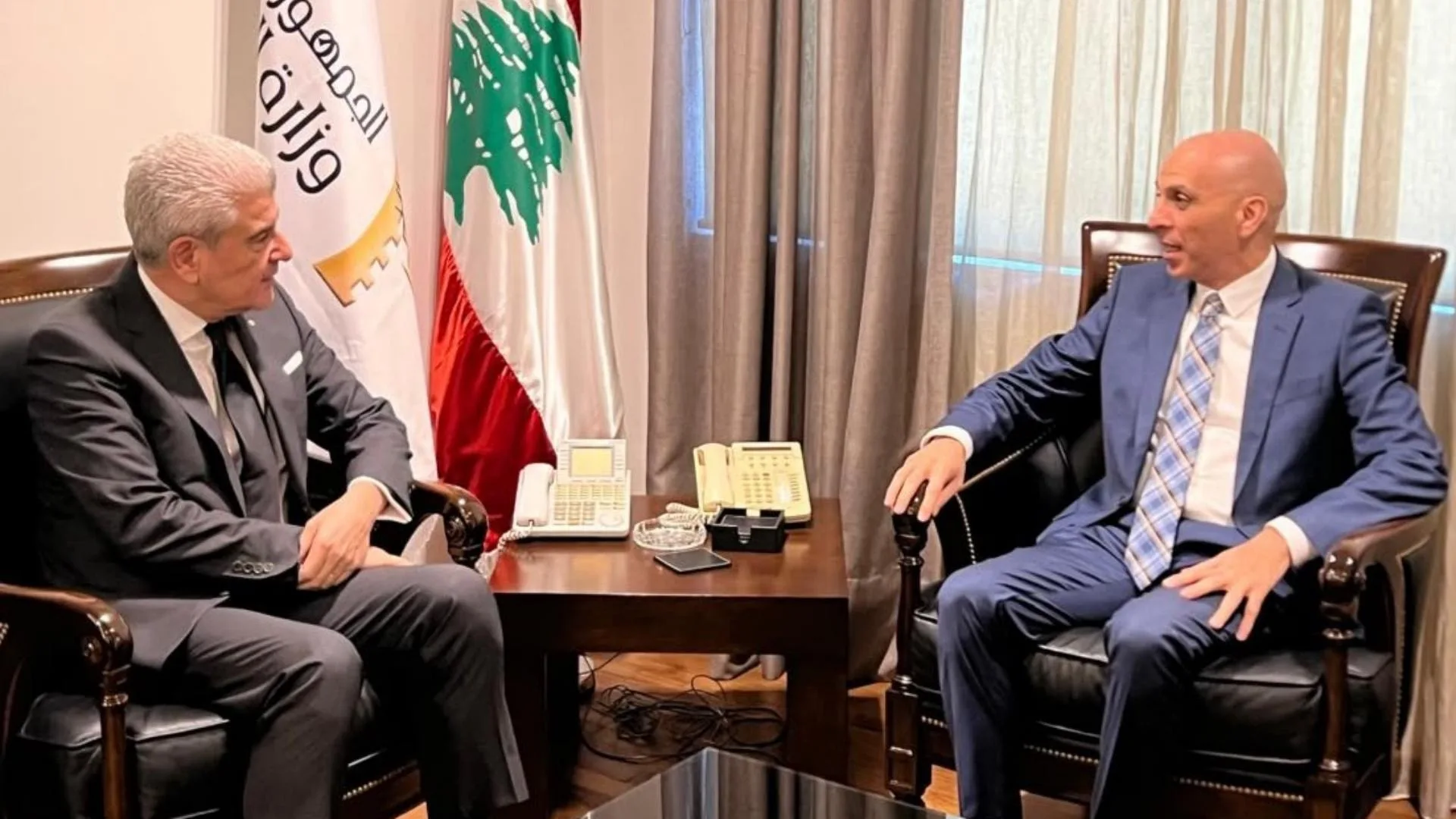
The General Authority of the Special Economic Zone in Tripoli organized the Tripoli Economic Development Forum, under the patronage of Prime Minister Dr. Nawaf Salam represented by Minister of Information Lawyer Dr. Paul Morcos. The event was held at the Engineers' Syndicate Conference Hall in North Tripoli, aiming to introduce the vision and development potential of the Special Economic Zone, open channels for constructive dialogue with the local community, strengthen public-private partnerships, and develop logistical integration between the zone, the Port of Tripoli, and transport networks, thereby building trust and achieving sustainable economic development in Tripoli and North Lebanon.
Attending the opening ceremony were MPs Fadi Karam, Elie Khoury, and Jamil Abboud; representatives of MPs Karim Kabbara and Ashraf Rifi; UN Resident Coordinator and Humanitarian Affairs Coordinator in Lebanon Imran Riza; North Governor Iman Al-Rafei; Chairman of the Board of Directors of the Rashid Karami International Fair Dr. Hani Shaarani; Mayor of Tripoli Abdul Hamid Karima; President of the Fayhaa Municipal Union Wael Zmarli; Mayor of Al-Mina Abdullah Kabbara; Linda Sultan representing the Chairman of the Tripoli Chamber of Commerce Tawfiq Dubisi; Chairman of the Board of Directors of the Port of Tripoli Iskandar Bandali and General Manager Ahmad Tamer; Head of the Special Economic Zone in Tripoli Dr. Hassan Dnaawi; Director of Banque du Liban in Tripoli Safwan Dnaawi; Dean of the Engineers' Syndicate in the North Shawqi Fatfat; and a gathering of northern dignitaries.
Touma
After the national anthem, Ibrahim Touma, a member of the Board of Directors of the Special Economic Zone in Tripoli, welcomed attendees and participants, emphasizing that "the meeting constitutes a space for dialogue, communication, and building genuine partnership for a better economic future for Tripoli and the North." He noted that "the first year of the Board's work, led by Dr. Hassan Dnaawi, formed a foundational stage for setting priorities and moving from planning to execution," pointing out that "the Economic Zone aims to attract investments and create job opportunities by leveraging Tripoli's assets, particularly the port, the Rashid Karami International Fair, and President Rene Moawad Airport." He stressed "the importance of integrating these facilities and linking them to regional and international markets, enhancing Tripoli's position as a regional hub for trade, logistics services, industry, and investment," affirming that "the project's success requires cooperation among public institutions, the private sector, municipalities, universities, and the local community, within a framework of transparency, governance, and mutual trust."
Bandali
For his part, Iskandar Bandali, Chairman of the Board of Directors of the Port of Tripoli, presented his intervention titled "Strategic Partnerships to Enhance Regional Connectivity," stating: "Tripoli's economic future relies on the integration of institutions and vital facilities." He emphasized "the importance of partnership between the Special Economic Zone, the Port of Tripoli, President Rene Moawad Airport, and transport networks to transform North Lebanon into a regional hub for trade, logistics services, and investment." He noted that "the port administration is implementing a program to develop infrastructure and modernize services," indicating that "the tender for the first phase of expanding the current container terminal is expected soon, raising its capacity to approximately 800,000 TEUs annually, while plans for a second terminal aim to increase the port's total capacity to around 1.8 million containers per year." He clarified that "the development plan also includes upgrading warehouses and logistics facilities, improving customs inspection infrastructure, and developing digital systems." Regarding cooperation with the Special Economic Zone, he mentioned "the signing of a memorandum of understanding between both sides, whereby the port administration will fund a consultancy study covering the reference model for the zone, licensing system, legal and regulatory framework, and one-stop-shop mechanism, to provide a transparent and competitive investment environment." He affirmed "the importance of moving towards operational integration between the two entities by facilitating customs procedures, digital connectivity, coordination of logistics services, and joint promotion of investments, making the port and the economic zone an integrated investment ecosystem." He stressed that "reconnecting the Port of Tripoli to the railway network up to the Syrian border in Al-Aboudieh is a strategic priority," revealing that the port administration "is funding a consultancy study to update engineering designs for the Tripoli-Al-Aboudieh line, in cooperation with the Railways and Public Transport Authority, paving the way for implementation phases." He also highlighted "the importance of integration with President Rene Moawad International Airport in air cargo and logistics services," noting that "linking the port, the economic zone, the airport, and railways would create a multimodal transport network enhancing North Lebanon's connection to regional and international markets." He touched upon the port's participation in the India-Middle East-Europe Economic Corridor (IMEC) Ports Club and the signing of its declaration, confirming the commitment to strengthening Tripoli's presence in future trade networks. He affirmed that "the goal extends beyond developing the port and economic zone to attracting productive investments, supporting Lebanese enterprises, creating jobs, and boosting exports," considering that "economic recovery in Lebanon can start from Tripoli and extend to various Lebanese regions and regional markets."
Sultan
Linda Sultan, Director of the Tripoli and North Chamber of Commerce, delivered the speech of Chamber Chairman Tawfiq Dubisi during the forum, confirming that "Greater Tripoli does not need to search for opportunities but possesses the assets and potential to be a key partner in shaping the future of the Lebanese economy." She indicated that "Tripoli forms an integrated economic system, comprising a port, airport, special economic zone, Rashid Karami International Fair, energy and telecommunications assets, as well as human and heritage resources," noting that "integrating these elements could transform the city into a production, commercial, and logistical platform connecting Lebanon to its Arab and international surroundings." She stressed "the importance of the Special Economic Zone as a fundamental pillar of this system," pointing out that "its success represents an economic opportunity for all of Lebanon, not just Tripoli." She also paused at the cooperation protocol signed between the Tripoli Chamber and the Special Economic Zone, considering it "a practical step to enhance institutional integration, unify efforts and expertise, attract investments, and build Arab, regional, and international partnerships that contribute to job creation and stimulate production." She affirmed that "what is required today is to move from vision to execution, and from potential to projects and investments," stressing that "Tripoli must not be on the sidelines of Lebanon's economic cycle but at its heart, transforming its facilities into an integrated economic and logistical system." She concluded by noting that "Greater Tripoli has the location, facilities, energies, and opportunities; what it needs is decision-making, partnership, clear vision, and continuous work," expressing hope that the forum would mark "the beginning of a new path of cooperation, titled: 'Greater Tripoli... From Potential to Investment, From Location to Role, From Role to Shaping the Future.'"
Riza
UN Resident Coordinator and Humanitarian Affairs Coordinator in Lebanon Imran Riza stated during an intervention titled "The Role of the United Nations in Supporting Sustainable Economic Development" that "Tripoli and the North are a priority for the United Nations due to their untapped economic assets, most notably the port, strategic location, industrial land, and young human resources." He indicated that "the Special Economic Zone in Tripoli represents a promising opportunity to attract investments, provided there are clear rules, effective infrastructure, and qualified human competencies," noting that "UN support will focus on three main axes: enhancing institutional cooperation, developing professional skills, and supporting the green economy." He stressed "the necessity of directing international support through national institutions and strengthening coordination between the economic zone, the port, the chamber, the syndicate, and municipalities, to boost confidence among investors and donors." In the labor market domain, he called for "linking vocational and university training to actual corporate needs and developing technical skills, enabling youth, especially women, to access decent employment opportunities." Regarding the green economy, he considered that "adopting renewable energy, water efficiency, waste management, and sustainable production constitutes a competitive advantage for Tripoli and opens the door to new investments and financing." He affirmed "the importance of public-private partnership as an entry point to turning plans into projects, investments, and job opportunities," noting that "the United Nations is ready to facilitate cooperation among partners, prepare investable projects, and mobilize necessary funding." He confirmed that "the United Nations will remain a long-term partner for Tripoli and the North," considering that "development success is measured by the emergence of new companies, providing jobs for youth, and transforming the North into an active partner leading Lebanon's economic recovery."
Morcos
Minister of Information Lawyer Dr. Paul Morcos delivered a speech conveying greetings from President Salam, who "honored me by tasking me to represent him today at this forum," thanking the General Authority of the Special Economic Zone in Tripoli for organizing the meeting and the Engineers' Syndicate in Tripoli and the North for hosting it. He said: "When we talk about economic recovery from Tripoli, we think of the young person looking for a job after graduation, the factory owner in the North wanting to expand production, and the farmer in Akkar, for example, who needs to get his produce to market at an affordable cost. These are known needs that must be considered when determining public investment priorities." Minister Morcos noted that "the Lebanese Constitution made balanced development a fundamental pillar of state unity and system stability," indicating that "the reform and rescue government translates this principle when linking public investment to each region's ability to produce and establish job opportunities." He considered that "Tripoli, with its port, economic and educational institutions, and industrial and commercial expertise, is capable of playing a key role in this recovery. The more the North's capacity for production and export increases, the wider the base of the Lebanese economy becomes and the deeper its ability to regain growth." He added: "Hence comes the government's support for activating the Special Economic Zone in Tripoli. The Council of Ministers approved studies related to the industrial and logistics center and authorized the Authority to proceed with qualification procedures to select an international developer and operator. This step allows moving to a phase requiring coordinated work between the Authority, relevant administrations, and the port, so investors know the participation conditions, how decisions are made, and what services they can rely on when starting operations." He continued: "The Special Economic Zone benefits from the Port of Tripoli. A company manufacturing goods here can pack, store, and ship them from the same place or nearby. For instance, there are more than one agricultural cooperative in Akkar. When sorting, cooling, and packing services are available near the port and shipping is easier, they can sell their produce in farther markets and retain a larger share of revenues. At the same time, northern institutions can expand their businesses by providing transport, maintenance, and other services to companies operating in the zone." Minister Morcos completed: "Therefore, the government placed the activation of the Special Economic Zone within a broader vision for the North and Akkar, including developing the Port of Tripoli, reviving the file of President Rene Moawad Airport in Qlayaat, the railway project, the Rashid Karami International Fair, and the oil supply project via North Lebanon (with the opening of the Arida crossing yesterday)." He noted that "each project has its path and requirements. The required work is coordination from the planning stage, so investments in transport, trade, and services complement each other and benefit institutions and residents in Tripoli, Al-Mina, and other areas of Akkar and the North." Minister Morcos saw that "it is the state's duty to show investors where to submit license applications, what documents are required, and how long the process takes. It is also its duty to ensure fair competition and consider worker safety and environmental protection in development and operation conditions." Welcoming "the renewal of the cooperation protocol between the Zone Authority and the Tripoli and North Lebanon Chamber of Commerce, Industry, and Agriculture," he said: "The value of this cooperation appears when it facilitates companies' understanding of licensing procedures and benefiting from available laboratory services and technical expertise," considering that "municipalities, syndicates, universities, and technical institutes also have a fundamental role. Through dialogue with companies that will operate in the zone, education and training institutions can know in advance what skills are needed for employment and prepare young men and women for these opportunities." Minister Morcos affirmed that "the people of the area and business owners know where transport bottlenecks occur, what services producers lack, and what makes commuting difficult for workers. Therefore, it is important for the Authority and concerned parties to listen to them as they prepare to operate the zone." He addressed "the Lebanese private sector, Lebanese expatriates, and our Arab and international partners," inviting them "to learn about the opportunities this project offers and participate with your expertise and investments in its development," announcing that "Tripoli needs investments that leverage its location and people's expertise, expand its institutions' production capacity, and build long-term working relationships with suppliers and local companies." He saw that "the zone's success is measured by what is achieved on the ground. How many job opportunities were created for locals? How many local companies now supply goods or services to institutions operating there? Has getting goods to markets become faster and cheaper?" Minister Morcos concluded by affirming "on behalf of the Prime Minister, the government's support for activating the Special Economic Zone," thanking "everyone working on this project," and wishing that "today's discussions help determine what should be accomplished in the next phase."
Dnaawi
Hassan Dnaawi, Head of the Special Economic Zone in Tripoli, indicated that "the city, which historically served as Lebanon's gateway to the world, is preparing to reclaim its economic role," considering that "the Special Economic Zone forms a fundamental lever for uplifting Tripoli and the North and reducing youth migration by providing job opportunities and sustainable investments." In a presentation given during the closing of the forum's opening ceremony, he noted that "the zone is not just a paper project but a practical initiative aimed at attracting local, Arab, and international investments, enhancing production, exports, and innovation, and giving youth the chance to stay in their city and expatriates the chance to return." He pointed to "achieving practical steps in the project's path, most notably launching an international tender, through public-private partnership, to develop, manage, and operate the industrial and logistics center adjacent to the Port of Tripoli, launching the licensing system and one-stop shop last October to facilitate investor transactions, alongside starting works to develop the Special Economic Zone building." He clarified that "the project's impact exceeds the zone's boundaries, as it is expected to contribute to attracting foreign investments, increasing Lebanese exports, enhancing the role of the Port of Tripoli as a regional hub for trade, logistics services, and reconstruction, in addition to providing thousands of direct and indirect job opportunities, especially for youth and women." He considered that "the zone's success will form a model for reform, governance, and public-private partnership, and proof of Lebanon's ability to provide a competitive investment environment." Dnaawi thanked President Joseph Aoun, Prime Minister Nawaf Salam, and the Cabinet for "their support and follow-up of the project," and commended the role of the private sector, the Engineers' Syndicate, speakers, participants, and board members in ensuring its success. He concluded by affirming that "Tripoli does not ask for pity but for opportunity," stressing that "the goal is to turn stories of migration into stories of return and success, and for the city's young men and women to find opportunities to build their future in their hometown."
Latest news
Aoun Receives Heikal to Discuss Security Situation in Lebanon and the South
Salam Receives Economic Bodies and Discusses Their Demands to Enhance Economic Stability

Operating Passenger Transport by Motorcycles for a Fee Is Illegal