Lebanon
Fayez Rasamni from Beirut Port: No Reform Without Revenues and No Justice Without Fairness for Public Sector Employees
Minister of Public Works and Transport Fayez Rasamni called for a minute of silence for the souls of the martyrs of the Israeli aggression and the victims of the Beirut Port explosion, emphasizing that the port has once again proven to be Lebanon's lifeline.
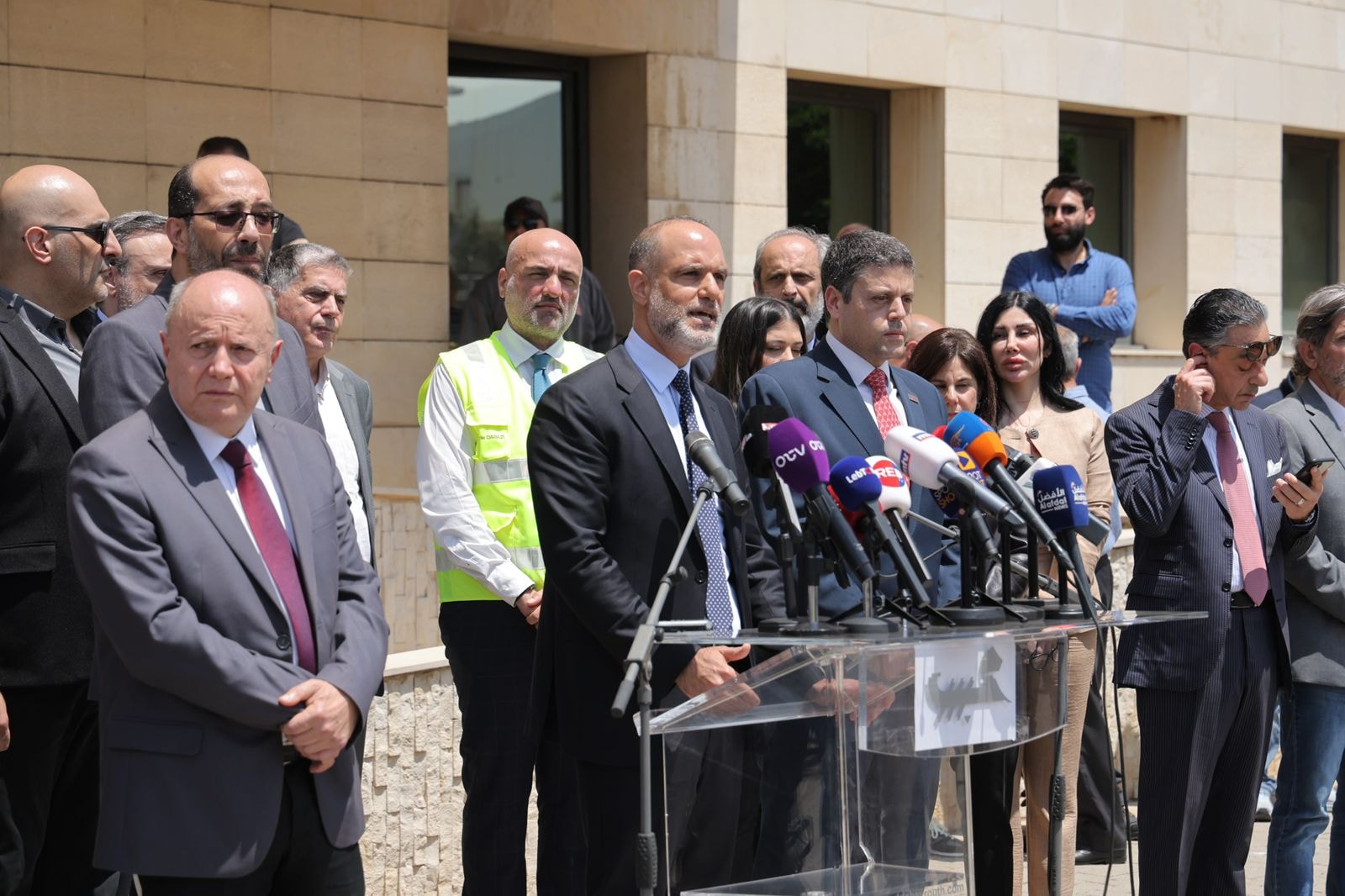
Rasamni: No reform without revenues, and no justice without fairness for public sector employees
The management and investment of the Port of Beirut held a celebration on the occasion of Labor Day, today, Thursday, in the presence of the Minister of Public Works and Transport, Mr. Fayez Rasamni, the Chairman of the Board and Director-General of the Port, Marwan El-Neffi, and the Head of the General Labor Union, Dr. Bechara El-Asmar, alongside the Board of Directors, workers and employees, representatives of the unions operating in and dealing with it, maritime agents, a delegation from the CMA BT container terminal, in addition to representatives of the security agencies also operating in the port.
Minister of Public Works and Transport Fayez Rasamni called for a minute of silence for the souls of the martyrs of the Israeli aggression and the victims of the Beirut Port explosion, emphasizing that the port “has once again proven to be Lebanon's lifeline, as it managed, thanks to the efforts of its workers, to secure vital supplies of food and medicine in the most difficult circumstances, and continued to operate even during holidays and weekends.”
He pointed out that the goal is to achieve 24/7 operation of the port, seven days a week, comparable to global ports, considering that what has been achieved to date reflects an exceptional commitment from the workers.
Speaking about the employees' conditions, the Minister acknowledged the difficulty of the phase, stating that he wished he could address them under circumstances that guaranteed their full rights, but the crisis Lebanon is experiencing imposes a different reality. He simultaneously stressed his commitment to working on two parallel tracks: addressing the shortcomings revealed by the port disaster, and completing the reform process within this vital facility.
He revealed that during an extended meeting, he reviewed precise details related to security and administrative shortcomings within the port, which allowed for a clear picture of the points of failure, much of which is due to negligence and mismanagement, while emphasizing that the final say remains with the judiciary.
In the context of reform, he noted that the introduction of scanner devices constitutes a fundamental step within an integrated system to enhance security and increase revenues, considering these measures essential for restoring regular operations within the port.
Rasamni addressed the broader challenges facing the state, particularly the salary scale issue, considering it illogical to demand employees to give their best amidst insufficient incomes, at a time when addressing this issue remains dependent on securing sustainable financial resources.
He also drew attention to the existing disparity between the public and private sectors, noting that public sector employees bear the greatest burden despite limited resources, especially with their number declining to only about eight thousand employees, excluding the Ministry of Education and security agencies, which places on them the responsibility of managing the state under highly complex circumstances.
He concluded by affirming that the current phase requires national awareness and additional sacrifices to rebuild state institutions, stating: “Words on Labor Day may not be enough to express the extent of my appreciation, but I pledge to continue working daily to achieve the required reforms, because our goal is one: to build a state capable of serving its citizens as it should.”
The Chairman of the Board and Director-General of the Port of Beirut, Marwan El-Neffi, extended greetings to the workers and employees, describing them as "colleagues," a title he considered an honor bestowed upon him by the Cabinet's decision to appoint him to this position.
El-Neffi emphasized the strategic importance of the port as the vital artery of the national economy and the primary maritime gateway for Lebanon and the region, stressing that the strength of this facility lies not only in its equipment or stones but in the "beating hearts" of its workers who have maintained its continuity and momentum for 139 years.
He noted that the port, just like the nation, managed to overcome difficult circumstances thanks to the solidarity of everyone, from operations management to projects and studies, and the CMA BT container terminal, to security and safety, maintenance teams, and guards, pointing out that the present we live in today is the fruit of the work of those who preceded us, while "the future is currently being written."
El-Neffi did not overlook the humanitarian aspect and the great sacrifices, solemnly recalling the martyrs of the August 4 explosion from among the port's personnel, listing their names as a symbol of loyalty, and also saluting the injured who continue their contributions, concluding by affirming that the true celebration of Labor Day is the daily achievement that ensures the port remains a continuous economic beacon.
The Head of the General Labor Union, Dr. Bechara El-Asmar, began by greeting the workers of Lebanon in both the public and private sectors amidst the difficult economic conditions Lebanon has been experiencing since 2019, and the accompanying continuous security targeting in the South and various regions. He also extended greetings to the Minister of Public Works and Transport and the Chairman of the Board and Director-General of the Port of Beirut, praising the cooperation with the Ministry of Finance and the efforts of the Port of Beirut's workers and employees that restored the port to the global economic map, especially after the explosion that destroyed large parts of it.
He considered the Minister and the Chairman of the Board to be the "first two workers" for the spirit of cooperation their work reflects, which brought the port to this advanced stage, affirming that this model embodies the role of the labor movement in revitalizing investment institutions that form the backbone of economic life in Lebanon.
El-Asmar called on politicians to reduce bickering and accusations because politics weakens constructive efforts, emphasizing the need to restore dignity to the labor movement, which has lost a significant portion of its rights. He revealed that he followed up with the Minister of Finance on the issue of the six salaries, but their implementation proved difficult due to their cost, amounting to about $800 million annually, which exceeds the treasury's capacity.
He concluded with the hope that the Port of Beirut model, based on cooperation between the Ministry, the Port management, and the CMA container terminal management, would be generalized to various sectors due to the tangible results it achieves.
Related articles
Al-Rahi Calls for a Shift from Passive Waiting to Active Work

Education Leagues: Approving Six Salaries Is a Small Part of Our Rights

A breathtaking scene.. Failed in a robbery, so he shot at the residents!