·
·

Lebanon
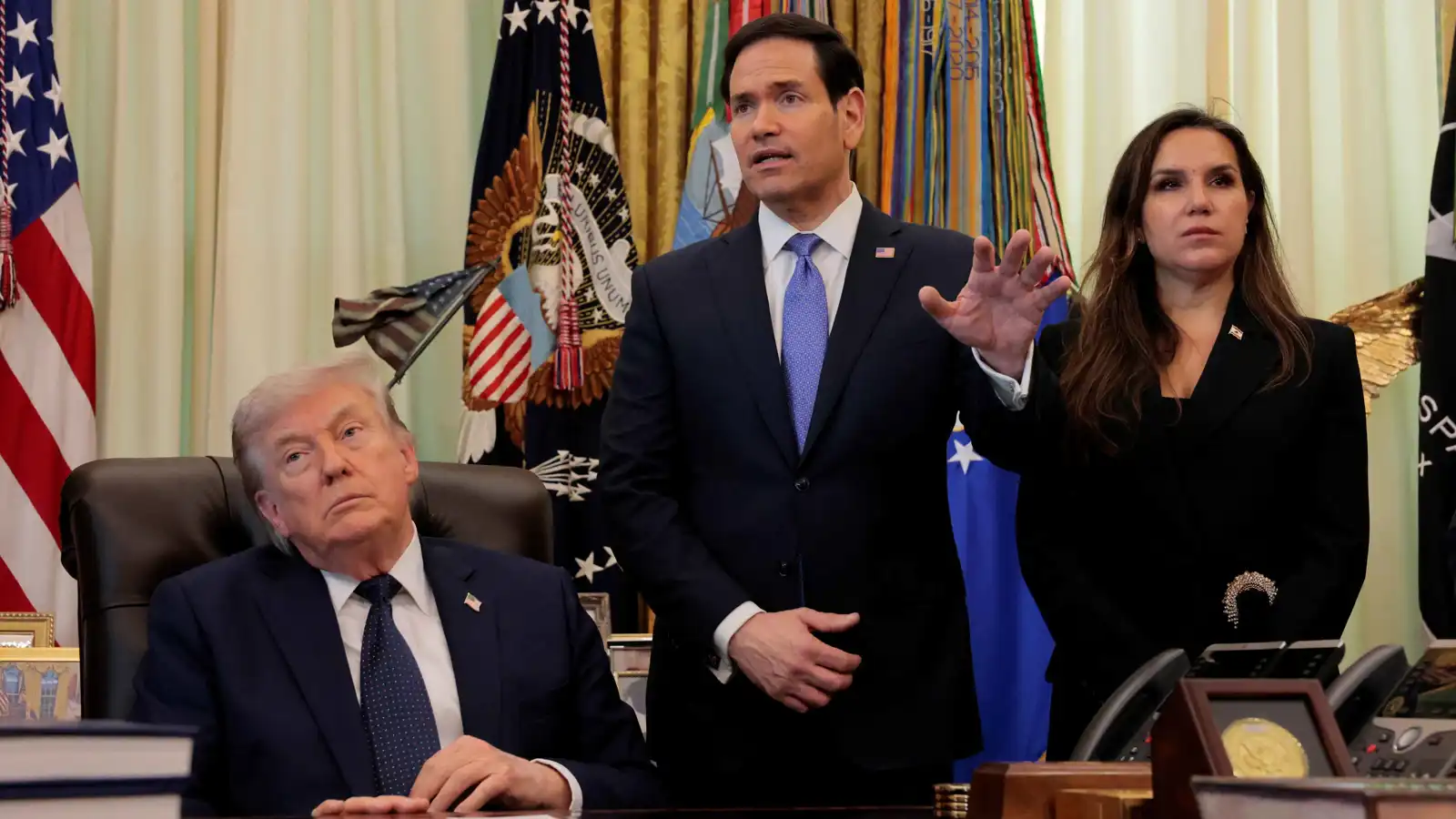
U.S. Secretary of State Marco Rubio said Monday that the current ceasefire between Israel and Lebanon is "unique," asserting that "Lebanon and Israel are not in a state of war" and that Israel's problem "lies with Hezbollah, which is launching attacks against Tel Aviv."
Rubio added, in an interview with Fox News on Monday: "What I have observed from efforts to reach an agreement between Israel and Lebanon — which have been very successful — is that the Lebanese and the Israelis are seeking peace and have no dispute with each other. Israel is not claiming any territory in Lebanon; there is no part of Lebanon that Israel claims to own," he said.
He added: "Israel's problem is not with Lebanon, but with Hezbollah. And incidentally, the Lebanese have acknowledged that Hezbollah is a problem for them too. Israel is not the only victim of Hezbollah — the Lebanese are as well," as he stated in the interview.
The American secretary said that "current efforts are focused first on the ceasefire and ensuring that defensive operations continue within the ceasefire agreement."
He stated that "Israel has the right to defend itself against any imminent or ongoing attack from Hezbollah elements."
Israel has been conducting daily strikes on Lebanon since the ceasefire, while its forces continue the systematic demolition of some 55 Lebanese border villages, issuing near-daily evacuation orders to residents of border villages, blocking displaced persons from returning to the area south of the Litani River and its surrounding valleys, and establishing what it calls a "buffer zone" inside Lebanese territory.
"A Strong Lebanese Army"
Rubio added that "both sides agree that the solution lies in having an armed Lebanese army capable of disarming Hezbollah — and that is what we are seeking to achieve through an effective system in which trained and equipped units within the Lebanese army have the ability to confront and dismantle Hezbollah elements, so that Israel does not have to do it."
Regarding recent Israeli strikes, the American secretary said: "We are aware that they will occur, and the agreement makes clear that Israel has the right to respond to any imminent Hezbollah attack on northern villages," as he stated.
Rubio described recent Israeli attacks on Lebanon as "defensive measures, entirely different from a large-scale campaign."
"There Is No Lebanese-Israeli Conflict"
On the possibility of Beirut joining peace agreements with Israel, Rubio said "the situation has not reached that stage yet."
He continued: "It would be very promising, but we have not reached that point yet. What we see is that there is no Lebanese-Israeli conflict in the direct sense. The conflict is entirely with Hezbollah. And the latter is not only at war with Israel, but also with the Lebanese state itself."
Rubio said that "the only thing Hezbollah has brought to Lebanon — a foreign force operating inside it as a proxy of the Iranian regime — is suffering and destruction. There must be one government, one army inside Lebanon, subordinate to the Lebanese government. That is the entity we must empower."
The Israeli Buffer Zone in Lebanon
When asked whether the American administration is open to a scenario in which Israel permanently maintains a buffer zone inside Lebanon, Rubio answered: "No, I don't think the Israelis want that permanently. I think if you asked them they would tell you the ideal outcome is a strong Lebanese government and a Lebanese army capable of dismantling Hezbollah, preventing it from launching these attacks, and ensuring it does not exist in the future as a military unit. That is the ideal outcome the Israelis are seeking, and I believe that is what the Lebanese want too."
He added: "The short-term problem we face is that the Lebanese army, though willing, does not currently have the full capacity to confront all the threats posed by Hezbollah inside Lebanon," as he stated.
He continued: "Therefore, I believe the ideal outcome would be that there is no need for an Israeli presence. The Israelis do not want to stay in Lebanon permanently. Their current presence is limited to a buffer zone to protect Israeli villages from small-arms fire, anti-tank missiles, and sometimes longer-range rockets. But in the long run, Israel has not claimed any territory in Lebanon."
Al-Sharq