·
·

Lebanon
A meeting was held at the Ministry of Finance, attended by the Minister of Finance Yassin Jaber, the Minister of State for Technology and Artificial Intelligence Kamal Shehadeh, representatives from VISA, and experts from both ministries. The meeting focused on exploring the possibilities of developing a unified national platform for digital payments in Lebanon, in line with best international practices to enhance public services and state financial administration.
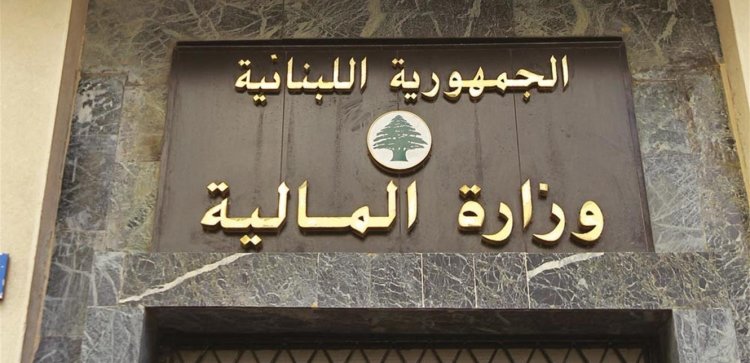
A meeting was held at the Ministry of Finance, attended by the Minister of Finance Yassin Jaber, the Minister of State for Technology and Artificial Intelligence Kamal Shehadeh, representatives from VISA, and experts from both ministries. The meeting was dedicated to discussing the possibilities of developing a unified national platform for digital payments in Lebanon, in line with best international practices and to enhance the modernization of public services and the state's financial administration.
The meeting included a presentation of an integrated vision for establishing a modern digital infrastructure for government payments, enabling citizens and institutions to pay taxes, fees, fines, and all other official transactions electronically in a secure, transparent, and fast manner, via mobile phones and various digital channels. This aims to reduce cash transactions, enhance operational efficiency, improve user experience, and raise the level of oversight and financial traceability.
A delegation from VISA presented successful models from countries that have adopted unified platforms for government services and payments, such as the United Arab Emirates, Singapore, Estonia, and Jordan. These experiences have contributed to increasing collection rates, expanding financial inclusion, facilitating citizens' access to public services, and enhancing the digital relationship between citizens and the state through advanced applications and platforms.
During the presentation, Minister Jaber outlined the vision that the Ministry of Finance will pursue as part of the reform and modernization process, noting that "the development of electronic payment and collection systems constitutes a fundamental priority within the public financial administration modernization plan, due to its direct impact on increasing transparency, improving collection, accelerating revenues, and simplifying procedures for citizens and institutions." He added: "The Ministry views this project as part of a broader vision aimed at building a more efficient, effective, and responsive state to the needs of its citizens."
For his part, Minister Shehadeh emphasized the importance of integration between financial policies and digital transformation, considering that "building a modern economy requires strategic partnerships with leading global institutions, and the transfer of expertise and technology to serve the national interest."
He added: "This path begins and ends at the Ministry of Finance, as it is the primary and pivotal entity in this national project, given its central role in managing public revenues, developing government financial services, and leading the institutional modernization and financial digital transformation process in Lebanon."
The discussion covered the operational and technical aspects of the project, including settlement mechanisms and direct transfer to the treasury account, immediate financial reconciliation, risk management, cybersecurity, fee structure, and defining an operational model in partnership with the private sector that reduces investment burdens on the state and ensures service sustainability according to clear performance indicators and advanced international standards.
At the end of the meeting, it was agreed to continue technical and institutional consultations and to prepare a comparative study in the coming days showing the added value of the unified national platform compared to current systems, in addition to developing an implementation roadmap that includes the relevant government bodies and public institutions, in preparation for adopting the most suitable model for Lebanon and commencing implementation according to the state's priorities and national needs.
After the meeting, Ministers Jaber and Shehadeh spoke to journalists:
Minister Jaber
Minister Jaber said: "Despite all the difficult circumstances we are going through, it is essential to continue planning and working for a better future for Lebanon. Here, I would like to thank Minister Shehadeh for his participation, the working team, and representatives from VISA, with whom we discussed what we intend to establish, which is a digital PLATFORM through which we can transition to other methods to facilitate payment processes for the state and other institutions. We, at the Ministry of Finance, have completed a phase in this direction, where citizens can now pay using credit cards and e-wallets through transfer companies, but there are still areas where we can make further progress, and that is what we are working on."
Minister Shehadeh
Minister Shehadeh said: "We are always with you in partnership, a partnership to provide better and easier services for citizens and the state. Based on this principle, we wanted to propose the idea of establishing a unified payment platform for all Lebanese administrations in a way that simplifies matters for citizens and, at the same time, expedites the Ministry of Finance's collection of its dues for the treasury in a better, more transparent, and systematically traceable manner, showing the payment path to the public treasury. This is considered an important part of the financial reforms that the Ministry of Finance is working on, and we, in turn, presented a detailed overview of what we are working on in this area and the technologically advanced ideas used by the developed world, and we hope to be able to implement these ideas. Our ambition, as Minister Jaber indicated, is that we are confident we are heading towards better days, and we must build for a better country and better service."
Minister Shehadeh was asked: How can we practically explain to citizens the nature of this service and how to use it? He replied: "The idea, in short, is that any citizen downloads an application on their mobile phone, through which they can pay all service obligations for all ministries, government institutions, or those owned by the Lebanese state, and others as well, as the platform is not limited only to state institutions; it can also be made available for use in payment areas for other institutions. In addition to this payment-related aspect, its importance extends to allowing citizens to clearly know their due obligations, thereby reducing their transaction costs, as through this platform, we will achieve the lowest commission rates borne by the citizen to obtain such services."
He concluded: "Here, it must be noted that with the establishment of this service, banks and money transfer companies that provide collection services to the Lebanese state can continue their existing work in this area. It is not a platform that replaces them, but rather a complementary platform to their work, and its purpose is to bring together all payment methods and all institutions into a unified platform, similar to developed countries."