·
·


Tech & Science
New research from the University of California, Riverside reveals that fruit flies can survive and adapt to extreme hypergravity conditions up to 13 times Earth's gravitational pull.

In a discovery that challenges assumptions about biological limits, scientists at the University of California, Riverside have found that fruit flies can not only survive but also adapt to extreme hypergravity. The research, published recently, exposed the insects to gravitational forces as high as 13G, a level far exceeding what humans can typically endure.
While fighter pilots train to withstand brief bursts of up to 9G before experiencing blackout, these tiny organisms demonstrated remarkable resilience, reproducing and eventually recovering normal behavior even after prolonged exposure to such intense conditions.
To conduct their study, the research team utilized a custom-built centrifuge designed to simulate hypergravity conditions significantly stronger than Earth's natural pull. Movement patterns of the fruit flies were meticulously tracked using advanced infrared sensors and climbing tests.
"The centrifuge is like a merry-go-round," explained Arumugam Amogh, one of the researchers. "The faster you go, the more you feel pulled outward. That's hypergravity."
The initial findings presented a surprising pattern. After 24 hours at 4G, the fruit flies exhibited hyperactivity. However, as the gravitational force increased to 7G, 10G, and even 13G, their activity levels sharply decreased.
"When flies experienced four times Earth's gravity, or 4G, for 24 hours, they became hyperactive," said Ysabel Giraldo, another researcher on the team. "But at higher levels of 7G, 10G, and 13G, the pattern reversed: Instead of becoming hyperactive, the flies became less active, and they didn't climb as much."
The study extended beyond short-term observations, tracking the flies across their entire lifespans and even over multiple generations. Despite the initial behavioral changes, flies exposed to hypergravity, including those at 4G who remained hyperactive for weeks, eventually returned to their normal behaviors over time.
This recovery suggests a biological system capable of adapting under severe stress rather than succumbing to it. Researchers hypothesize that the brain may adjust its energy utilization in response to gravitational changes.
"We believe what we're seeing is that gravity feeds directly into the brain's decision-making around energy use and movement," Amogh noted. "It helps determine whether to act or conserve energy."
Further observations revealed corresponding shifts in the flies' fat storage and metabolic rates, indicating a direct link between energy expenditure and movement patterns under varying gravitational conditions.
This research offers crucial new insights into how gravity influences biological systems, particularly by focusing on the effects of hypergravity—a contrast to much existing research which concentrates on microgravity experienced in space.
Remarkably, the team successfully raised fruit flies for ten consecutive generations under constant hypergravity. These insects lived, mated, and reproduced successfully under sustained stress, challenging previous assumptions about the long-term viability of life in extreme environments.
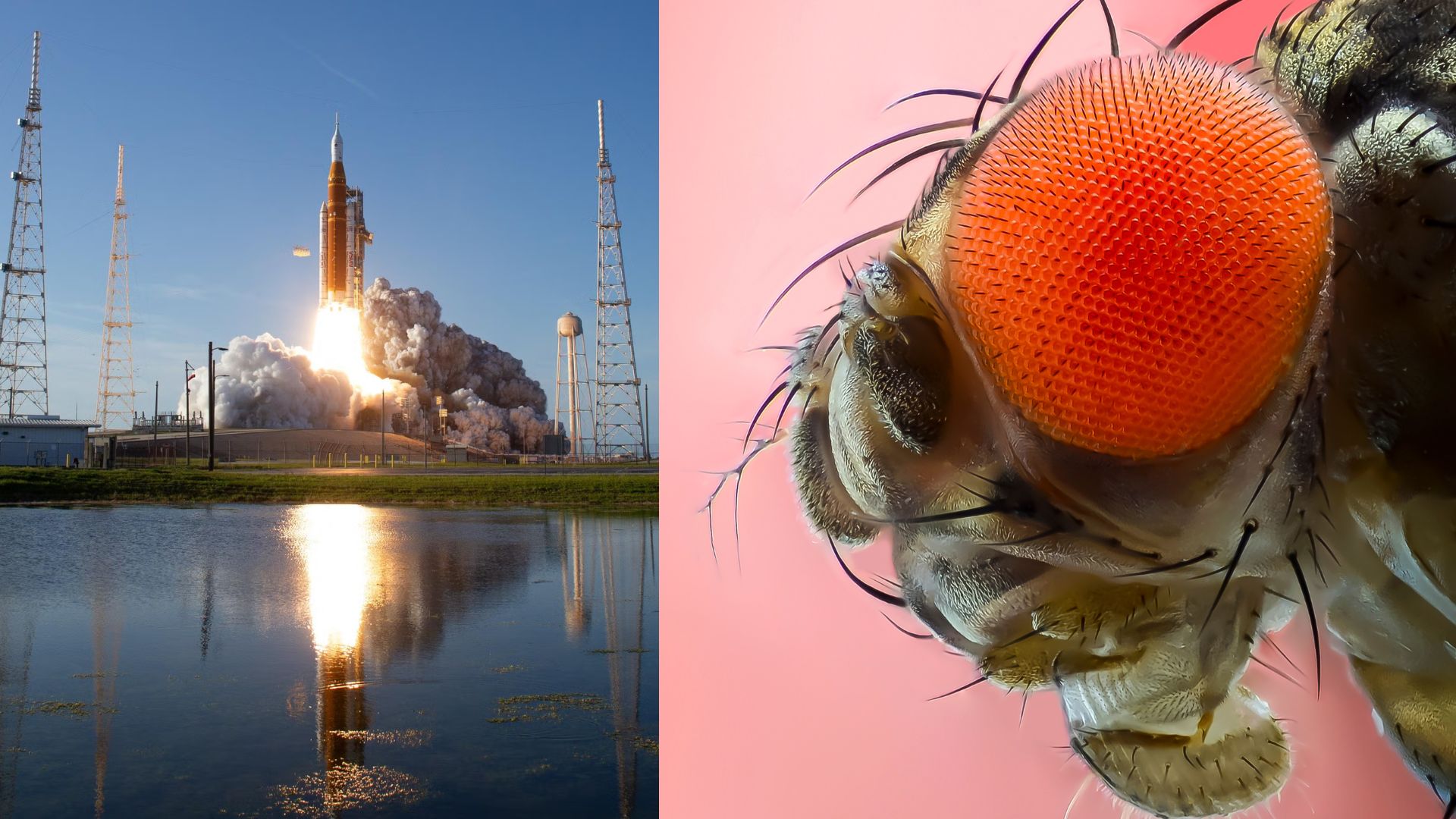
The findings have significant implications for understanding how human bodies might respond to high-G conditions, relevant for fighter pilots and astronauts during spaceflight and re-entry to Earth. As ambitious missions like Artemis II aim to send humans further into space, comprehending the full spectrum of gravity's effects becomes increasingly vital.
"I think our study is really timely," Giraldo commented. "The link between gravity, physiology, and energy use will only become increasingly important to understand as space travel is poised to become more common in the future."
The study was published in the Journal of Experimental Biology.