

Tech & Science
SpaceX catches Starship on launch pad in historic orbital return
SpaceX successfully caught its Starship spacecraft with mechanical arms at the Texas launch site, marking a major milestone for reusable rocket technology.

Elon Musk’s SpaceX achieved an unprecedented technical feat on Saturday by successfully catching a spacecraft returning from orbit. The company executed the first-ever retrieval of a vehicle after its re-entry, reinforcing the viability of fully reusable rockets and opening new possibilities for low-cost space travel.
The catch sequence explained
The spacecraft emerged from clouds after enduring intense heat during atmospheric re-entry. It descended slowly over the Starbase facility in Texas before sliding vertically between mechanical "arms" atop Launch Pad 2. This success represents a significant step toward developing fully reusable rocket systems, which could drastically lower mission costs and enable higher launch frequencies.
SpaceX spokesperson Dan Hot described the moment as the desired achievement in spaceflight: "The vehicle falls through fire to be caught by steel arms from the air. We caught Starship, and now everything will change." Crowds gathered near Starbase cheered as the craft settled between the robotic arms during the fifteenth test flight of the world's largest and most powerful rocket system. Musk shared videos of the capture, commenting that it "looks great."
Mission details and statistics
The Starship vehicle completed 14 orbits around Earth and deployed 26 satellites into orbit for Musk’s Starlink internet network during a journey lasting 22 hours. Catching the spacecraft proved more complex than retrieving the booster stage, which SpaceX has recovered three times previously. Starship descended from a higher altitude and at significantly greater speed.
Jessica Anderson, head of the Starship program, confirmed that the operation proves the feasibility of recovering a full orbital launch vehicle at its launch pad. Clayton Swope, a space affairs expert at the Center for Strategic and International Studies, called the mission a "huge technical achievement" demonstrating the practicality of full Starship reuse. Kathleen Curley, an analyst at Georgetown University’s Center for Emerging Security and Technology, noted that repeated successes are essential to prove SpaceX can handle sensitive payloads and missions.
Return path and engineering challenges
SpaceX engineers designed the return trajectory so the vehicle would pass over sparsely populated desert areas and several towns. The craft executed a wide turn around cities in the Rio Grande Valley in Texas to approach the landing site from the east. Lars Blackmore, a senior engineer at the company, explained that the control team cannot intervene for 21 minutes while flying over land, making the process precise and tense.
Starship variants are designed to place internet satellites and data centers into orbit, alongside versions intended for transporting humans to the Moon and Mars. NASA relies on Starship to serve as a lunar lander within the Artemis program. Agency Director Jared Isaacman congratulated Musk and SpaceX on the X platform, stating the achievement is a crucial step toward the Moon.
Future goals and production scaling
Musk views Starship as a cornerstone for rapid-reuse rockets, aiming for very frequent launches to easily transport payloads like satellites and data centers into space. Despite the success, SpaceX faces engineering hurdles such as transferring fuel to the vehicle in orbit, a necessary step for Moon and Mars trips that remains unsolved. The Super Heavy booster also requires further refinement after a technical fault during its descent led to its automatic destruction in the Gulf of Mexico.
The company is investing heavily to expand production and launch capabilities. SpaceX has reached a rate of producing one spacecraft every two weeks and one booster stage every four weeks.
Latest news
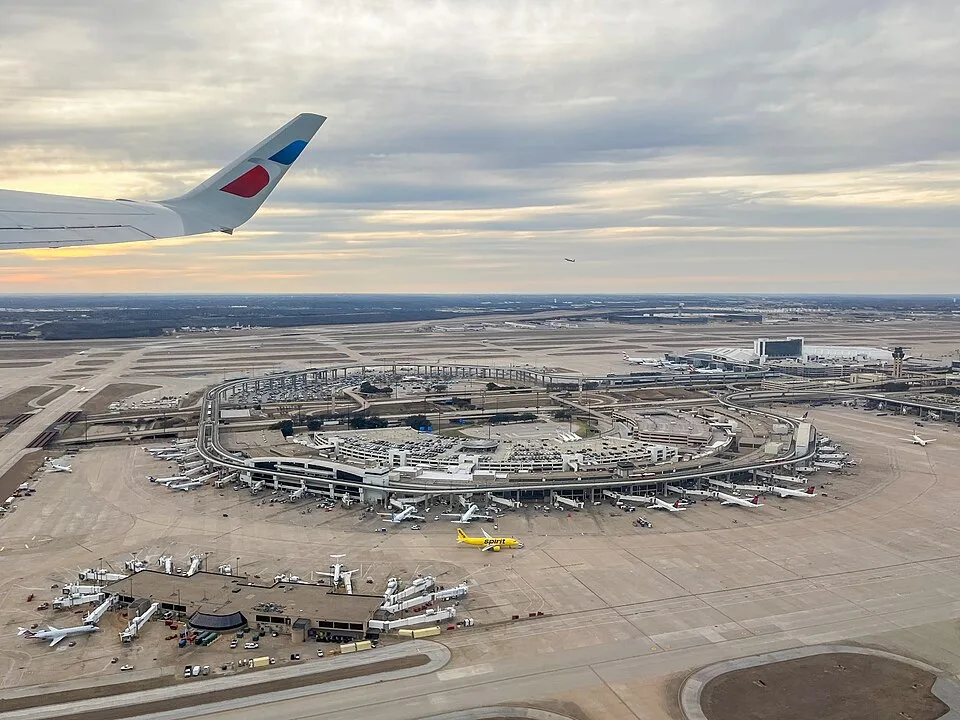
Dallas Fort Worth Airport Shuts Down Amid Bomb Threat Reports

Federal Judge Halts Trump's Plan to Renovate Washington Golf Course

Myanmar Air Strike Kills 12 at Displaced Persons Camp
