·
·


World
Health Minister Rakan Nasrallah emphasized that political disagreements within the government must not paralyze its function, stressing unity and prioritizing decisions benefiting all Lebanese citizens. He detailed the Ministry of Health's expanded role in treating injured from the port explosion and enhancing emergency care across the country.

Minister of Health Rakan Nasrallah affirmed that "differences of opinion within the government must not turn into conflicts that obstruct its work," stressing that "the government is expected to function as a single team, with priority remaining on addressing pending issues and making decisions that serve the interest of the Lebanese citizen."
He noted that "the debate during the parliamentary session between Prime Minister Najib Mikati and Minister of Defense Michel Moawad should be resolved within governmental frameworks," highlighting "President Mikati’s statement that he speaks on behalf of the entire government." He also observed that "the afternoon session was more calm," expressing hope that "this calm continues to allow for decisions that benefit the Lebanese people," while underscoring "the importance of resolving pending legislation, alleviating injustice for some detainees, and safeguarding the rights of military personnel, civilians, and victims."
In response to questions about his political stance within the government, Nasrallah clarified that "the Ministry of Health is a ministry for all Lebanese," explaining that he conducts his ministerial duties based on this principle, affirming that "national loyalty and serving citizens are the benchmarks in running the ministry." He added that, like other ministers, he holds a political opinion which he presents in cabinet meetings with wisdom and prudence, but simultaneously commits to ministerial solidarity and national consensus.
He stressed that "the performance of the Ministry of Health must be balanced and fair, regardless of political affiliations," noting that "health services are provided to everyone according to required standards of transparency and equity."
He called for adopting a political model based on listening to diverse opinions, urging each official to place themselves in the other party’s position to understand their perspective, while preserving every group’s right to present and discuss their positions in the Council of Ministers or Parliament.
On the health front, Minister Nasrallah spoke of "the Ministry of Health’s readiness to manage emergency cases during wartime," noting that "in recent years, the ministry has accumulated significant experience due to successive crises—from the Beirut port explosion to financial collapse, wars, and attacks targeting the health sector." He highlighted that "the ministry operates under an emergency response system, in cooperation with the World Health Organization and other relevant bodies, through the Public Health Emergency Operations Center to manage crises."
He explained that "before the outbreak of the latest war, the ministry monitored escalation indicators in the region, prompting proactive outreach to medical associations, public and private hospitals, and international organizations to strengthen medical stockpiles and enhance preparedness," emphasizing that "this collaboration enabled the absorption of large numbers of injured during the conflict," praising the roles of doctors, nurses, pharmacists, importers, manufacturers, and both public and private hospitals across all regions.
He pointed out that "during escalation periods, the ministry adopted a centralized mechanism to distribute injured patients among hospitals, coordinated with emergency services, matching the number of injuries with each hospital’s capacity," confirming that "this mechanism helped manage over 1,200 injured in one wave of attacks, along with large numbers of casualties in other phases."
He revealed that "during the war, the ministry expanded health coverage beyond insured individuals, including essential surgeries and necessary hospitalization for all Lebanese, not just displaced persons or residents of specific areas." He clarified that "the goal was to relieve the burden on uninsured citizens and prevent them from becoming additional victims due to inability to afford treatment," commending the efforts of hospitals in Tripoli and Akkar in serving displaced patients.
Regarding the injured from the Beirut port explosion, he affirmed that "the ministry bears responsibility toward them, announcing that every injured person still requiring surgery will receive full coverage." He stated that "a general directive will be issued to ensure coverage for explosion victims in public hospitals, whether insured or uninsured," stressing that "their right to treatment is a state and ministry obligation, not a favor from anyone."
He also announced "efforts to involve private hospitals willing to provide such coverage," urging them to "cooperate with the ministry and admit port attack victims according to approved referral protocols." He confirmed that "the ministry is ready to address pending cases, including those from 2023, 2024, and 2025, as well as current ones," emphasizing that "each case will be handled individually and the ministry’s doors will remain open to any complaints or issues related to coverage and treatment."
On medical specialties and required competencies for practicing medicine, especially in emergency departments, the Minister thanked "all major academic institutions, particularly those I belong to, for their pivotal role in training and equipping specialists we are proud of in Lebanon," noting that "this topic is somewhat sensitive; anyone wishing to practice medicine in Lebanon must have coordination between the Medical Syndicate, the Ministry, and the Ministry of Education regarding certifications, licenses, and specialties."
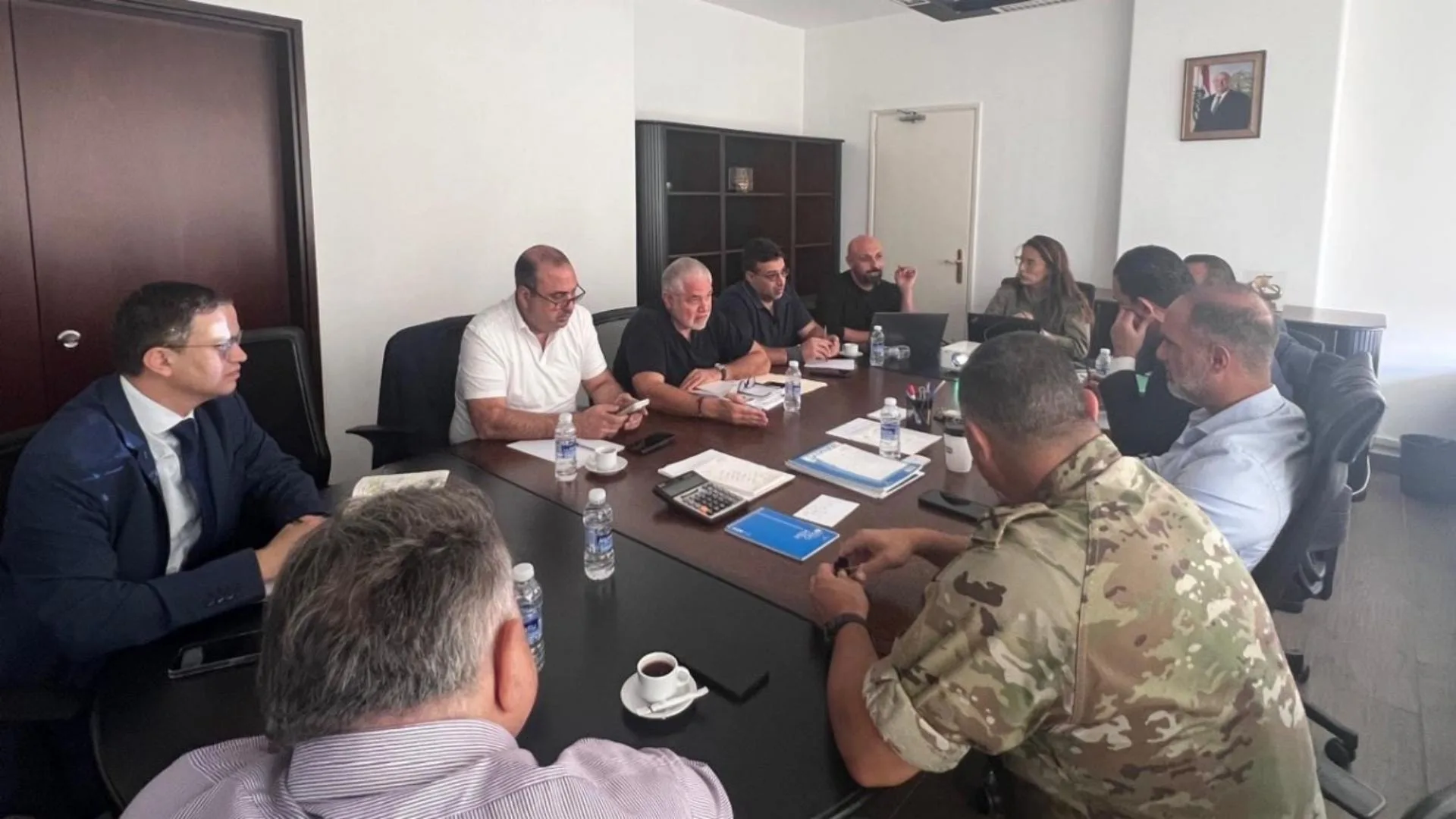
Speaking about post-general medicine specialties, he said: "We have a department called Medical Professions within the ministry, which coordinates with specialized committees issuing specialty certificates. However, we are currently developing a new model, already initiated at the ministry, focused on emergency medicine, since the emergency department serves as the hospital’s frontline and is the sole unit capable of managing patient inflow and outflow, delivering care, and ensuring efficiency—achieved through the emergency physician. We have full collaboration with the Lebanese Society of Emergency Medicine, and Dr. Amin Kazi is here with us today, who can speak about this comprehensive project between us and the society."
Dr. Kazi then intervened: "Mr. Minister, first I would like to congratulate you for having the courage to initiate such a discussion. Naturally, a specialist doctor’s training program must be complete and internationally accredited to ensure they gain the required expertise across all domains; we entrust them with lives in critical situations, so we must be certain that these doctors or physicians possess the competence, training, and ability to serve patients in these sensitive moments where every minute counts. Therefore, what you’ve done with the Lebanese Society of Emergency Medicine and the Medical Syndicate by jointly launching this initiative to establish the necessary standards enabling training centers nationwide to achieve this capability is highly valued. I know you requested the project we developed with Dr. Hitti and Minister Firas Al-Bayda, which is the World Bank-funded project aimed at reorganizing emergency departments throughout Lebanon. Your engagement with this issue is fundamental to ensuring these services are delivered through well-distributed centers across the country, so that no patient reaches an emergency room without adequate care being available. This is a crucial long-term vision, and achieving it under Lebanon’s current conditions and wartime realities, dedicating time and resources to this matter, deserves congratulations. It is an honor to work with a minister like you, and I say: you are a minister who dares to go where others hesitate."
The Health Minister continued, highlighting "our new achievement in primary healthcare, aiming to strengthen its role. When hospital bills become excessively high and we cannot provide adequate treatment, early diagnosis and prevention become absolutely essential. We are introducing a new model through contracts with fixed financial ceilings, working with primary healthcare centers—including distinguished ones located with us in Damour—to enable early diagnosis and treatment. Even a single aspirin could prevent a heart attack, reducing pressure and burden on hospitals. This is a human investment before it is a financial one, integrating both humanitarian and economic dimensions."
Regarding UNRWA’s move to reduce aid to Palestinian refugees and shift this burden onto the Lebanese state, he said: "Earlier, we discussed at length the needs of Lebanese citizens, referring to 'insured Lebanese' and 'uninsured Lebanese,' striving to balance priorities to ensure health services reach all Lebanese—barely managing to secure them. We carry an enormous burden. Not only that, but during the Syrian refugee crisis, the UNHCR covered costs until suddenly withdrawing, leaving the Syrian brother in Lebanon facing the hospital alone, forcing the Ministry of Health to cover his treatment. Let me state plainly: the Ministry of Health lacks the capacity, and even if we had it, we would care for everyone—but we do not have sufficient means to cover Lebanese citizens themselves, let alone other services. Yet, the health issue remains complex; if cholera emerges, for example, it does not distinguish between Palestinian, Syrian, Lebanese, or any resident on Lebanese soil. We offer full cooperation and regularly discuss this with the World Health Organization. In primary healthcare centers, we impose no restrictions—anyone may enter and access state-provided services in certain locations. But the health burden cannot be placed on the Lebanese state, despite my deep affection and respect for our Palestinian and Syrian brothers and sisters."
On avoiding this burden, he argued that "the international community must assume responsibility in this area, and we are ready for all forms of cooperation. We are ready to create treatment packages at drastically reduced prices, possibly with minimal or no profit margins in our public hospitals, and ready to open primary healthcare centers and provide medicines if donated through our doctors and nurses. But financially, we cannot bear this cost—we barely manage our own burdens. I repeat my salute to all non-Lebanese residents among our brothers; they are welcome and receive services and packages. But the international community must not pit us against them or place them against us; instead, it must fulfill its responsibilities. I urge UNRWA, the UNHCR, WHO, UNICEF, and all organizations we regularly engage with, to fulfill their roles in advocacy and take responsibility both domestically and internationally."
On another note, responding to questions from attending medical students about the ministry’s strategy to retain specialized doctors—whether in surgery or general medicine—in Lebanon rather than letting them emigrate, he said: "Despite being the youngest Health Minister, it hasn’t been long since I left academia, and I remain deeply involved in this partnership; yesterday I was still in the clinic. Of course, this is a tremendous responsibility when operating under such difficult conditions in Lebanon. I have duties as a representative of young Lebanese to preserve their opportunities and presence within hospitals. When Dr. Zaiter was appointed, he was among the youngest applicants—and now he leads the largest public hospital in Lebanon. Of course, we have retention policies in place to support medical and nursing sectors, whether through activating syndicate roles or funding mechanisms; a doctor or nurse without retirement security and future benefits cannot stay. These are the core strategies we are implementing at the ministry. When we improve hospital conditions, we improve job opportunities. We heard Dr. Azhari describe how doctors began seeking positions in public hospitals—these are additional employment opportunities, made possible through expansion and securing them."
Regarding opening public hospital spaces for joint procedures, he said: "We have begun a memorandum of understanding between Baabda Hospital, Roum Hospital, and Hotel Dieu Hospital. At Rafik Hariri Hospital, Lebanese University and Arab League send specialists to Baabda Hospital. We are working to open opportunities for resident doctors to observe these experiences. We have also established a memorandum of understanding between the American University and the Ministry of Health to enable sending doctors to the Turkish Hospital in Saida. Larger initiatives may include investing in the public Baalbek Hospital to host resident doctors. As a ministry and public hospitals, we benefit because resident doctors cover required departments and are available 24/7, while we provide them with substantial educational opportunities—since public hospitals handle a high volume of cases, offering them rich learning and practical experience."
He concluded: "Wherever you go in the world, you find a Lebanese doctor, and you find their name and reputation etched in the memory of patients and hospitals—whether in Canada, the U.S., Europe, or Arab and Gulf countries and Iraq. We have built this reputation, and thanks to this integration, we will continue to uphold Lebanon’s title as the hospital of the East, God willing, and return to that status."