World
Nvidia Investigations: Complex Network of Companies and Entities Helped Smuggle Chips to China
A Financial Times investigation reveals how Alice Huang, linked to former Nvidia CEO Jensen Huang, was connected to a complex network of companies and intermediaries that facilitated the smuggling of AI chips into China.

A Financial Times investigation stated that Chinese businesswoman Alice Huang, whose name has been linked to former Nvidia CEO Jensen Huang, was connected to a vast and complex network of companies and intermediaries supplying artificial intelligence chips, including a "criminal entity" in Cambodia suspected of involvement in "illegal activities."
US investigations center on Alice Huang, the former executive at Megaspeed, and whether the company, one of Nvidia's largest customers in Southeast Asia, was involved in secret chip trading.
Some US officials suspect that Alice Huang was a "Chinese spy," an accusation Beijing described as a "smear campaign."
A separate report by The Wall Street Journal noted that a Chinese citizen named Li Ming, who had a direct relationship with Alice Huang and currently resides in a luxury villa in Singapore, just one street away from the Chinese embassy after being released on bail, played a pivotal role behind the scenes in transferring chips to China.
The report indicated that he was one of the key figures responsible for managing the smuggling network of export-restricted chips, was deeply involved in Megaspeed's activities, participated in making major decisions within it, and also played a role in other companies trading Nvidia chips.
Multi-billion dollar trade and dozens of partners
The Financial Times said its investigation found that Alice Huang was linked to a wide and complex network of companies that acted as intermediaries between Nvidia and its chip users in China, including cloud computing partners, gaming tycoons, smugglers in Cambodia, and hundreds of shell companies.
The Financial Times added that the efforts of these entities, which appeared unconnected without necessarily each having awareness of the full picture, combined to achieve billions of dollars from one of the world's most profitable illicit trades: moving Nvidia chips to China.
The newspaper said it traced these links after interviewing more than 12 people with knowledge of these operations, revealing connections hidden by complex structures spanning hundreds of corporate records and official documents.
US restrictions and black market
Nvidia's advanced chips are crucial for developing the latest AI technologies and have become a strategic commodity in the geopolitical competition between the United States and China.
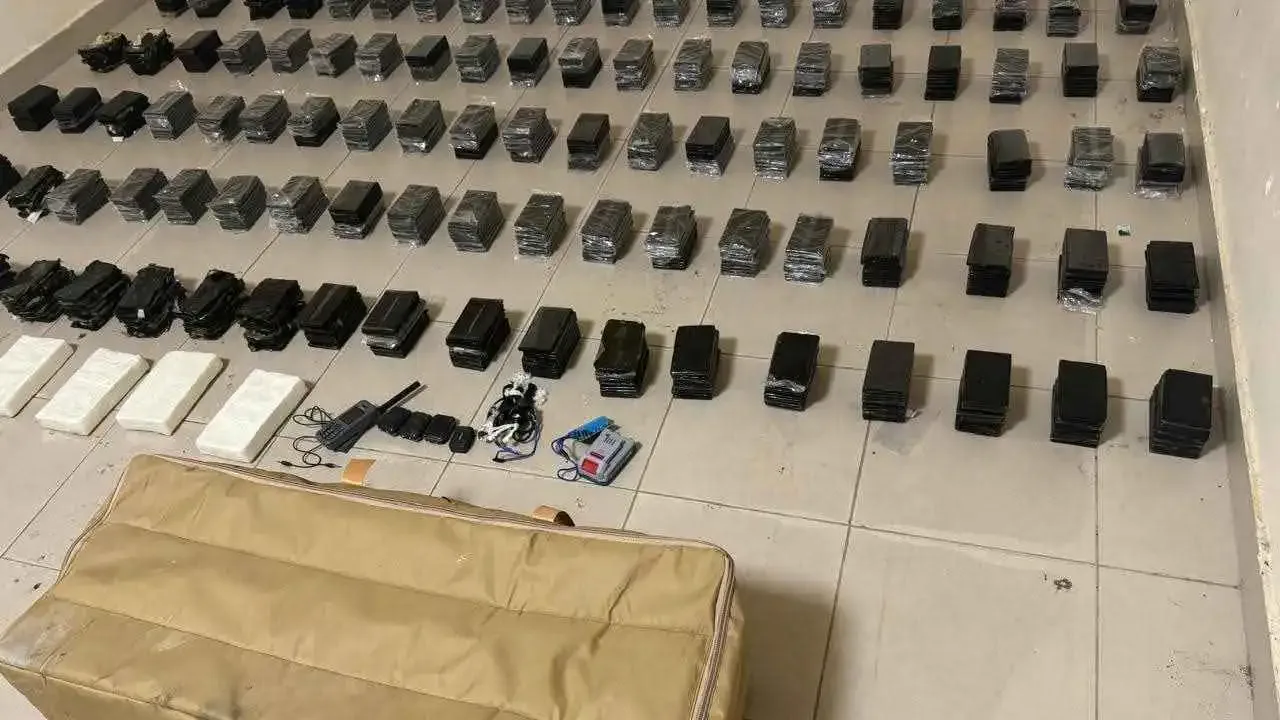
Export controls imposed by Washington to prevent Beijing from obtaining the most powerful processors led to the emergence of a multi-billion dollar black market aimed at circumventing US restrictions and meeting "insatiable Chinese demand."
Chris Clague, a research fellow at the International Institute for Strategic Studies, who has focused on illicit trade over the past decade, said: "Chip smuggling is no different from drug or arms smuggling in terms of supply chain structure. But special importance is given to the semiconductor industry, as it is the means through which the United States wants to slow China's progress in the AI race."
3 channels for smuggling chips to China
Transferring advanced chips to China requires passing through three main corporate channels: a group permitted to obtain and distribute semiconductors, customers who do not violate US export restrictions, and a secret network for smuggling goods into China and money out.
The network linked to Alice Huang reached the United States via Inspur, which was one of Nvidia's largest partners in assembling chips and converting them into ready-to-use servers in China.
In March 2023, Inspur was placed on the US "Entity List" due to accusations of aiding the Chinese military. Some of its subsidiaries were also listed, but this did not include a subsidiary partially owned by it in the United States, headquartered in San Jose, California.
Inspur renamed its US unit to Aivres, and since it was not on the Entity List, it was able to continue commercial dealings with Nvidia.
According to a person with direct knowledge of the matter, questions were raised within the chip manufacturer about whether Aivres should be considered an Original Equipment Manufacturer (OEM) partner given its ties to Inspur. However, Nvidia concluded that the company met all compliance requirements and export controls.
An impeccable record
The Financial Times said the second pillar of the network is a customer eligible to purchase large quantities of Nvidia chips.
OEM partners like Aivres, allowed to integrate Nvidia Graphics Processing Units (GPUs) into systems and sell them later, were still required to prove their customers were not Chinese to obtain products from the US chipmaker.
For Nvidia to consider a customer qualified as an end-user, it requires submission of company records extending back at least three years and proof that management and owners are not predominantly Chinese.
According to several people with knowledge of the matter, some Chinese customers of Inspur sought to use a successful online gaming company, Century Huatong, to restore access to chip supplies.
Over more than two decades, the Chinese group transformed from an auto parts company to a gaming platform, before eventually becoming an investor in data centers, leveraging its close relationships in the sector.
The solution: A shell company, "Megaspeed"
Former executives at Century Huatong discussed ways to access chips with their business partners and acquaintances. The emerging solution involved using a shell company registered outside China, which did not trigger US export restrictions and could be presented as a next-generation cloud service provider, known as a "Neocloud."
That shell company became Megaspeed, while Alice Huang took charge of fulfilling the requirement for a trusted executive to appear before external parties, possessing an impeccable record, according to people familiar with the arrangements.
According to Chinese corporate records, Kang Wei, Alice Huang's husband, was among the early investors in Century Huatong.
His fund, Hexi Investment, supported a data center project launched by Century Huatong in 2020 in collaboration with 7Road, a Shenzhen-based gaming company in which both Huang and Century Huatong had invested.
Alice Huang and Kang Wei did not respond to requests for comment.
7Road International, the offshore arm of 7Road, was the predecessor company that paved the way for Megaspeed's emergence, as it had clean corporate records in Singapore for several years. In 2023, Huang acquired its unit in the city-state and renamed it.
A spokesperson for Nvidia said: "We added Megaspeed and one of its subsidiaries to our restricted list in 2025. We do not sell to them, and if one of our OEM partners identifies the company in any planned shipment, we do not approve the sale by the partner."
Nvidia added that it also imposed sales restrictions on Aivres.
Alice Huang... The Perfect Person
The Financial Times said people who knew Alice Huang at the time indicated that she was considered, thanks to her fluency in English, residence in Hong Kong, and reputation as a skilled relationship builder and dealmaker, an "ideal representative acceptable to Western circles."
This was aided by the fact that Huang and her husband were already looking to enter the data center field in Southeast Asia, which rents chips to Chinese tech companies.
A person who dealt with her commercially during that period said: "Alice was chosen to head Megaspeed because of the trust built over years."
"Cambodian Gang"
The third and essential element of this system was finding a partner to transport the chips to China.
People familiar with the matter said Ho Xiao Wei, whom US authorities describe as a prominent figure in a Cambodia-based network sanctioned for cyber fraud and money laundering, played at least part of this role.
Ho Xiao Wei was arrested in Japan during the summer, and US authorities accused him of running smuggling and gambling networks as the "second man" in the Prince Group.
A spokesperson for Prince Group affiliates said Ho never worked for the group and that there is "no evidence supporting the baseless US allegations."
According to people with knowledge of the matter, Ho earned money from online gaming-related businesses, which allowed him to connect with Century Huatong.
The links between Ho and Century Huatong extend through a complex network of ownership stakes and intellectual property partnerships, spread across dozens of corporate records examined by the Financial Times.
One clear link appears through Wang Ji, chairman of Century Huatong and its largest individual shareholder, who held a majority stake in a Ningxia-based company, later dissolved, where Ho served as a director.
Another director in the dissolved company owns a Chongqing-based firm controlling several gaming entities, linked to Fang Zhi Chen, whom the US sanctioned for suspected money laundering for the Prince Group. The group's spokesperson said there is no evidence of a connection between Fang and the group.
Century Huatong's ties to leaders suspected of links to the Prince Group date back to around 2015, when the gaming platform began a process that ended with the acquisition of Shanda Games, owner of the Chinese rights to the popular game Legend of Mir, in a historic deal valued at $4.2 billion.
Gaming and Money Laundering
The Financial Times said Ho and his partners were part of a group that hosted Legend of Mir games on private servers, an activity that generated massive profits. Several members of the group were arrested in 2016 on charges of violating intellectual property rights, but a verdict in the case was recently overturned due to corruption that plagued the investigation, according to state media reports.
According to two people working in the online gaming sector who knew Ho, he moved to Cambodia during the period of the arrests.
Gaming is often used for money laundering, as virtual currencies or in-game items can be purchased with illicit funds and then sold in secondary markets to make the money appear legitimate.
Gaming groups also remained within Nvidia's sphere of activity for a long time; before the chipmaker shifted its focus to supporting the AI sector in 2022, the largest demand for its GPUs in China came from the gaming and cryptocurrency sectors.
A person involved in gaming deals said: "If you look at the people and entities involved in chip smuggling today, you will find many familiar names from the days of working in gaming."
He added: "Many of them developed side activities, such as money laundering, and had already established infrastructure inside and outside the country to move money and goods."
According to people familiar with Prince Group operations, the group's alleged "gray" infrastructure, considered one of the widest in the region, ranged from complex shell company structures to secret financing channels via gaming and cryptocurrencies.
The Prince Group spokesperson said the group does not "own an illegal network," and there is no basis for claiming such a network exists, except for what he described as "unsupported US allegations contained in an indictment proven to be full of fallacies and temporal impossibilities."
Alice Huang Meets Jensen
By mid-2023, the elements of the Megaspeed system were complete. The company officially contacted Nvidia, presenting itself as a next-generation cloud computing company with data centers in Malaysia and a rental contract with Alibaba.
Led by Huang, Megaspeed passed the compliance tests conducted by the chipmaker and quickly became one of its largest customers in the region.
During that period, Alice Huang developed a close relationship with Jensen Huang, Nvidia's CEO, according to several sources familiar with the sector.
The nickname given to her in Chinese data center circles was "Jensen's Assistant."
At Megaspeed, business was booming. The declared value of goods imported by Speedmatrix, Megaspeed's Malaysian subsidiary, from Aivres reached approximately $4.6 billion between December 2024 and December 2025, according to trade data.
Many of those chips ultimately ended up in China, according to several people with knowledge of the matter.
According to Singapore's Straits Times, a raid conducted by Indonesian police in early 2026 resulted in the discovery of empty server racks, containing no graphics processing units, at Megaspeed's local headquarters.
Several people involved in chip distribution channels said that once Nvidia products passed through smuggling routes in Southeast Asia—a process that could involve multiple countries and take weeks—they entered the black market in China, where they were sold at prices several times their original value.
After the chips arrived in China, Shanghai Century Litong was one of the leading entities responsible for distributing smuggled Nvidia chips domestically, according to people with knowledge of the deals. The Information website published the first report on Century Litong's role in the Nvidia chip trade network inside China.
Corporate records indicate that Alice Huang was again linked to the founding of the group. She controlled, along with her sister Huang Yu, an investment company that entered a joint venture with Century Huatong under the name Shanghai Century Longting.
Longting later founded Century Litong.
Bloomberg reported finding restricted Nvidia chips inside data centers linked to Longting in Shanghai.
Smuggled Chips
Last year, the Financial Times revealed the sale of at least $1 billion worth of smuggled Nvidia chips in China over just three months, after US President Donald Trump tightened restrictions on H20 chips, a less powerful chip designed specifically for the Chinese market to meet export control requirements.
People with knowledge of the smuggling operations said multiple layers of companies were created to hide the flow of AI chips to China. These layers also provided a useful firewall between entities involved in smuggling and end-users, some of whom include China's largest tech groups.
Tencent and Alibaba, two of China's largest tech companies, have commercial relationships with Century Huatong.
Tencent, China's largest social media, messaging, and gaming platform, holds a 10.1% stake in the company.
Century Huatong, through one of its wholly-owned subsidiaries, invested in T3 Travel, a ride-hailing service booking company that also includes Tencent and Alibaba among its investors. Alice Huang serves on T3's board of directors.
The Financial Times said it found no evidence indicating Tencent or Alibaba's involvement in chip smuggling activities.
Tencent said: "We are a minority investor in a variety of internet and video game companies. We have no connection to the other activities mentioned in the investigation, nor do we have knowledge of them."
Alibaba did not respond to a request for comment.
Inspur, Aivres, Century Huatong, 7Road, Shanghai Century Litong, and Shanghai Century Longting also did not respond to requests for comment.
Restrictions on China
Two US administrations attempted to protect American superiority over China in AI by restricting its access to Nvidia's most advanced processors.
The Trump administration announced this week additional restrictions on how Chinese companies can access these chips via Southeast Asia.
But US export controls created a lucrative opportunity for those willing to break the rules, according to Hana Domein, senior research analyst at Georgetown University's Center for Emerging Security and Technology.
Domein said: "When there is high demand that is not met, smuggling emerges."
She added: "We must be realistic about what export controls can achieve. This does not mean that none of the US chips will make their way to China. And when you impose restrictions on Southeast Asia, can't they simply go to other countries?"
Latest news

After 83 Years of Independence: Has the Lebanese Citizen Been Freed from the Need for Wasta?
Trump Weighs Strikes on Iran as US Military Issues Warnings

Israeli Drone Explodes on Choukine-Nabatieh Road Early This Morning