·
·


World
A report by Axios indicates significant progress in US-Iran negotiations to end the war, leading President Donald Trump to suspend the 'Project Freedom' operation in the Strait of Hormuz.

A report by Axios website indicated significant progress in ongoing negotiations between the United States and Iran aimed at reaching an agreement to end the war, prompting US President Donald Trump to suspend the 'Project Freedom' operation in the Strait of Hormuz.
The operation to 'guide' commercial ships through the strait, which began on Monday, led to an exchange of fire between the two sides, in addition to Iranian missile attacks targeting the UAE for the first time since the ceasefire was announced a month ago.
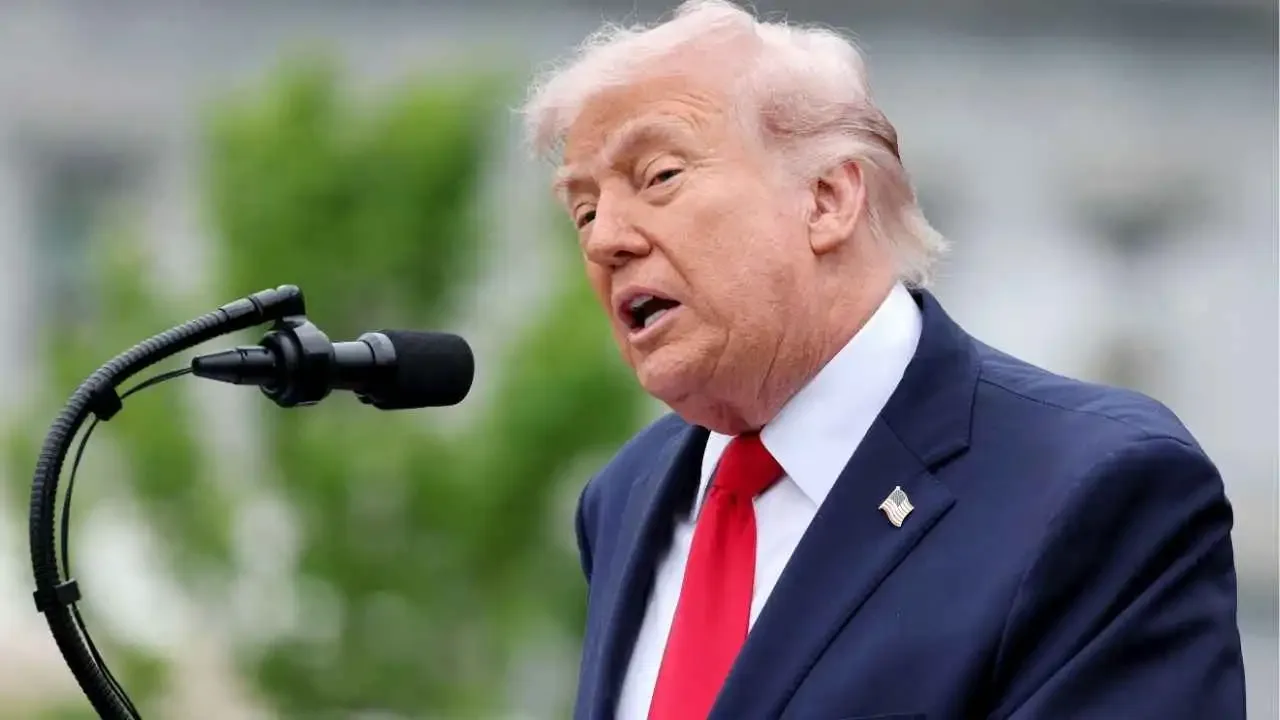
Trump explained in a post on the 'Truth Social' platform early Wednesday that the decision was made 'at the request of Pakistan and other countries ... in addition to the fact that significant progress has been made towards a complete and final agreement with representatives of Iran.' He added: 'We have mutually agreed that while the blockade will remain in full effect, Project Freedom will be suspended for a short period of time to see if the agreement can be finalized and signed or not.'
Trump had earlier announced that the United States would 'guide' commercial ships through the Strait of Hormuz, which Iran had effectively closed, for two months as part of an initiative called 'Project Freedom.' However, media reports indicated that many points remained unclear after the launch of the initiative, as Trump did not disclose many details.
Despite some ships managing to pass, reports of Iranian attacks tested the four-week truce that halted the war, amid questions about how many companies would take this step with American assistance. Iran had effectively closed most commercial routes through the vital waterway at the entrance to the Arabian Gulf, where an estimated 1,600 ships are stranded, while the US Navy imposed a blockade on ships heading to and from Iran.
Trump said in a previous post on 'Truth Social' that the United States 'will safely guide ships out of these prohibited waterways,' describing it as 'a humanitarian gesture,' and warning that any interference 'will be met with firmness.' But he did not mention anything about lifting the US blockade or clarify what he meant by the United States 'guiding' ships.
US Central Command indicated that it would coordinate safe navigation movement between ships, but would not directly escort any ship through the strait. It added that 'US military support for Project Freedom will include guided missile destroyers, more than 100 land and sea-based aircraft, multi-domain unmanned platforms, and 15,000 troops.'
Data showed that only a few succeeded in crossing under 'Project Freedom,' with four ships crossing the strait on Monday according to S&P Global Market Intelligence data. Secretary of War Pete Hegseth stated on Tuesday that two commercial ships crossed the strait under US military escort, noting that before the war, about 130 ships crossed the strait daily.
Danish shipping giant Maersk announced that a US-flagged car carrier belonging to one of its subsidiaries crossed the strait under US military protection, without clarifying the route the ship took or how the US Navy assisted it. US forces on Monday shot down cruise missiles and drones, and destroyed six Iranian fast boats that were threatening ships the US Navy was guiding through the strait, according to US Central Command. No ships crossed the strait until Tuesday evening, according to Kepler, a global company specializing in maritime navigation data.
In response, Mohammad Baqer Qalibaf, Speaker of the Iranian Parliament and chief negotiator in the stalled peace negotiations, said on the 'X' platform on Tuesday that Washington's actions endanger navigation in the strait, warning of an escalation of the situation and accusing America of violating the ceasefire. In an interview with conservative host Hugh Hewitt broadcast on Monday, Trump refrained from answering whether the ceasefire had ended, while Hegseth described Washington's efforts to help ships pass through the strait on Tuesday as 'defensive and temporary,' affirming that the truce remains in place.
This coincided with a warning from Ali Abdollahi, a senior Iranian military commander, to 'all commercial ships and oil tankers against attempting to cross without coordination with the armed forces,' according to official Iranian media.
Media reports considered that 'there is no clear answer yet' to determine the extent of the initiative's success, noting that despite a small number of ships crossing, violence threatens the fragile truce. They affirmed that 'all of this worries shipping companies' that have shown reluctance to send ships through the strait, with some saying the US offer was not enough to convince them to make the journey.