Culture & Society
Henry VIII’s Enforcer Secretly Preserved Forbidden Catholic Text
Six pages from a medieval manuscript linked to Yale reveal Sir John Gage secretly saved a banned book while dismantling monasteries.

Six fragile pages held at The Keep archive in Brighton, U.K., have been identified as part of a 500-year-old manuscript that reveals an act of quiet defiance by Sir John Gage. While Gage served Henry VIII by enforcing the dissolution of monasteries, these fragments suggest he simultaneously rescued a Catholic text slated for destruction.
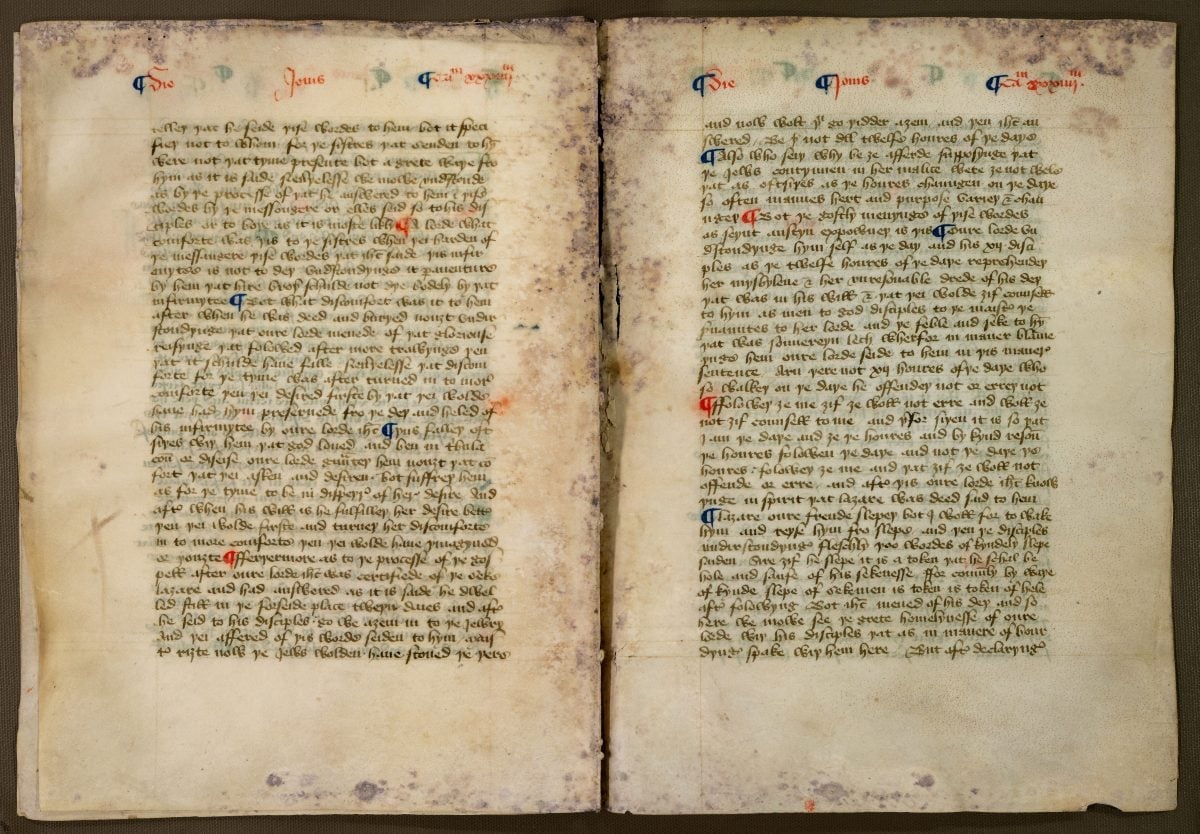
Pages 8–9 of Nicholas Love’s Medieval Manuscript
The Manuscript Connection Revealed
Dr. Katie Walter of the University of Sussex and Dr. James Wade of Girton College, Cambridge, established the link between the British pages and a volume located 3,500 miles away at Yale University in the United States. Their research, published in Notes and Queries, identifies the work as a copy of Nicholas Love’s early 15th-century Mirror of the Blessed Life of Jesus Christ, which bears Gage’s signature on its final page among a list of owners.

Katie Walter & James Wade in the Keep Archive, Brighton
The connection resolves a cataloging puzzle that had challenged scholars for nearly a century. By examining the digitized Takamiya MS 20 manuscript at Yale’s Beinecke Library, the researchers discovered a gap immediately preceding a passage on oral confession. The missing text aligned perfectly with the content of the pages at The Keep, and the handwriting matched the original scribe, confirming the fragments belonged to the same volume.
A Bestseller Turned Dangerous
Nicholas Love completed his English translation and adaptation of a Latin text around 1409, during a period when religious disputes carried deadly consequences. The Lollards, a proto-Protestant movement, advocated for Bible access in English and challenged papal authority. A 1401 law sought to suppress heresy, prescribing punishments including death by burning for seditious offenders like the Lollards.
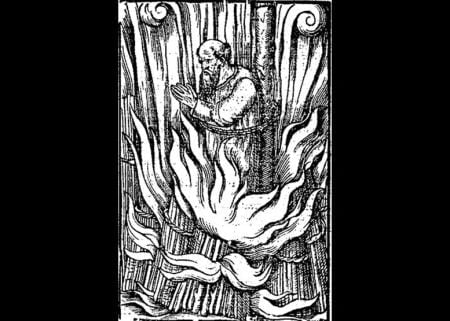
Depiction of the Lollard Richard Wyche Being Burnt at the Stake in 1440
“In the early 15th century, having bible translations in English could get you killed,” Walter says. “Nicholas Love’s translation offered a safe alternative. It was considered orthodox and circulated with the seal of approval of Archbishop Arundel, the outspoken opponent of the Lollards.” William Caxton published a printed edition in 1486, and the book remained in print until the start of the Reformation abruptly halted publication.
Love had appended a treatise defending the real presence of Jesus’ body and blood in Communion, alongside passages on oral confession and other orthodox Catholic sacraments. These topics became subjects of fierce debate during Henry VIII’s reign. Some Catholics continued to prize the book illicitly after it became dangerous reading.
“65 copies of Love’s text survive today. That’s a lot for a 15th-century manuscript but so many could have been destroyed in the Reformation. It shows how popular it was, but it also shows how a work that became suspicious and dangerous for some could also be valued and preserved by others,” Wade says.
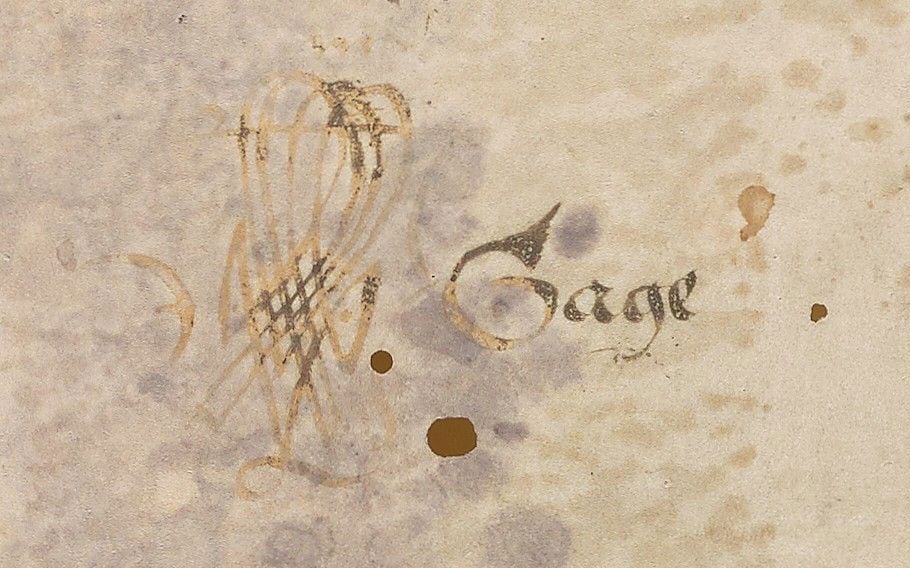
John Gage’s Signature in Takamiya MS 20
Gage’s Dual Role in the Court
Gage’s involvement highlights two conflicting aspects of his life, recognizable to readers of Hilary Mantel’s Wolf Hall trilogy. He appears in those novels as a religious conservative who nonetheless served Henry VIII dependably as Constable of the Tower and a member of the Privy Council. When the dissolution of the monasteries began in 1536, Gage was already vice-chamberlain of the royal household and gaining influence at court, maintaining good terms with Thomas Cromwell.
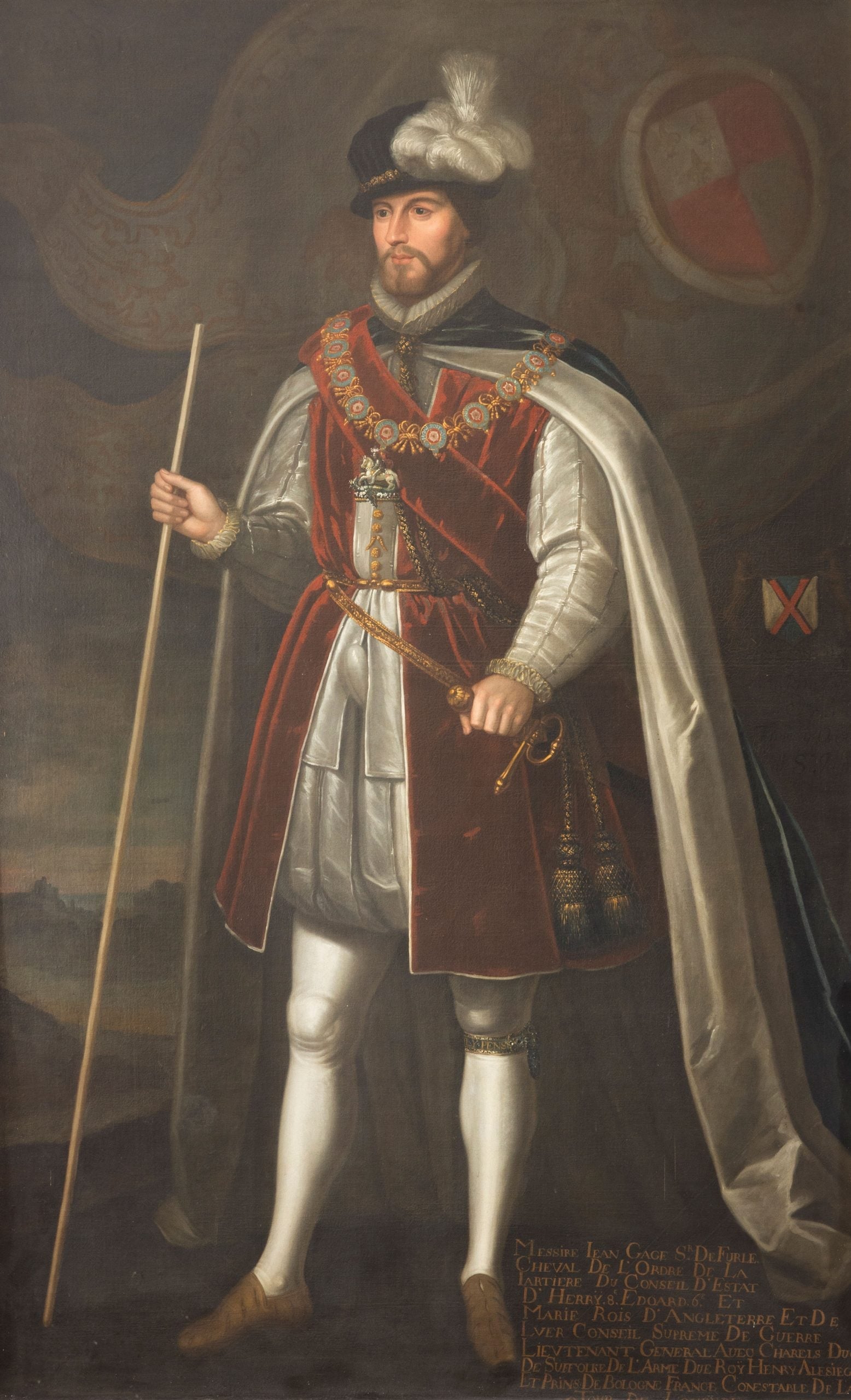
Portrait of Sir John Gage
Assigned to organize the dissolution in Surrey, Kent, and Sussex, Gage took stock of monastic assets and determined their disposal for the Crown. “Gage had a very long career in a highly turbulent court,” Wade says. “He survived when many other very shrewd people did not. And he made a fortune in the process. But he’s also this incredibly conflicted man, because he remained a Catholic throughout the Reformation. He’s got all this power and bureaucratic savvy combined with a risky conviction in his faith. Somehow he manages to reconcile these two things, and survive.”
Walter notes that two possible owners before Gage were religious women, suggesting the manuscript may have originated in a monastic house. “The dissolution of the monasteries led to the destruction of many books but others were taken and then circulated through informal networks. Considering Gage’s active role in the dissolution, it’s very possible he acquired the book during this chaos,” she says.
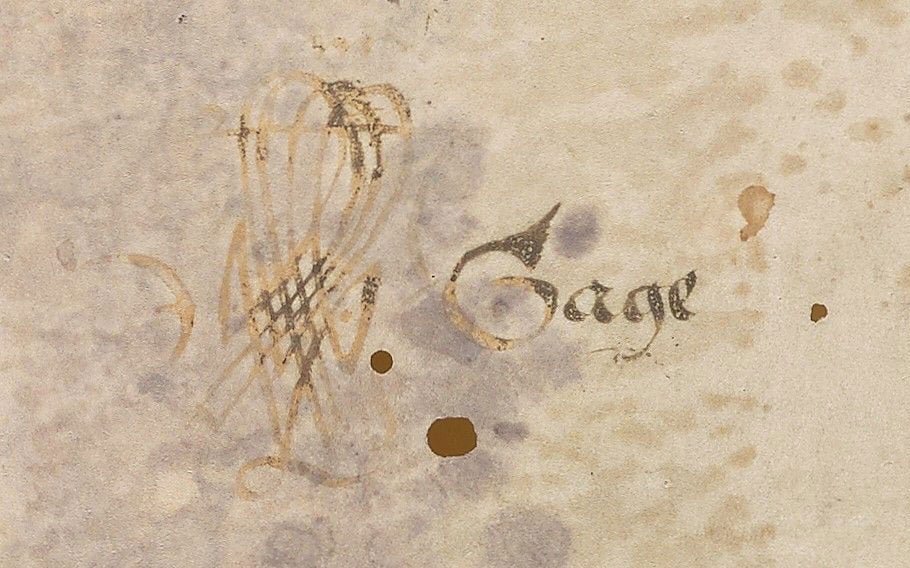
John Gage’s Signature in Takamiya MS 20
Preservation Amidst Destruction
Other monastic possessions legitimately passed into Gage’s hands through his official duties. He acquired the Battle Abbey sword, a treasure made for the abbot in the early 15th century, and his house, Firle Place, was built using stones removed from nearby Lewes Priory after its surrender to the Crown in 1537. However, the specific route by which the manuscript entered his possession remains uncertain.
“One possibility is that John Gage went to a monastic library and brought it home. Another is that someone else smuggled it out, and it briefly circulated from hand to hand until Gage acquired it. The key thing is – he kept it safe when he was meant to destroy books precisely like this one,” Wade says.
After printing ceased, Catholics played a significant role in safeguarding the text’s contents. “We often associate this period with book burning and destruction, so this manuscript’s story goes a bit against that grain. It reminds us that people were also rescuing, valuing, and caring for books,” Walter says. She adds that by keeping the book on his shelf, Gage and his family participated in a broader secret effort to preserve Catholic literature and knowledge.
The researchers hope these findings will open new opportunities to trace Gage’s perilous course through the dissolution and the Reformation. “It makes us think about the integrity that underlies subterfuge. There was a lot at stake for John Gage to perform tasks at court, but then secretly preserve the very thing that he’s meant to destroy,” Wade says.
Latest news

US Air Force Allocates $1.7 Billion for B-1B and B-2 Upgrades

95 Arrests in 17 Countries: Details of the Interpol Raid That Shook the World

White House Spokesperson Karoline Leavitt Admits: I Failed the Bar Exam