Lebanon
Ambassador Al-Dosari on Saudi National Day: We Confirm Lebanon's Support
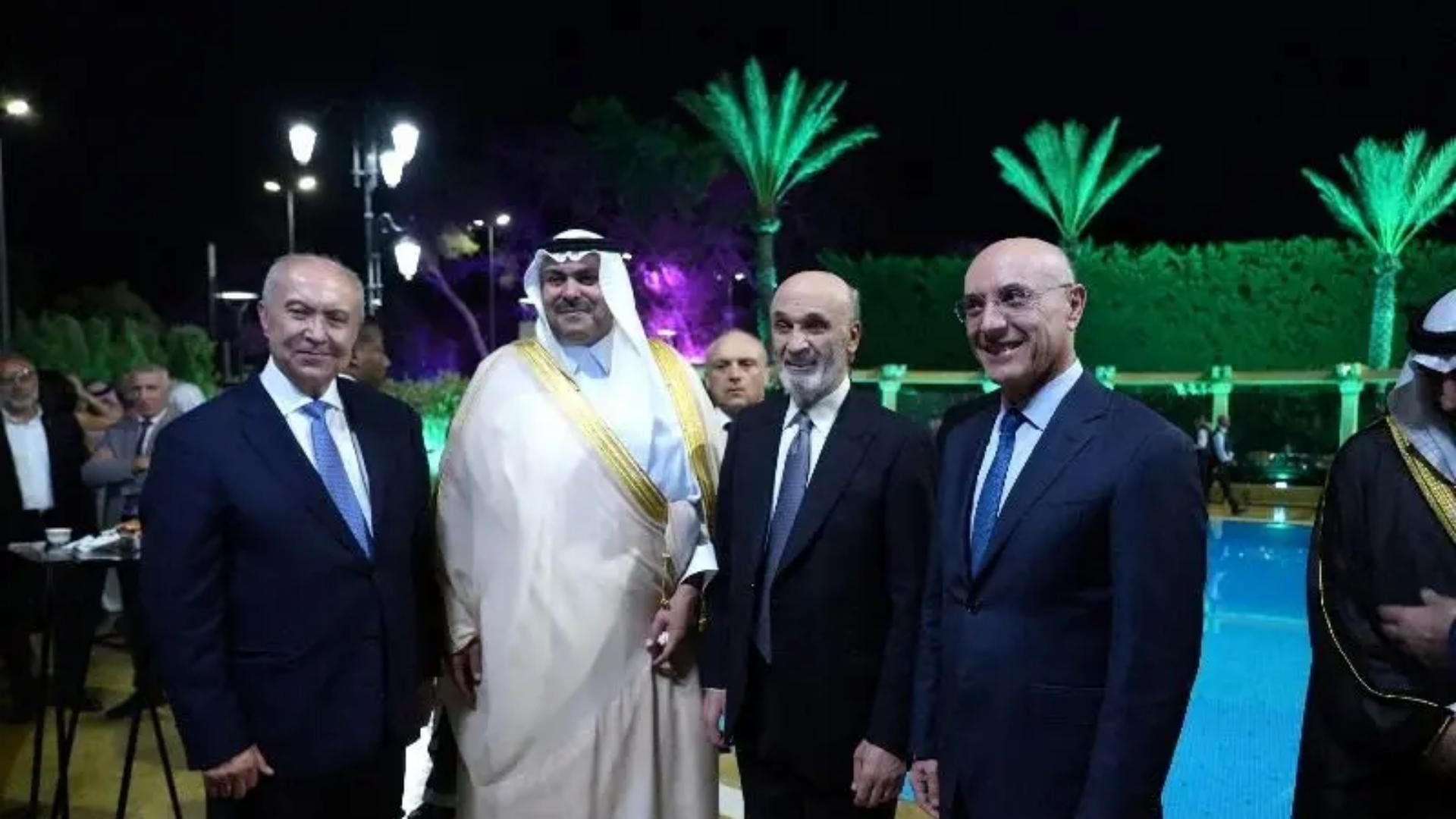
Saudi Arabia's ambassador to Lebanon, Fahd bin Abdulrahman Al-Dosari, hosted a reception for the 96th Saudi National Day, reaffirming Saudi support for Lebanon's sovereignty and stability.

Saudi Arabia's Ambassador to Lebanon, Fahd bin Abdulrahman Al-Dosari, held a reception to mark the 96th Saudi National Day last evening at his residence in Aley, attended by Minister of National Defense Michel Moawad representing President Joseph Aoun, Representative of the Speaker of the Parliament, MP Fadi Murr, representing Speaker Nabih Berri, Minister of Culture Ghassan Salamé representing Prime Minister Najib Mikati, former President Michel Sleiman, former Prime Ministers Fouad Siniora and Tamam Salam, leader of the Lebanese Forces party Samir Geagea, and ministers: Information Boulus Marqous, Finance Yaseen Jabber, Tourism Laura Khazenn Luhoud, Interior and Municipalities Ahmed al-Hajjar, Public Works Fayez Rassamni, Justice Adel Nassar, Economy Amer Boustani, and Social Affairs Hnin Sidah. Numerous members of parliament also attended.
Al-Dosari
After the national anthems of Lebanon and Saudi Arabia were performed, Ambassador Al-Dosari delivered a speech stating: "Every year on September 23, the Kingdom of Saudi Arabia celebrates the anniversary of its unification under the leadership of His Majesty King Abdulaziz bin Abdulrahman Al Saud. Today, we commemorate this glorious milestone through our gathering. Since that unification, the Kingdom has pursued a wise foreign policy based on principles of justice, equality, international peace and security, and non-interference in the internal affairs of other nations—drawing inspiration from its great constitution and authentic Arab culture. This has earned the Kingdom the esteem and respect of its brothers and friends among the members of the international community. Deeply aware of the importance of relations with other countries, the late King Abdulaziz established the Ministry of Foreign Affairs as the first ministry in the Kingdom, through which diplomatic ties have been built with sister and friendly nations."
He added: "Since the completion of the Kingdom’s unification, His Majesty the late King Abdulaziz bin Abdulrahman Al Saud worked tirelessly to build a modern state across all sectors. His legacy was carried forward by his noble sons—Kings Saud, Faisal, Khalid, Fahd, and Abdullah, may God bless them all and reward them generously. My Lord, Custodian of the Two Holy Mosques, King Salman bin Abdulaziz Al Saud, has stood as their steadfast supporter and guide in achieving this vision. After assuming leadership, he entrusted his trusted heir, His Royal Highness Crown Prince Mohammed bin Salman bin Abdulaziz Al Saud, with shaping a new chapter in the history, present, and future of the Kingdom. In 2016, the Vision 2030 was launched, charting an exceptional national transformation journey centered on building a vibrant society, a thriving economy, and an ambitious nation—grounded in the Kingdom’s inherent strengths and implemented through three integrated and interlinked phases, each building upon the achievements of the previous one."
He continued: "This year, 2026, marks the third phase of the Vision—the phase of consolidating gains and accelerating implementation. It is based on the reforms and accomplishments achieved so far, which have enhanced the quality of life for citizens and residents, strengthened the economy, improved government efficiency, and expanded investment and development opportunities—supporting the ongoing transformation initiated by this vision."
He said: "The Kingdom of Saudi Arabia and the Republic of Lebanon share deep historical bonds across all levels and dimensions. The Kingdom supported Lebanon’s independence and was among the first nations to recognize it in 1943. This was symbolized by the visit of His Majesty King Abdulaziz to the late Lebanese President Camille Chamoun in Riyadh, followed two months later by the official visit of His Majesty King Saud, then Crown Prince, to Lebanon. These reciprocal fraternal visits between leaders and officials of both brotherly nations significantly strengthened ties of kinship, mutual respect, and support across all fields. Following the outbreak of the Lebanese Civil War, the Kingdom hosted numerous summits and conferences and actively pursued diplomatic and political efforts to end hostilities across all Lebanese territories. The most significant event in modern Lebanese history took place in Taif in 1989, where Lebanese representatives signed the National Reconciliation Document, marking the end of the civil war and closing that tragic chapter in Lebanon’s history."
He added: "The Kingdom of Saudi Arabia affirms its unwavering stance in supporting Lebanon’s sovereignty over its lands and all its resources. The recent decision by the Kingdom to lift the suspension on Lebanese exports was a clear indication of our appreciation for the positive efforts undertaken by the Lebanese leadership and government."
He concluded: "I extend my deepest gratitude to all staff of the Saudi Embassy in the Republic of Lebanon for their outstanding efforts in making this event a success. I also thank you all for sharing in our joy on this special day. May God protect the Kingdom of Saudi Arabia and may God protect Lebanon. Peace be upon you, and His mercy and blessings."
Latest news

Nikkei Rises 1.23% on Chip Stocks, Pre-Dividend Buying

Brent Drops 74 Cents to $105.85 as US-Iran Truce Talks Weigh on Oil
Countries of the Abraham Accords Hold First Meeting Since October 7 Attacks