·
·


Lebanon
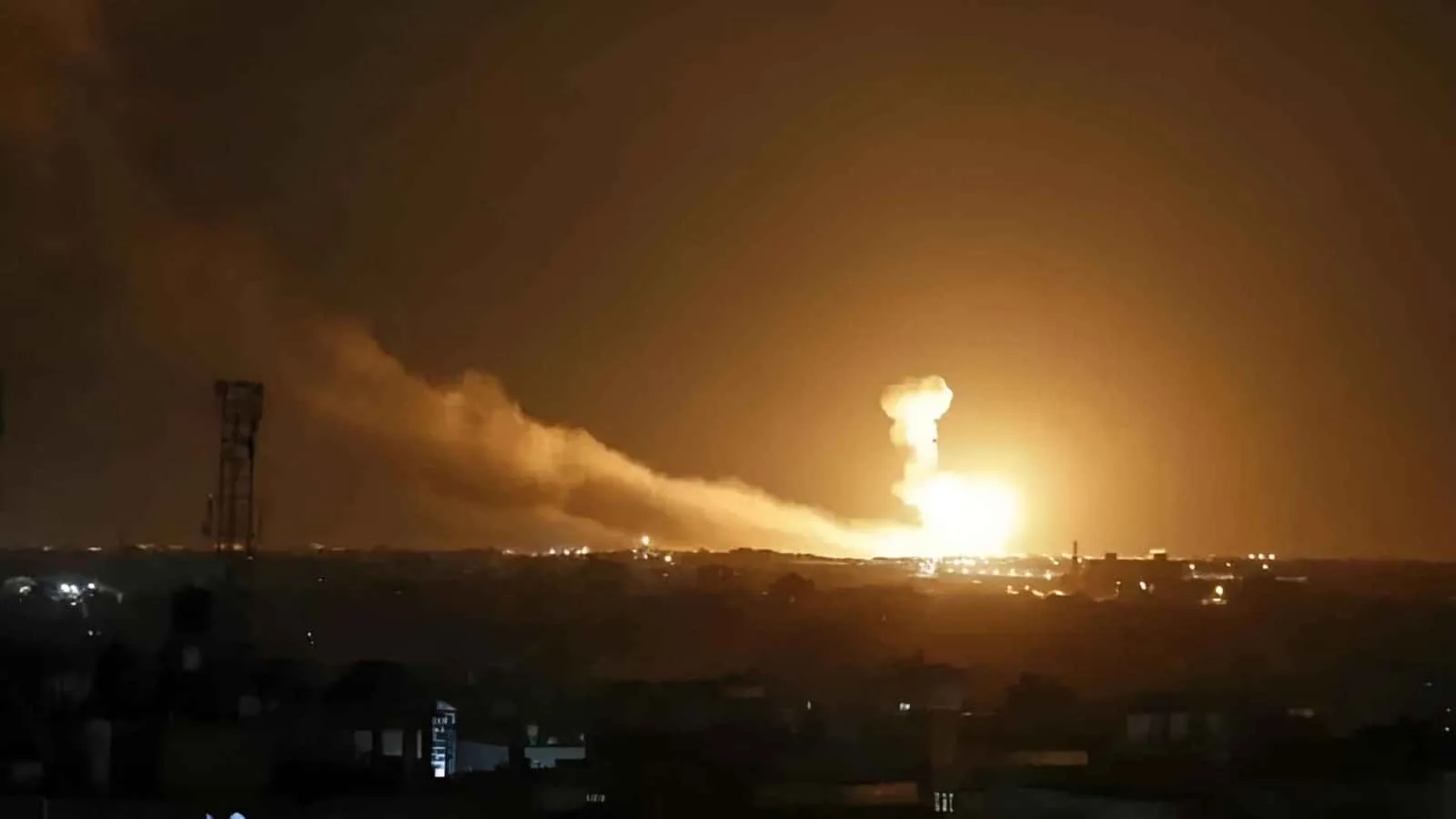
Hezbollah unexpectedly vacated the Al-Taher hills to Israeli forces, bypassing calls to hand them over to the Lebanese army, amid growing speculation about Iran's approval of the move ahead of the eighth round of negotiations.

Hezbollah surprised the Lebanese political establishment by vacating the Al-Taher hills, allowing Israeli forces to take control—instead of handing them over to the Lebanese army as advised, which would have strengthened the Lebanese negotiating delegation’s position. The eighth round of talks remains pending a decision from Washington, likely to be announced in the second half of September.
The evacuation raised a series of questions, foremost among them whether Iran approved the move, according to a source involved in the negotiations speaking to Al-Sharq al-Awsat. The source emphasized that it is inconceivable for Hezbollah to make such a decision unilaterally without consulting Iran, especially since senior Iranian officials had previously threatened intervention to defend the hills. Yet they refrained from providing concrete support, and no one believes the evacuation was carried out without prior consultation with Tehran’s leadership.
In this context, the source questioned whether the evacuation of the Al-Taher hills marks the culmination of an Iranian-mediated settlement, facilitated by multilateral intermediaries who reportedly ensured the safe withdrawal of military experts believed to belong to Iran’s Revolutionary Guard, who were stationed at the facility. This despite earlier statements by Iranian officials claiming they had maintained contact with those inside and threatened intervention to prevent Israel from taking full control.
The source noted that Iran’s threats to intervene in support of Hezbollah’s defense of the hills remained empty rhetoric, much like their previous threats following Israel’s assassination of former Hezbollah Secretary-General Hassan Nasrallah. According to the source, Tehran gave Hezbollah the green light to evacuate the hills.
The source highlighted Hezbollah’s insistence on not surrendering the hills to the Lebanese army. He questioned whether the group’s refusal to heed advice stemmed from its leadership never intending to comply in the first place—not because it feared Israeli takeover of Al-Taher, as it did with other positions previously held by the Lebanese army during its southward redeployment along the Litani River—but because any presence there would inevitably mean losing the opportunity to keep fighters north of the Litani River.
Thus, the source concluded that Hezbollah chose to evacuate the hills after Israeli forces had already encircled them, controlling all access points near the towns of Nabi Badeh al-Fawqa and Kfar Tabniyeh, and the outskirts of Doha in the town of Kfar Raman. He stressed that the evacuation does not imply Hezbollah’s departure from northern Litani but rather part of a strategic redeployment aimed at justifying the continued possession of arms under the pretext of resisting Israel.
He said: "Were official bodies ever provided information on whether the Israeli army fully established control over the hills, or if there are hidden passages and tunnels still being used to consolidate control?"
He added: "It would have been more beneficial for Hezbollah to hand over the hills to the Lebanese army to strengthen the negotiating delegation’s position, instead of evacuating them to allow Israeli control to become a fait accompli, dominating the agenda of the eighth round of talks. Meanwhile, preparations continue for the international preparatory conference hosted by Paris mid-month to support the Lebanese army and internal security forces." The source revealed that, based on available information, "there has never been a direct confrontation between Israel and Hezbollah requiring the evacuation of the hills—due to the clear imbalance of power. The evidence indicates Hezbollah evacuated the hills only after successfully withdrawing its surviving fighters."
The source expressed bewilderment at Hezbollah’s refusal to follow advice to hand over the Al-Taher hills to the Lebanese army under the pretext of retaining weapons in northern Litani, as if its political survival hinges solely on keeping arms and refusing to relinquish them without any political cost. This reflects Hezbollah’s linkage of disarmament to a national security strategy consensus. The source observed that Hezbollah’s tour of most political and party leaders, beginning with a meeting with the Free Patriotic Movement, failed to achieve its goals given the broad Lebanese consensus on state monopoly over arms, leaving Hezbollah without allies to justify its arsenal.
He asked: "What is the point of tying Lebanon to the U.S.-Iran understanding memorandum, whose implementation remains stalled amid escalating tensions and mutual accusations between the two sides, while Washington intermittently pressures Iran’s leadership with strong demands from President Donald Trump?"
Conversely, what prevents Hezbollah from supporting the negotiating delegation and giving it a chance to implement the framework agreement, instead of leaving the country hostage to a memorandum that seems unlikely to materialize in the foreseeable future? The source stated that Lebanon remains committed to its position on freezing hostilities, releasing prisoners, rebuilding destroyed towns, and Israeli withdrawal—principles the negotiating team adheres to based on instructions from President General Joseph Aoun.
The source pointed out that there is no longer justification for Hezbollah to retain its weapons given the overwhelming imbalance of power, its failure to uphold combat rules, and its unilateral authority over decisions on war and peace—costs that have burdened the country heavily. Otherwise, why maintain arms after evacuating the hills without any compensation, while placing the government under obligation to support Gaza and Iran?
Meanwhile, the source viewed Israel’s release of five kidnapped individuals, prompted by U.S. Ambassador to Beirut Michel Aoun, who successfully secured Prime Minister Benjamin Netanyahu’s approval, as opening a window to reinitiate discussions on freeing Lebanese prisoners, aiming to break the deadlock in negotiations. However, Tel Aviv insists on knowing the burial sites of Lebanese Jews who died during the outbreak of Lebanon’s civil war before agreeing to return their remains.
Al-Sharq al-Awsat learned from a senior official involved in the negotiations that Netanyahu handed Aoun maps identifying suspected burial locations—effectively conditioning the return of remains on progress toward freeing Lebanese prisoners.
The source revealed that Lebanon maintains lists of names of Lebanese Jews and locations where, according to a representative of the Jewish synagogue in Beirut, they are believed to be buried. He stated that Lebanon has fulfilled all required actions through competent agencies, yet no remains have been found so far according to these records.
The source affirmed that Lebanon continues searching for the remains of Lebanese Jews despite difficulties arising from the lack of guidance on burial sites. He confirmed ongoing cooperation between the synagogue representative and security agencies in hopes of pinpointing the locations.
Source: Al-Sharq al-Awsat
By: Muhammad Shaker