·
·


Lebanon
Lebanon’s central bank governor detailed measures for depositor protection, banking sector restructuring, and emphasized institutional independence amid the ongoing financial crisis.

Governor of Lebanon's Central Bank, Karim Saeed, stated that the central bank is neither an adversary nor subordinate to the government. He emphasized that the primary duty of an independent central bank is to maintain discipline that ultimately protects the government from the consequences of its excesses. He warned that when a state loses monetary discipline, it not only weakens its currency but also erodes trust, investment, growth, the economy, wealth, and savings.
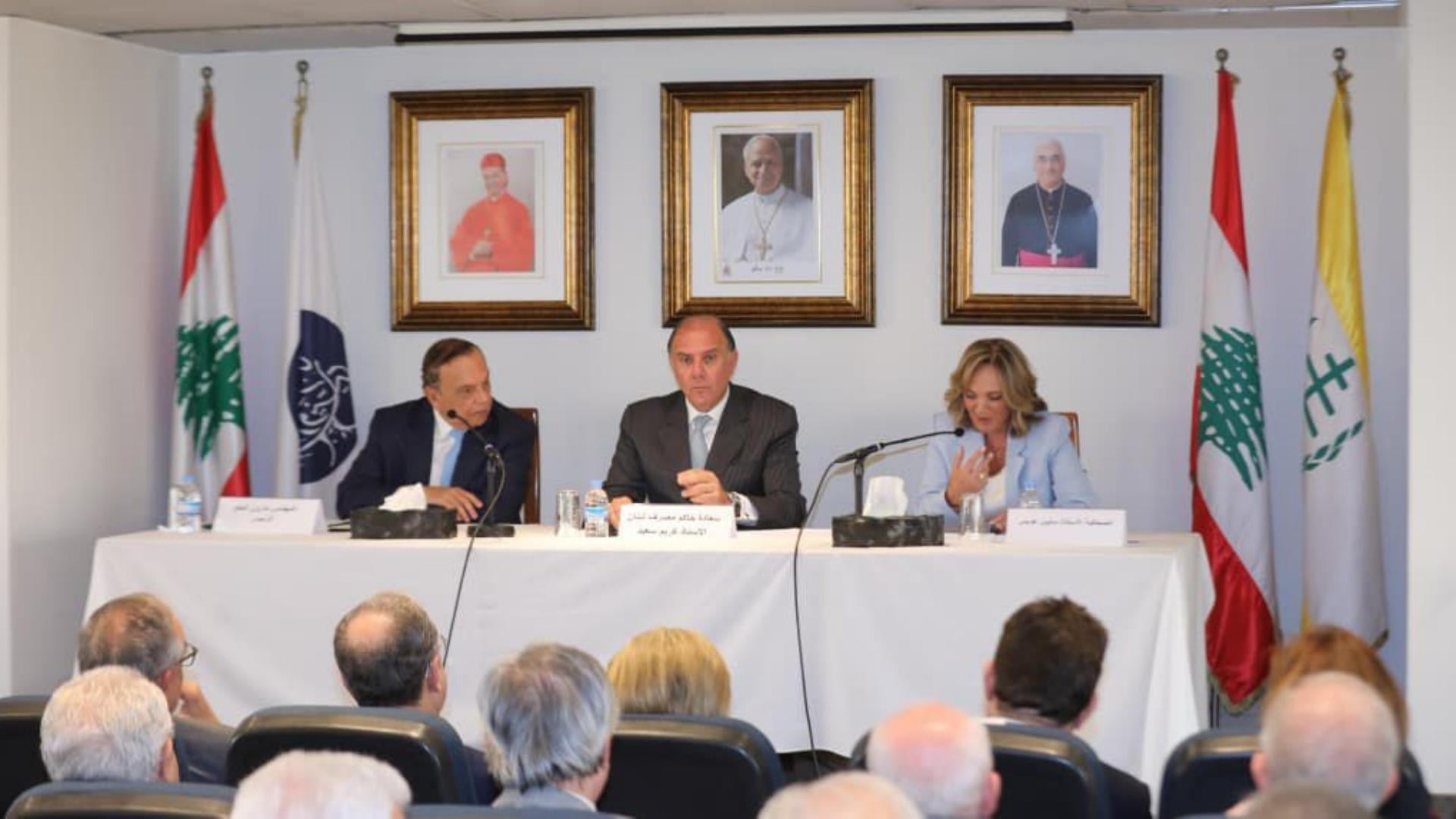
Speaking at a well-attended event at the Maronite League headquarters, chaired by its president, Engineer Maroun Helou, Saeed explained that the purpose of central bank independence is to ensure the presence of a single institution within the state's constitutional framework capable of saying "no" when necessary. This includes rejecting excessive borrowing, financing structural deficits through monetary issuance, inflationary financing, and short-term political interests that threaten long-term national stability. He underscored that the bank must say "no" to lending to governments without any restrictions, conditions, contracts, or draft agreements, particularly when such funds come from depositors.
Saeed pointed out that Lebanon’s financial failure was not due to a lack of laws but because of a gradual abandonment of respecting them. He identified the most critical and complex legislation as the Financial Regularization and Deposit Repayment Law, currently under discussion between the government and the International Monetary Fund (IMF), with the central bank participating in some aspects intermittently. He stressed that the central bank will not support this law unless it is based on solid legal foundations, a realistic economic approach, and genuine social justice.
He outlined four primary objectives of this legislation:
1) Ensuring that all parties—the state, the central bank, and commercial banks—bear the economic burdens of the crisis with a realistic and fair distribution of obligations.
2) Preventing depositors, especially small depositors holding less than $100,000, from incurring high costs and enabling the fastest repayment methods according to available liquidity.
3) Providing the Lebanese banking sector, before others, a genuine opportunity to recapitalize and restructure to continue offering services and participate in economic recovery.
4) Holding accountable all those involved in suspicious operations and recovering stolen funds to increase liquidity reserves aimed at repaying deposits.
The meeting included the Maronite League’s president and members, former ministers and deputies, past league presidents, several professional syndicate heads, board chairpersons, general managers, members of the executive council, the Maronite General Council president and members, as well as committee heads and members within the league.
The session began with the Lebanese national anthem and was moderated by journalist Sabine Owais.
Hatim Hatim, head of the Maronite League’s Economic and Financial Committee, welcomed Dr. Saeed, expressing anticipation to hear the central bank governor’s perspective on the current financial situation and the future plans led by the central bank to achieve the hoped-for recovery.
Following this, Engineer Maroun Helou, president of the Maronite League, extended a welcome, highlighting the special significance of Saeed’s visit. He noted that Saeed holds one of the most sensitive responsibilities during this critical phase in Lebanon’s history and praised his professional expertise and deep understanding of reform and responsibility. Helou also emphasized Saeed's representation of a longstanding Lebanese family with a distinguished role in national and political life, contributing for decades to Lebanon’s service and stature.
Helou remarked that Saeed assumed his responsibilities during an exceptional period marked by an unprecedented financial, monetary, and economic crisis affecting Lebanese citizens’ lives, future generations, and their trust in the state and its institutions. He added that the challenges facing the central bank go beyond traditional monetary management to include rebuilding confidence in the financial and banking sector, protecting monetary stability, and contributing to economic recovery in cooperation with constitutional authorities and relevant bodies.
He further stated that under Saeed’s leadership, Lebanese citizens expect a new phase characterized by transparency, good governance, serious reform, and an active central bank role in restoring internal and external confidence. This, Helou said, would open the door to economic revival, guide the sector toward fairer and more sustainable choices, and restore Lebanon’s financial standing regionally and globally. He expressed hope that Saeed’s term would serve as a rescue phase to establish stability, restore financial and monetary order, transition from collapse to monetary stability and financial balance, and that Saeed’s expertise, relationships, and vision would place Lebanon on the path to genuine recovery and banking sector restructuring based on solid foundations that protect depositors’ rights, stimulate the economy, and strengthen state resilience.
Helou affirmed that deposit issues remain fundamental, representing not just numbers but people’s lifetimes and rights. He emphasized that deposit repayment according to a fair and transparent plan is a priority. He praised Saeed’s professional and financial career as a model of competence, experience, and integrity, which justifies confidence in his ability to confront current challenges and achieve his goals. Helou acknowledged having heard Saeed’s work program and proposed solutions during his meeting with the Economic, Social, and Environmental Council and recognized the significant responsibility he bears, expressing confidence in his capability to fulfill this rescue role amid what Saeed described as a systemic crisis.
Helou concluded by welcoming Saeed among his family and colleagues at the Maronite League, wishing him success in this national mission for Lebanon’s benefit and the establishment of a more stable and prosperous future.
Governor Karim Saeed responded by expressing his sincere thanks to the Maronite League and its Economic Council for the invitation. He noted that this was his second time addressing this esteemed forum and hoped these meetings would become a regular tradition. Saeed praised the league as one of the few Lebanese institutions combining historical memory, free thought, national commitment, and genuine concern for the country’s future. He emphasized that exchanging ideas with an audience aware that economic issues are not merely material but also political, institutional, social, and above all national is vital. These issues relate to rationalizing public funds, protecting private wealth, distributing responsibility, and building trust between citizens and public institutions. He clarified that their discussion would not focus on interest rates, exchange rates, inflation, or banking supervision, which are important but merely outcomes of deeper, more significant matters.
Saeed proceeded to discuss the importance and role of institutions, specifically the independence of institutions. He stated that the financial and administrative independence of Lebanon’s central bank is a fundamental condition for Lebanon’s economic recovery now and in the future.
To understand the future of Lebanon’s central bank, Saeed said it is necessary to revisit its origins. Established in 1963 under the Money and Credit Law issued on August 1, 1963, during President Fouad Chehab’s era, the bank reflected a constitutional vision emphasizing institutional strength over individual popularity. Chehab is remembered not only as a president but as a key builder of modern Lebanese institutions. He inherited a modern state and constitutional institutions from the founding president in 1943, as well as a prosperous economy from his predecessor, President Camille Chamoun, which fostered a promising banking sector open to the Arab and Western worlds. The legacy of these presidents was institutional rather than political or ideological. Chehab particularly understood that a nation’s strength lies in the solidity of its institutions, which must be independent, efficient, professional, and governed by laws rather than personalities. The central bank was one such institution, embodying a modern constitutional vision. Its founders recognized that monetary stability could not be achieved if the central bank was treated as an ordinary government department or merely a commercial bank competing in the private market. Therefore, they created a unique entity.
Saeed highlighted that Article 13 of the Money and Credit Law defines the central bank as a legal public entity with financial independence, considered a merchant in its dealings with others. In its first role, it acts as the state’s bank, safeguarding public institution deposits, treasury funds, settling state obligations from its accounts, and consulting with the government on financial and monetary matters when necessary. It also functions as the sector’s regulator, supervising commercial banks, financial institutions, exchange offices, financing companies, and payment systems.
In its second role, the central bank operates as a regular bank conducting financial transactions and investments with other banks domestically and abroad. It issues deposit certificates, discounts treasury bills, and buys and sells local and foreign currencies. This dual nature makes the central bank a sui generis legal entity—public in its mission, private in some dealings, and independent in performing both functions. This distinction is fundamental.
Saeed affirmed that the central bank is the state’s bank, with the state as the sole shareholder. It must not become the state’s banker or financial intermediary. Though these concepts may seem similar, they describe entirely different constitutional realities. As the state’s bank, the central bank protects the country’s monetary system, facilitates public financial operations within legal limits, and maintains confidence in the national currency. Becoming the governments’ banker, however, means financing political choices regardless of economic discipline, subordinating monetary policy to electoral cycles, allowing financial laxity to gradually undermine monetary stability, and replacing institutional governance with political facilitation.
For this reason, all modern democracies have gradually recognized the necessity of an independent central bank, a principle Lebanon has upheld since 1963, the central bank’s founding year.
Saeed noted frequent misunderstandings regarding independence. Some believe it grants absolute authority to the central bank or permits lack of accountability and unilateral financial and monetary decisions. Others think it places the governor and board above or against democratic institutions. He clarified that both assumptions are entirely incorrect.
He explained that central bank independence is not a privilege granted but a protection given to both the state and the economy. The central bank is subject to government oversight, judicial accountability, and constitutional responsibility, with its governing members sworn in before the president of the republic, Lebanon’s head of state.
The purpose of independence is to ensure the existence of one institution within the constitutional framework capable of saying "no" when necessary: no to excessive borrowing, no to financing structural deficits via monetary issuance, no to inflationary financing, no to short-term political interests threatening long-term national stability, and no to lending governments without any restrictions, conditions, contracts, or draft contracts involving others’ funds—specifically depositors’ money.
In this sense, the central bank is neither an opponent nor subordinate to the government. It serves as an administrative check maintaining balance between financial ambition and monetary discipline. This philosophy permeates the Money and Credit Law. A careful reading of Articles 88 to 91 reveals that financing the state by the central bank is not the principle but the exception, reserved for unprecedented cases and extreme necessity.
The legislator did not intend for this financing to become a permanent principle or a fixed rule, nor for monetary policy to replace sound fiscal policy. Unfortunately, a key lesson from the current financial crisis is that exceptional measures gradually became routine practices.
Saeed described how, over many years, monetary easing replaced financial discipline, and the distinction between temporary assistance and structural financing faded. As public deficits accumulated, the burden increasingly shifted to the central bank’s balance sheet and eventually to the banking sector and the savings deposited by Lebanese citizens.
He stressed that this observation is not accusatory but an objective diagnosis. Institutions deteriorate gradually before collapsing suddenly; no institution loses its independence overnight but relinquishes it progressively through exceptions that become habits and habits that become policy. This may be the greatest institutional lesson in Lebanon’s modern financial history. Therefore, the central bank’s primary duty is not to oppose the government but to maintain discipline that ultimately protects the government from the consequences of its excesses. When a state loses monetary discipline, it weakens not only its currency but also trust, investment, growth, the economy, wealth, and savings. Ultimately, state institutions themselves lose credibility.
Saeed then shifted focus to reforms, noting that "reform" has become one of Lebanon’s most frequently used words. Every government speaks of reform, every international institution calls for it, and every political program promises it. He posed the fundamental question: what is reform?
He clarified that reform is not merely legal amendment, adding or deleting provisions, or importing legal concepts from elsewhere without considering Lebanon’s constitutional, legal, and legislative reality. If it were, Lebanon would have been reformed long ago. Lebanon’s tragedy was not the absence of laws.
In fact, Lebanon’s legal framework, especially in banking and finance, was among the most advanced in the region. The Money and Credit Law remains exceptional after more than sixty years, having established a modern central bank, defined its constitutional mission, preserved its independence, and created a supervisory structure later emulated by many countries. Lebanon’s financial failure was due to gradually ceasing to respect these laws.
Rule of law often became a matter of perspective rather than principle. Rules meant to apply equally to all were applied selectively. Exceptions became common practice. Temporary measures turned into permanent policies. What should have remained exceptional became routine. This is why the current reform effort must be understood correctly: it is not a legislative exercise but a process to restore confidence in institutions and correct public sector practices.
Many reforms are encouraged by the IMF and international partners, which should not cause concern or unnecessary opposition. On the contrary, their direction, momentum, and the confidence they inspire among investors, markets, and international financial institutions should be welcomed.
However, adopting reforms does not mean abandoning governance or existing laws. The central bank’s responsibility is neither to evade reform requirements nor to accept directives without independent opinion, constructive criticism when needed, or strong objection when necessary. Its duty is to ensure reforms align with Lebanon’s constitutional and legal framework, strengthen institutions rather than weaken them, and are implementable without creating ambiguity or contradictions within the legislative body.
Good legislation is measured not only by its objectives but also by its coherence. The legal system resembles a structure; one cannot replace a pillar simply because it appears stronger elsewhere. Each new component must fit the existing framework; otherwise, the entire edifice risks weakening. This is precisely the approach taken. Amendments to the banking secrecy law have been approved, enhancing transparency while preserving constitutionally guaranteed rights.
The draft Banking Restructuring Law is also under renewed discussion, representing a crucial step toward restoring confidence in the banking sector. This law aims not only to address accumulated losses but also to establish a clear framework for recapitalizing banks capable of continuing operations and liquidating those that cannot, in a manner that protects depositors as much as possible.
The most important and complex legislation remains the Financial Regularization and Deposit Repayment Law, currently under negotiation between the government and the IMF, with the central bank intermittently involved. Saeed reiterated that the central bank will not support this law unless it rests on solid legal grounds, a realistic economic approach, and genuine social justice.
The key objectives include:
1) Ensuring that all parties—the state, central bank, and commercial banks—bear the economic burdens of the crisis with a fair and realistic distribution of obligations.
2) Preventing depositors, especially small depositors holding less than $100,000, from incurring high costs and enabling the fastest repayment methods according to available liquidity.
3) Providing the Lebanese banking sector, before others, a real chance to recapitalize and restructure to continue service provision and participate in economic recovery.
4) Holding accountable all involved in suspicious transactions and recovering stolen funds to increase liquidity reserves aimed at deposit repayment.
Saeed acknowledged that the path to recovery will not be easy. The crisis was deep and painful, and cannot be overcome by quick decisions or political slogans. It requires discipline and genuine will to rebuild trust between the state and citizens, and between institutions and the economy.
In conclusion, Saeed emphasized that the independence of Lebanon’s central bank is not an end in itself but a means to protect Lebanon’s monetary and financial stability. It serves to shield the state from excessive deficits and borrowing, and to prevent banks from engaging in high-risk investments. True reforms restore institutions rather than weaken them by emptying them or redistributing decision-making among various bodies, which leads to loss of responsibility and accountability. He expressed confidence that Lebanon, supported by its strong institutions, the state led by the president, and a responsible government, can overcome this difficult phase and build a better future.