·
·


Lebanon
Health Minister Rakan Nasrallah emphasized Lebanon's commitment to addressing family mental health challenges at the fourth annual conference of the Lebanese Psychologists' Union.

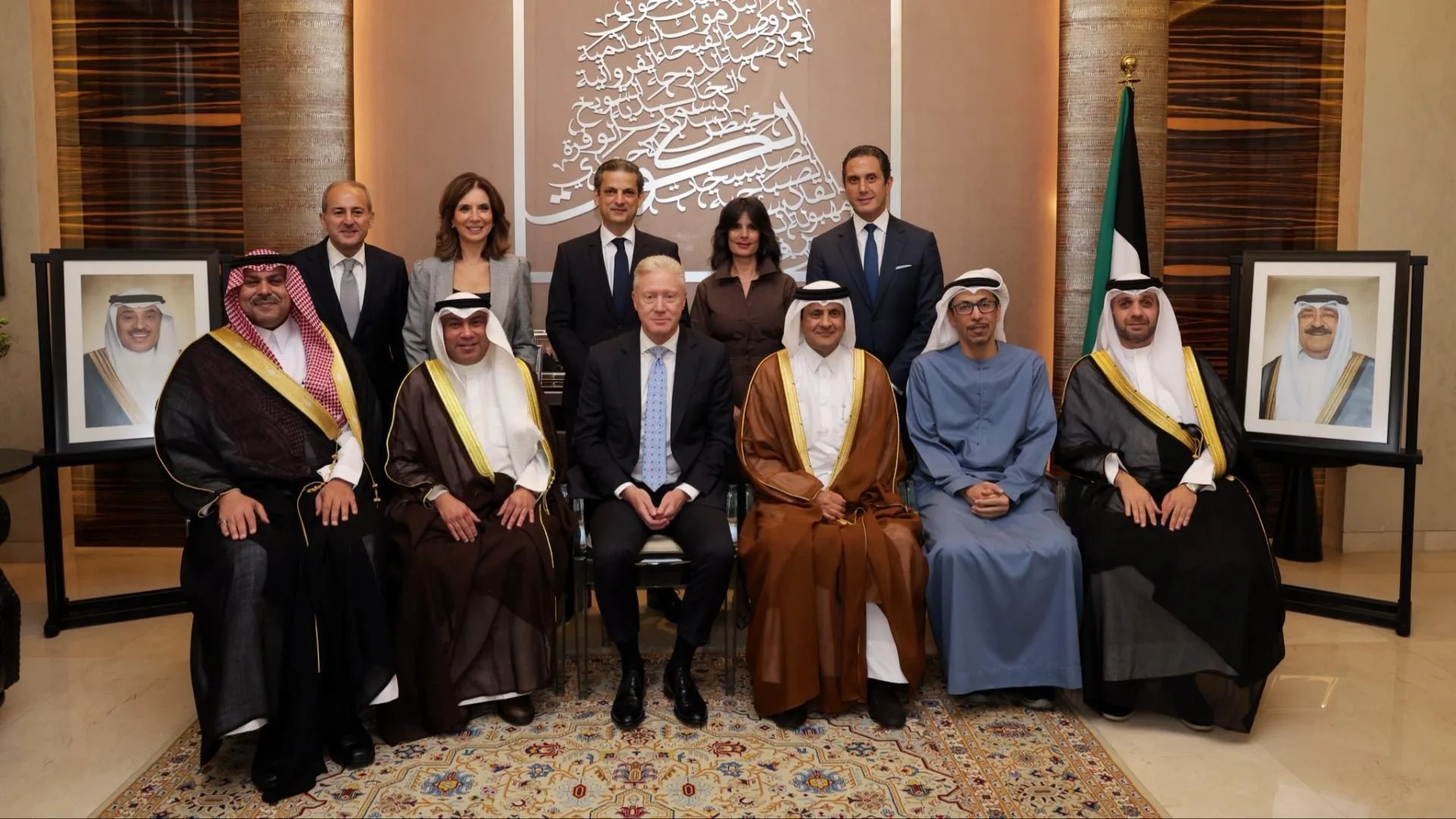
Minister of Public Health Rakan Nasrallah represented President General Joseph Aoun at the opening of the fourth annual conference of the Lebanese Psychologists' Union, held at the Mövenpick Hotel in Beirut under the theme: "Contemporary Family Psychopathology: Thinking About Today's Clinical Psychology." The event was attended by the president of the Psychologists' Union, Dr. Ragaa Maki, representative of Minister of Education Hilda Khouri, Vice President of Caritas, Mirai Hadid, and a large gathering of political, social, and medical figures. Throughout the day, specialized lectures addressed the challenges facing families in Lebanon.
Nasrallah affirmed that "the union's consistent organization of this conference for four consecutive years, transforming it into a reference point for psychologists, researchers, and students, is in itself proof of the vitality and seriousness of this profession." He expressed gratitude to the union and its president, Professor Dr. Ragaa Maki, for the effort invested in preparing the scientific program and for selecting a topic that directly reflects what our nation is experiencing today: contemporary family psychopathology.
In his speech, he said: "I say this deliberately, because the family you will study today through clinical practice and experience is precisely the same family that had to absorb, one shock after another, the tremors that have shaken Lebanon in recent years."
Nasrallah pointed out that "Lebanese families have endured since 2019 a financial and economic collapse ranked by the World Bank among the harshest the world has seen in over a century. On August 4, 2020, the Beirut port explosion shattered the lives of thousands of families in an instant. Then came the pandemic, isolating us from one another at the very moment we needed each other most. Lebanon still hosts, relative to its population size, one of the largest numbers of displaced persons and refugees in the world. Recently, the Israeli aggression and renewed displacement forced families once again to leave their homes and lands, struggling to explain the inexplicable to their children. Rarely has any other nation been asked, in such a short span, to endure such resilience."
He clarified that "against this backdrop, the work you gather here today to discuss is no longer merely an academic exercise; it has become a matter of national importance. Each of these crises has left its mark on how Lebanese families function, on the authority parents still hold over their children growing up amidst war, migration, and screens, and on couples’ and families’ ability to remain cohesive under pressures no family should bear alone. For this very reason, our government considers mental health—and particularly family mental health—as an inseparable part of public health, indeed of national health itself. For this reason too, the Lebanese state established, just over a decade ago, the National Mental Health Program within the Ministry of Public Health, and successive governments have continued investing in it without interruption, not despite every crisis, but precisely because of them."
He noted that "under the leadership of Dr. Rabih Chamaa, the National Mental Health Program has implemented two national strategies for mental health, with the latest covering the period from 2024 to 2030, shifting Lebanon’s care system from isolation to dignified, accessible community-based services for all. The program has integrated mental health into primary healthcare centers across Lebanon, making support available close to people’s homes, no longer restricted solely to specialized institutions. It has built and trained a national network capable of delivering immediate psychological first aid and psychological and social support within days of any emergency this country has faced—from the port explosion to the pandemic to the ongoing Israeli war on Lebanon and the resulting displacement. It has also developed low-cost, evidence-based digital interventions, earning international recognition for being specifically designed for a country that has not always been able to afford more."
He stressed that "none of this is sufficient to attribute solely to the profession carrying out this work on the ground. Since the 1970s, generations of Lebanese psychologists have demanded official recognition, regulation, and legal protection for their profession. This recognition did not come automatically; it required the National Mental Health Program, acting on behalf of the Lebanese state, to bring together universities, professional associations, and psychologists from all sectors around one table, leading a joint draft through the political process until its enactment. The Minister of Public Health expressed pride that the current government was the driving force behind the 2017 law establishing the Psychologists' Union, as well as the subsequent 2022 law granting it full democratic and institutional structure—enabling Lebanese psychologists to have their own home, a space they define themselves, protect people through licensing and professional ethics, and speak with one unified voice on behalf of a profession this country needs now more than ever."
Nasrallah underscored that "partnership does not end with the law establishing the union; it continues in discussing the pressures reshaping contemporary families—from digital identities to new parenting models to the ethical dilemmas of psychological treatment in a media-driven world." He said: "Know that the government is determined to remain your partner in translating this thinking into services reaching families wherever they are. We will continue working with you to strengthen the psychology workforce within our national health system, to protect children and adolescents navigating a world unknown to their parents, and to ensure no Lebanese family suffers alone."
He concluded: "Lebanon has asked much of its families in recent years, and has also asked much of you—psychiatrists and researchers sitting beside these families in their darkest moments. On behalf of the Lebanese Republic, I thank you for this work, congratulate the Lebanese Psychologists' Union on this fourth conference, and wish your discussions today all scientific precision and all humanity deserved by this critical subject."