Lebanon
Tourism Minister from Tripoli: We Have an Opportunity to Discover a Different Way to Understand the City
Tripoli hosted the 'Taste of Tripoli' event under the patronage of Tourism Minister Laura Khazen Lahoud, celebrating the city's culinary heritage as a key part of its identity and tourism potential.

The Municipality of Tripoli, the "Tripoli is My Identity" Committee, and the Tourism Committee organized the TASTE OF TRIPOLI event, sponsored by and attended by Minister of Tourism Laura Khazen Lahoud, "to celebrate Tripoli's food heritage as an authentic part of the city's identity and cultural and tourist scene." The event was attended by Abd al-Karim Fayyad representing Minister of Information Dr. Paul Marqaq, Fahmi Karami representing Minister of Education Rima Karami, MP Ashraf Rifi, former MPs Samir Jisr and Ali Darwish, Mayor of Tripoli Abdul Hamid Karima, Mayor of Al-Mina Abdullah Kabbara, President of the Fihayaa Municipal Union Wael Zamrli, North Lebanon Governor Iman Al-Rafi, Head of the Special Economic Zone Hassan Danaoui, Chairman of the Board of Directors of the Rashid Karami International Fair Hani Al-Sha'rani, Director of Bank of Lebanon in Tripoli and the North Safwan Danaoui, General Manager of Tripoli Government Hospital Nasser Adra, former Mufti of Tripoli and the North Sheikh Malek Al-Shaar, and other dignitaries.
Karima began by saying: "Today, standing among you and this large gathering of people who have come together for Tripoli, I thought of something simple. Perhaps the most beautiful way to talk about any city is to talk about the things that make people remember it. And Tripoli, I want to ask you: What do we remember about it? Its streets, its markets, its old houses, its sounds and noise, or the smell of food wafting from homes and kitchens? Tripoli is not just a city thousands of years old; it is a living narrative that has lived, changed, and continued from generation to generation. Every stone carries a trace, every market witnessed the lives of people who passed through here, and every khan, house, and alley preserved a part of the city's memory."
He continued: "From the Citadel to the old markets, to the khans, alleys, lanes, and the clock tower, Tripoli has historically been a space where people meet, and where culture, commerce, and life intersect. The most beautiful thing is that every era that passed left its mark, but Tripoli remained Tripoli; it maintained its authenticity and took from each era its touch without losing its identity. This is precisely what makes talking about 'Taste of Tripoli' more than just talking about food; because Tripoli's food is not just recipes and ingredients, but stories and memories. It is the morning of Eid, the Friday gathering, Ramadan evenings, and the hospitality of mothers and grandmothers. It is a taste linked to place, time, and people. A person may forget the name of a street, a hotel, details of a trip, or even some places they visited, but there are things they always carry with them, and taste is one of them: the taste of knafeh, cheese sweets, maghribiyeh, kaak, sayyadiyeh, and more than a hundred dishes associated with Tripoli and its memory. Hence, the importance of the 'Tripoli Food Heritage Map.' Today, we are not just documenting dishes, but also places, experiences, and the stories associated with them; so that this heritage remains present for our children and grandchildren, and becomes a new door for visitors to get to know the city and experience it in a different way."
He concluded: "The city does not grow only through projects and infrastructure - however important they are - but the city also grows when it knows the value of what it possesses, preserves it, develops it, and introduces people to it. This is part of our responsibility as a municipality: not to leave Tripoli's heritage confined to memory, but to transform it into an experience and an opportunity..."
Kabbara
For his part, Deputy Mayor of Tripoli Khalid Kabbara said: "I would like to talk a little about the idea that brought us here. 'Tripoli is My Identity' is one of the municipal council committees, and one of its main goals is to work on developing and updating the image of Tripoli, and how we present our city to people; because we know Tripoli geographically and historically, we know its people, its markets, and its heritage. We know how much energy, stories, and places worthy of being visited and discovered it contains. But the question was: Do people outside Tripoli know the city as we know it? And from here was our launch: Project One: Working on a new visual identity for the city of Tripoli, where we organized the 'Tripoli Visual Identity' competition aiming to reach a visual identity that resembles the city with its history, present, and future, and this project is still ongoing. Project Two: Was a course to develop the skills of media professionals and content creators in Tripoli; believing that the city's image is built not only through projects, but also through images, videos, words, and the story we choose to tell. Project Three: And from here we reached the third project, which is 'Taste of Tripoli'. Before starting it, we asked ourselves a simple question: What is the thing people most associate with Tripoli?"
He added: "From here, we asked many people inside and outside Tripoli, and there were diverse answers: History, markets, the Citadel, and ancient architecture... But almost in all the answers, there was a strongly present element, which is: Food. Then we realized that food in Tripoli is not just a kitchen, but an essential part of the city's identity; behind every dish is a story, a person, a family, a shop, a street, a craft... behind it are habits passed down from generation to generation. There are dishes that we - as sons of Tripoli - consider natural and ordinary because we grew up on them, but for someone coming from outside the city, they may constitute a complete unique experience..."
Lahoud
The closing speech was given by the Minister of Tourism, who began by noting that "there are cities whose knowledge is incomplete until we taste them, and Tripoli is one of these cities." She said: "Because taste here carries two meanings together: it is the taste of the table; sweet and savory, dough and spices, desserts whose mere mention draws a delicious smile on every Lebanese face, and dishes that every family keeps their own special breath in preparing. It is also the taste of the city itself; in its architecture, in its markets, in its crafts, in its details, and in that special magic of elegance and authenticity that characterizes Tripoli with its old neighborhoods and venerable houses. This is the beauty of the 'Taste of Tripoli' idea. We are facing an opportunity to discover a different way to understand the city; every dish leads us to a neighborhood, every ingredient carries a tradition, and every restaurant, bakery, or family kitchen adds depth to Tripoli's identity. The beauty of the Tripolitanian cuisine is that it is not trapped in the past; it is alive, evolving every day without losing its personality. It contains very old recipes and also constant innovation, and this ability to merge antiquity with renewal is exactly what makes any city intriguing to the visitor. Hence the importance of linking food to place. The visitor who comes to taste a delicious dish will discover a street, a market, a building, a citadel, a fair, and a craft, thus making the kitchen a door to entering the entire city."
She concluded: "I believe that Tripoli today has a great opportunity to tell Lebanese and foreign visitors: Come and discover a city that has its own taste in both senses; a taste that is eaten, and a taste that is seen and lived. I hope that this initiative will help make Tripolitanian cuisine a reason in itself to put the city on the map of trips to Lebanon; planned to be visited for its taste, as one of the most famous cities known for its cuisine around the world."
The event included the launch of the Tripoli Food Heritage Map (Tripoli Food Map), which documents the city's traditional foods and the associated places and experiences. It also provided guests with the opportunity to learn about the most prominent traditional Tripolitanian dishes through a live tasting experience.
Latest news

Bangkok declared disaster zone after severe flooding
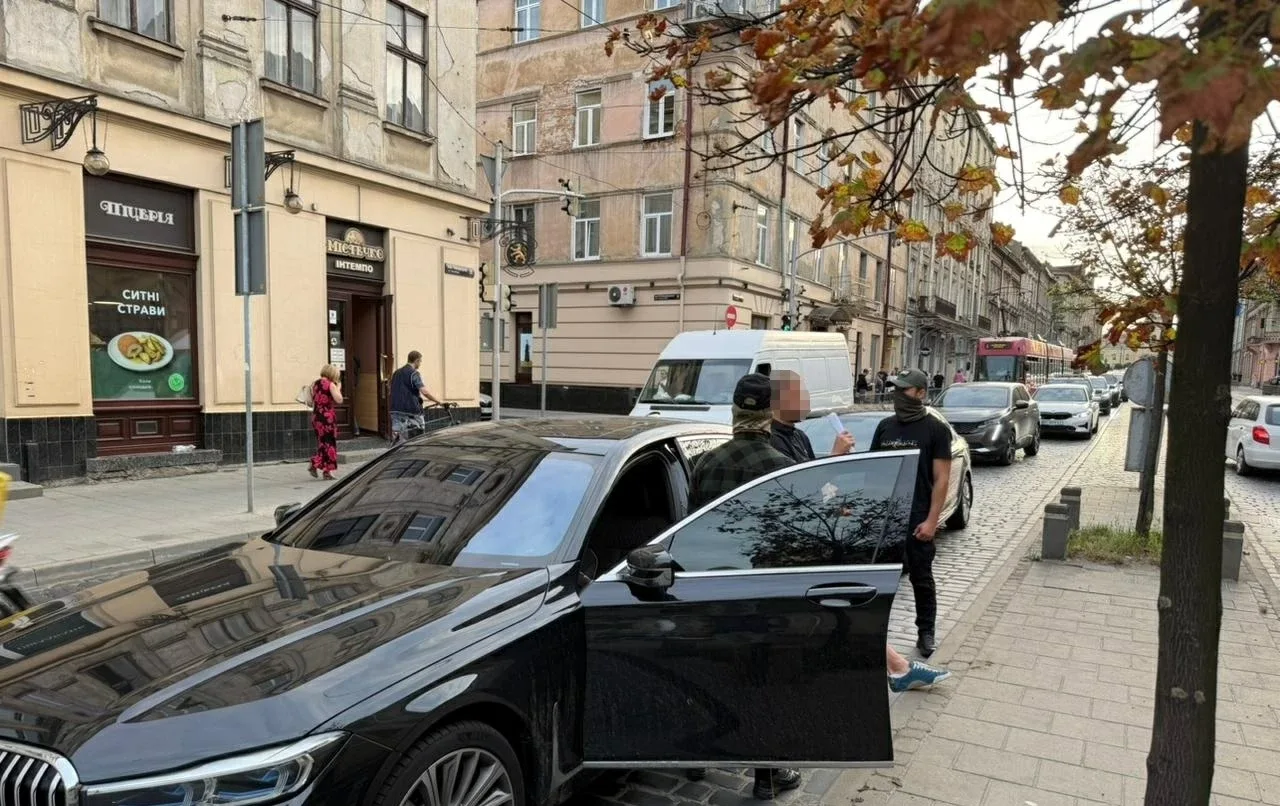
Ukraine’s Dismissed Prosecutor Linked to Dubai Villa in NABU Probe

Johansson pairs Prada minidress with Sophie Bille Brahe diamonds at NYFF