·
·


Miscellaneous
A Kentucky homeowner discovered a sky-blue Eastern box turtle, prompting wildlife experts to begin a careful process of removing layers of paint.

An adult female Eastern box turtle in Campbellsville, Kentucky, is undergoing a meticulous cleaning process after being discovered with a bright blue shell. The unusual coloration was not natural; a neighbor informed the new homeowner that a previous resident had painted turtles on the property. This discovery triggered an investigation and a public warning for nearby residents regarding the impact of such actions on local wildlife.
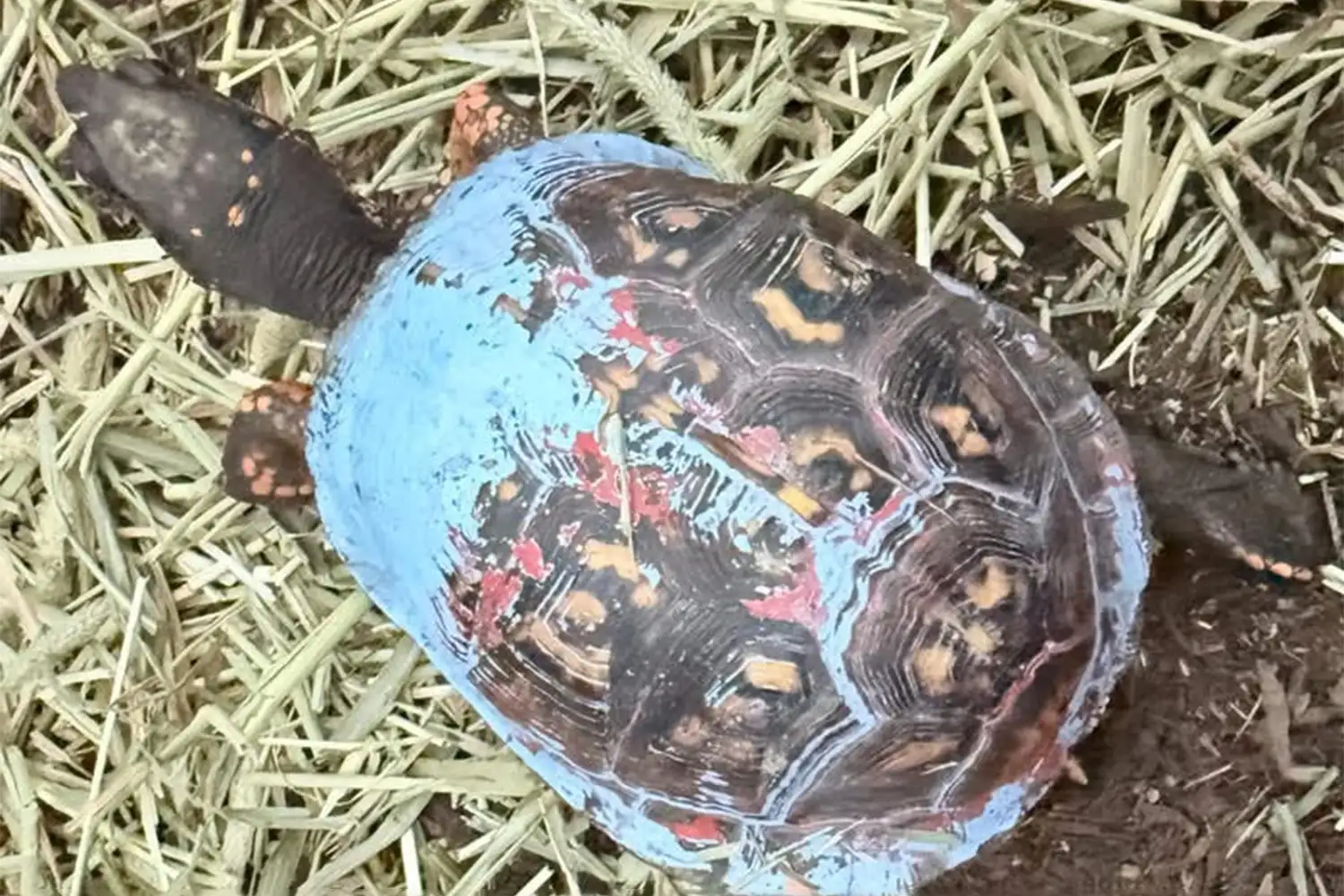
The homeowner contacted Wilderness Trail Wildlife Center in London, Ky., where staff identified the reptile as an Eastern box turtle and collected it for evaluation. During the assessment, the rehabilitation team found a layer of red coloring beneath the blue coat. This indicates the turtle had been painted at least twice. According to Popular Science, the seemingly oil-based paint was thick, layered, and difficult to remove, posing potential risks for serious complications.
Tonya Poindexter, a licensed wildlife rehabilitator, told the outlet that a turtle’s shell is part of its body and skeletal system, growing and healing along with the animal. She stated, “Putting paints and chemicals that were never intended for an animal onto that shell is simply not something we should be doing to wildlife.” The artificial colors also strip the turtle of its crucial camouflage defense against natural predators.
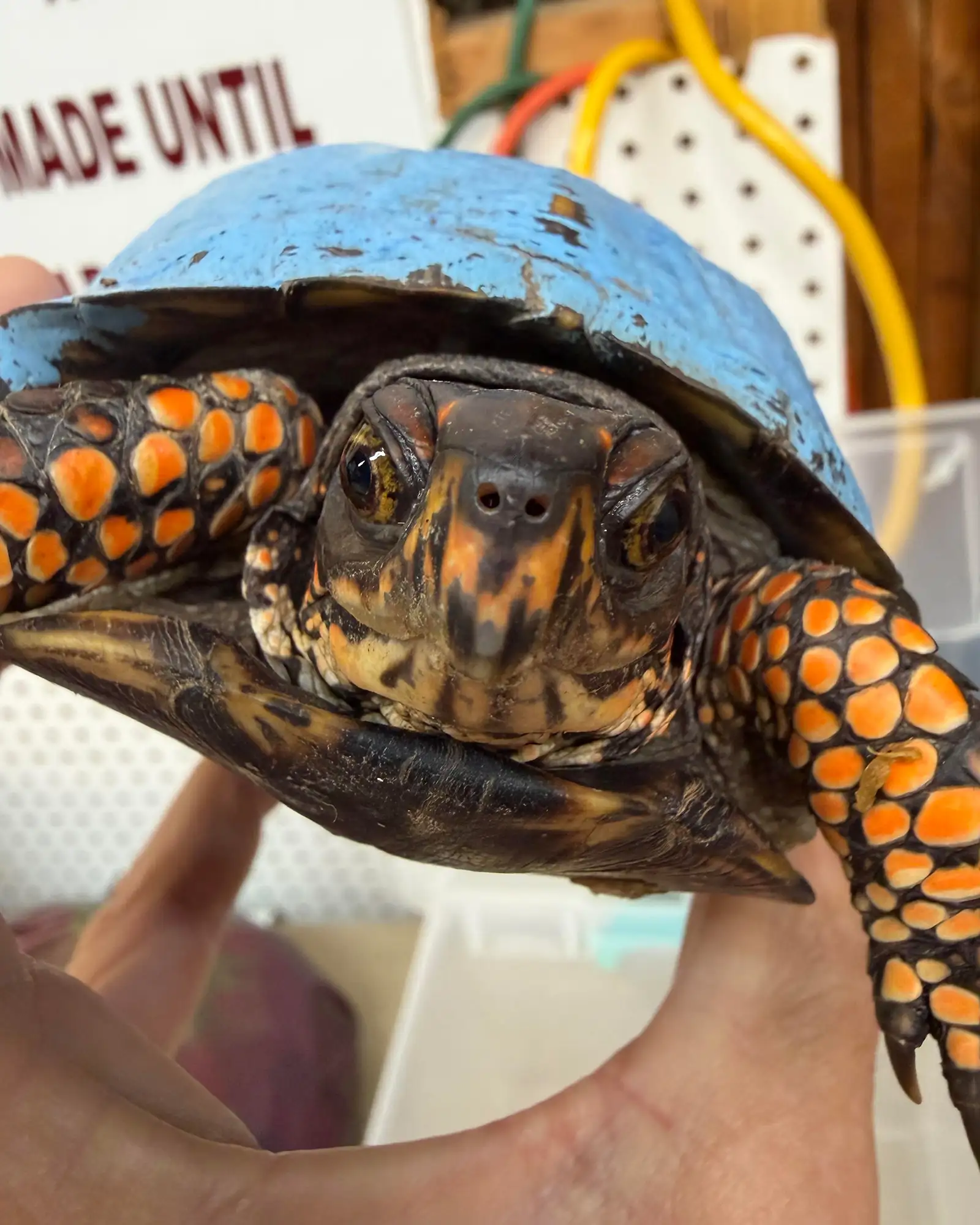
“Their natural brown, yellow and orange patterns blend beautifully with leaves, soil and the dappled forest floor,” Poindexter said. “Covering that natural camouflage with bright blue or red paint can make an animal that normally almost disappears into its surroundings stand out dramatically.” Because the turtle is currently highly visible to predators, the team decided not to release the otherwise healthy animal back into the wild until the paint is fully removed.
The removal procedure is slow and careful. It begins with the turtle soaking in warm water while a care team member scrubs small areas of her shell using a toothbrush and Dawn dish soap. For tougher, thicker paint sections, rehabbers apply small amounts of mineral spirits. They maintain airflow near the reptile’s face to prevent inhalation of concentrated fumes, followed by a thorough wash and rinse.
Poindexter cautioned the public against attempting similar removal methods. “This isn’t something I recommend people try themselves,” she said, urging anyone who finds a turtle covered in paint, glue, or tar to contact a licensed wildlife rehabilitator or veterinarian. Once the paint is sufficiently removed, the turtle will be released in the area where she was found.