·
·


Tech & Science
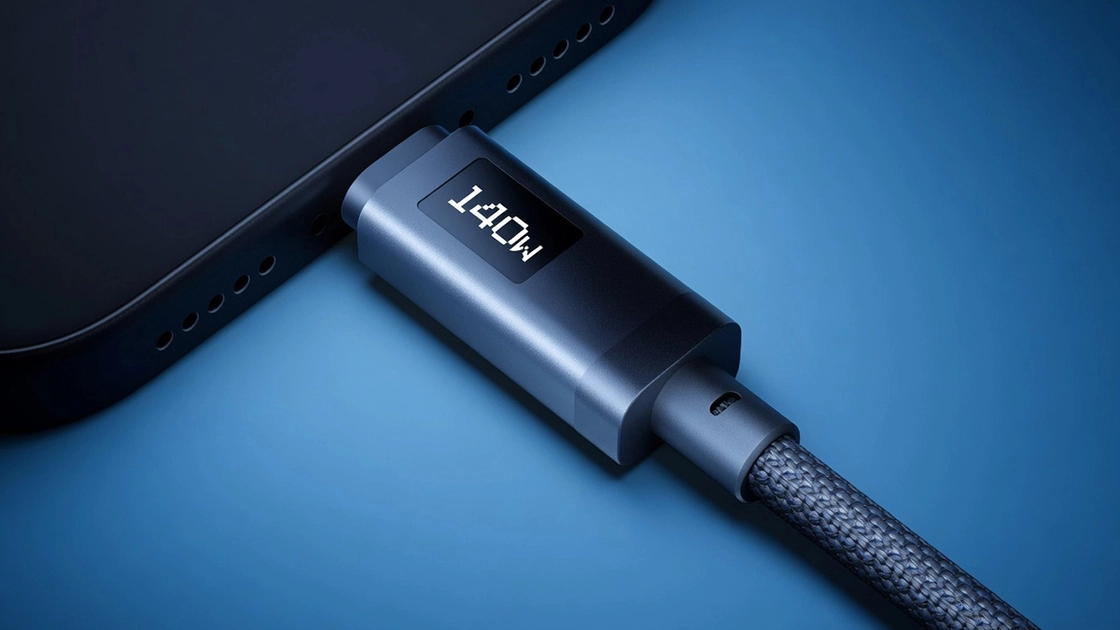
DJI launches a 240W USB-C cable featuring a built-in screen that displays live wattage, voltage, and current during charging.

A new USB-C cable from DJI offers a built-in display that shows real-time wattage, voltage, and current as devices charge. This cable supports up to 240W power delivery and includes a braided design for added durability.
The cable incorporates an E-Marker chip along with a small screen on one connector, providing users with immediate feedback on power delivery metrics. This feature helps identify whether charging speed limitations stem from the cable, charger, or power source, making it useful for verifying if a charger meets its advertised specifications.
With a maximum throughput of 240W and a 7A current rating, the cable is suitable for charging gaming laptops and DJI’s portable power stations, extending beyond typical phone charging capabilities. The 7A rating exceeds that of most standard USB-C cables available.
Data transfer speeds are limited to USB 2.0, a common practice for cables designed primarily for high power delivery to maintain flexibility and reduce costs by omitting extra data lines. Although this limitation may seem outdated in 2026, the cable’s focus is on charging rather than high-speed data transfer, such as 4K drone footage.
Comparable 240W display cables from other brands, like UGREEN, provide similar specifications but often come with higher prices ranging from $40 to $50. Some of these alternatives offer USB 3.2 data speeds, which is a consideration for buyers depending on their needs.
Currently, the cable is available bundled with DJI’s 140W GaN charger at an approximate price of $30. DJI has not announced a standalone retail price for the cable, and as of June 2026, it is not listed individually on DJI’s US or UK online stores. However, it may be found through third-party sellers on Amazon’s US and UK sites.
The bundled price undercuts competing standalone cables but ties users to DJI’s power accessory ecosystem. For those already using DJI charging products, this may be a practical option. Users without existing DJI gear might consider specialized display cables from other manufacturers for greater flexibility.