World
Hezbollah the Sole Suspect: Intelligence Documents Reveal Oil Smuggling Network from Jurf al-Sakhr to Baghdad
Intelligence documents and satellite imagery reveal an oil smuggling network operating since 2021 in areas controlled by Iraqi Hezbollah, stretching from Jurf al-Sakhr to Baghdad.

Intelligence documents and satellite images have revealed facts related to an operation extending since 2021 for smuggling crude oil in areas under the control of Iraqi Hezbollah in southern Iraq.
Reports obtained by the Iraqi National Intelligence Service, based on intelligence documents, satellite images, and spatial maps concerning operations to smuggle crude oil and petroleum products from the Jurf al-Sakhr (Jurf al-Nasr) area in Babil province south of Baghdad, revealed that these operations have been ongoing since 2021. They include breaches in pipeline lines, underground storage sites, primitive refining facilities, as well as the use of tankers to transport oil via multiple routes toward the capital, Baghdad.
The information indicates that smuggling operations are not limited to a single method but rely on a system of sites, facilities, and transport routes developed in stages over the past years, using camouflage means to avoid detection, particularly at oil storage and loading sites.
Underground Storage and Camouflage Methods
According to the documents and satellite images presented by the National Intelligence Service to the Prime Minister, one of the most prominent methods used in smuggling operations is storing oil inside pits and tanks beneath the ground surface, instead of relying on visible traditional oil warehouses, which reduces the possibility of detecting activity through aerial surveillance.
The images show some storage sites covered with white iron structures used for camouflage and hiding the nature of the facilities below, in addition to the existence of loading and unloading sites connected to a network of roads that allow moving tankers and transporting their loads away from breach sites.
These data indicate that the nature of the facilities used, if technically and field-confirmed, points to logistical arrangements that go beyond individual pipeline violations to include storage, transport, and distribution.
Two Routes for Transporting Oil from Jurf al-Sakhr to Baghdad
Regarding oil transport methods, maps revealed two main routes said to be used to transport smuggled derivatives or crude oil from the area toward Baghdad.
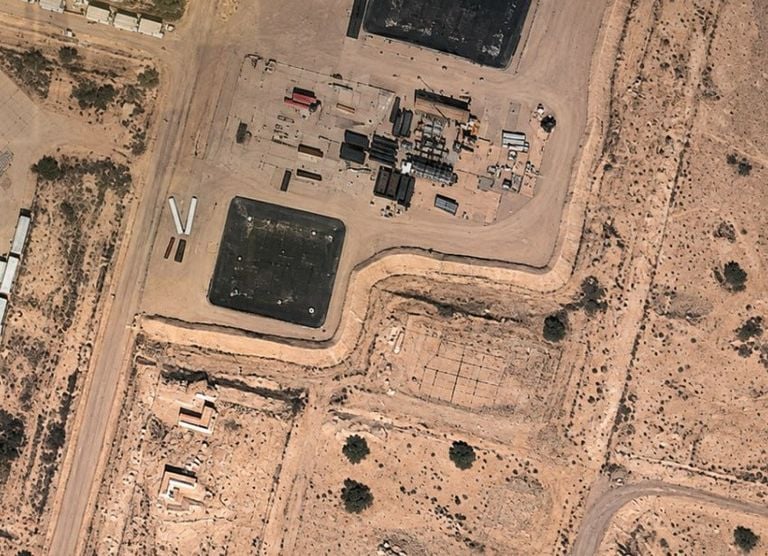
The first route begins from the Baghdad–Babil road, passing through the Musayyib Bridge, reaching the capital, allowing tankers to move along connecting roads between Babil province and Baghdad.
The second route begins from the refinery site toward the Ameriya al-Fallujah area, where tanker movement - according to the documents - merges with regular fuel vehicle traffic, before taking the international road and passing through the Al-Intisar checkpoint toward Baghdad.
These routes indicate reliance on more than one path for transporting loads, which may allow changing movement lines according to security and regulatory conditions, making tracking transport operations require coordination among security agencies, regulatory bodies, and sectors concerned with managing the road network and oil transport.
Pipeline Breaches and Oil Transport via Dozens of Tankers
Among the most prominent findings in the documents was the detection of a breach in one of the oil pipelines near the "Al-Bahbahani Intersection" area, noting the transport of extracted oil via dozens of tankers, each with a capacity of approximately 36,000 liters.
Satellite images also revealed another breach site within the Jurf al-Sakhr area located between two houses and palm trees, which had been covered with white iron structures to hide the activity related to oil loading and transport.
The documents clarify that loading operations at the second site continued until 2026, raising questions about how the violation of the pipeline network persisted throughout this period, and the effectiveness of monitoring, maintenance, and early detection measures for technical faults in oil transport lines.
The documents also indicate the existence of a primitive oil warehouse about seven kilometers from one of the breach sites, where tankers unload their contents before redistributing them toward Baghdad according to the routes shown by the spatial maps.
Primitive Refinery and Illegal Oil Facilities
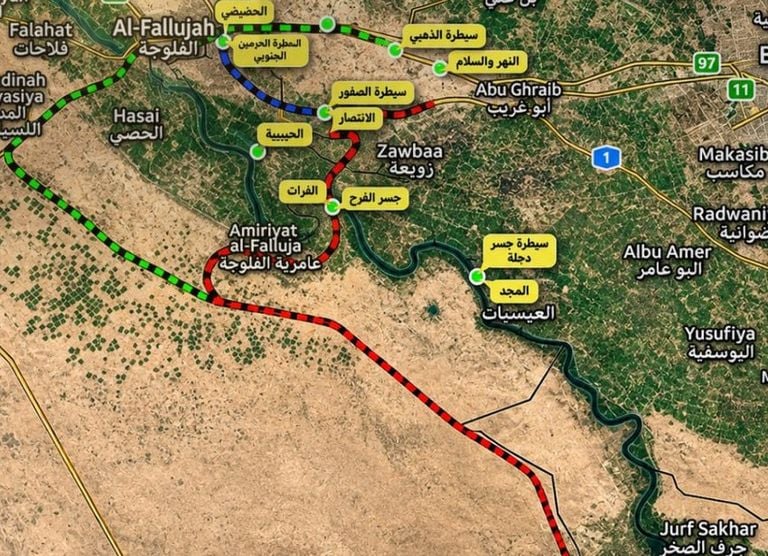
In another development, the documents mentioned the detection of the construction of a small oil refinery inside Jurf al-Sakhr, described as having primitive refining capabilities, with additional oil facilities and amenities added to the site.
Information indicated the detection of 14 tankers around the facility, while other images showed a pit surrounded by oil spots and parked tankers, stating that its activity began in 2021 and recorded a peak of 21 tankers during 2022.
These data raise questions about the nature of materials handled inside the facility, whether refining operations are conducted continuously, the potential production volume, and the entities responsible for operating the site and securing raw materials and transporting resulting products.
Furthermore, the existence of oil facilities outside the official system, if proven, opens the file of oversight over unlicensed industrial and oil activities, and the extent of their connection to acquiring crude oil or petroleum products through pipeline breaches.
Nighttime Loading and Difficulty of Detection
One of the points emphasized by the documents was what it described as an increase in loading operations during nighttime hours compared to daytime, considering that night activity contributes to reducing opportunities for detection and monitoring, and allows moving larger numbers of tankers away from the eyes of relevant authorities.
The data suggest that reliance on nighttime loading may lead to increased quantities of oil transported outside official channels, doubling the potential losses suffered by the national economy.
However, determining the actual volume of smuggled oil and the value of financial damages resulting from these operations requires official data on lost oil quantities, pipeline flow rates, number of tankers, as well as results of technical and financial investigations.
Accusations Regarding Control and Protection
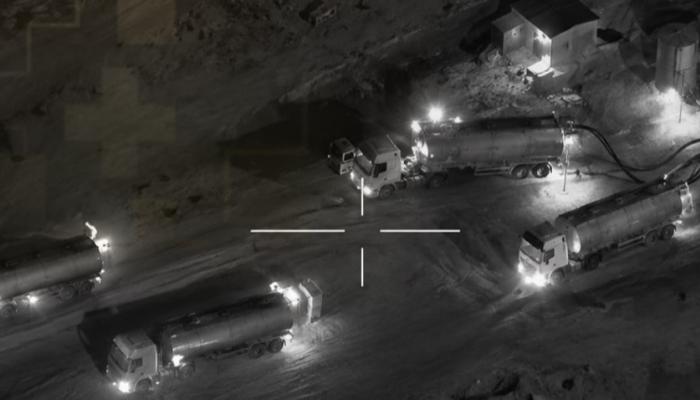
On the security side, the documents attributed the smuggling sites in Jurf al-Sakhr to an area under the control and protection of an entity affiliated with an armed faction (Kata'ib Hezbollah), indicating that pipeline breaches and associated operations have been ongoing since 2021.
This aspect of the information represents one of the most sensitive files due to the questions it raises regarding the ability of government institutions to enforce oversight over oil facilities and pipeline networks, especially in areas facing security and administrative challenges.
However, identifying the entity responsible for protecting the sites or participating in smuggling operations still requires an official investigation and public judicial evidence, and the accusations contained in the published documents cannot be treated as final judgments against any entity or party.
Responsibility of Oil Companies and Demands for Accountability
The documents did not limit themselves to presenting breach sites and tanker routes but included recommendations calling for holding officials accountable in the Pipeline Lines Company and the Petroleum Products Distribution Company following what they described as negligence in addressing pipeline pressure imbalances reportedly recorded since 2021.
These recommendations raise questions about response mechanisms to abnormal drops in oil transport line pressure, and the extent to there are alarm and monitoring systems capable of identifying fault locations and intervening quickly to prevent depletion of transported quantities.
The documents also called for taking legal actions against those violating the pipeline network and individuals who constructed illegal oil facilities, emphasizing the necessity of protecting public funds and pursuing those responsible for damages inflicted on the oil system.
"Al-Ain News"
Latest news

IMF Delegation Begins Talks on Banking Reform and Financial Gap in Beirut
Ukraine Strikes Russia's Fuel Lifeline: 6 Regions Face Supply Crisis
Egypt Permanently Lists Muslim Brotherhood and Three Leaders on Terror Watchlist