World
Report: Iraqi Factions Withhold Fighters' Salaries to Transfer Funds to Iran's Revolutionary Guard
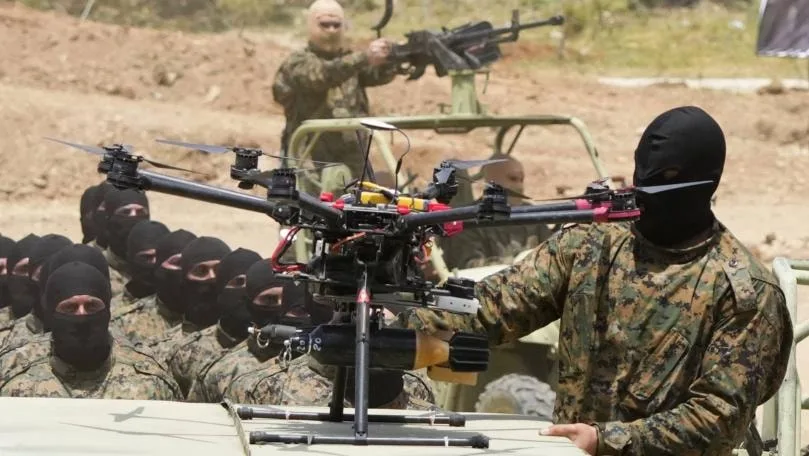
Sources from three pro-Iranian Iraqi factions told Alhurra that most fighters have not received salaries for two months, a move aimed at providing funds to the Islamic Revolutionary Guard Corps amid Tehran's financial crisis.

Sources in three pro-Iranian Iraqi factions told “Alhurra” that the majority of their fighters have not received their salaries for two months, a step aimed at saving money for the Iranian Revolutionary Guard Corps, in light of the financial crisis facing Tehran due to economic sanctions and the US naval blockade.
According to five sources, including three armed men, two of whom belong to Kataib Sayyid al-Shuhada and the third to Harakat Hezbollah al-Nujaba, and family members of two armed men from Kataib Hezbollah Iraq, faction leaders withheld the salaries of fighters not registered within the Popular Mobilization Forces (PMF) brigades, who constitute the majority of their elements, while those registered with the PMF continued to receive their salaries.
The United States classifies these three factions and the majority of pro-Iranian Iraqi groups on its list of terrorist organizations.
All sources who spoke to “Alhurra” preferred not to reveal their identities due to the sensitivity of the issue, noting that the withholding of salaries was communicated to fighters as a temporary measure to provide funds for the Iranian Revolutionary Guard Corps.
These developments come at a time when Iran faces an escalating economic crisis since the United States began exerting immense pressure on the regime by imposing a naval blockade and strict sanctions, weeks after the start of the US-Israeli war on Iran last February.
These pressures have reflected on the ability of the Iranian Revolutionary Guard Corps, which Washington classifies as a terrorist organization, to fund affiliated armed groups in the region, according to US officials.
Last October 16, US Central Command Commander Brad Cooper revealed that Iran-backed groups, such as Hezbollah, Hamas, and Shia militias in Iraq, which had received funding from the Iranian Revolutionary Guard Corps for years, are now being asked to return those funds.
Cooper said: “The financial pressure on the Iranian military establishment has become so great that there are reports indicating that pro-Iranian militias across the region are withholding their fighters' salaries in order to transfer funds to the Iranian Revolutionary Guard Corps, which is itself unable to pay its forces.”
Washington classifies Hezbollah and Hamas on its list of terrorist organizations.
In response to questions from “Alhurra” regarding the amount of money transferred by Iraqi factions to the Iranian Revolutionary Guard Corps, the timeframe during which these transfers took place, and whether they are still ongoing, US Central Command (CENTCOM) stated that it “has nothing to add to Admiral Brad Cooper's statements,” without providing further details about the specific Iraqi factions involved or the mechanisms of money transfer.
According to two Ahwazi opposition leaders critical of the Iranian regime, who spoke to “Alhurra,” the economic offices affiliated with the factions have begun, since last March, transferring a large portion of their financial revenues to Iran to contribute to funding the Revolutionary Guard and securing its salaries.
The two leaders said the three factions transferred funds in coordination with smuggling teams belonging to the Iranian Quds Force, via unofficial land and water routes along the borders between the two countries, in addition to tourism companies, land transport firms, Iraqi commercial fronts, banks, and exchange houses affiliated with these factions.
“Alhurra” was unable to independently verify this data.
Most pro-Tehran armed factions in Iraq are integrated into the Popular Mobilization Forces (PMF), an official institution linked to the Commander-in-Chief of the Armed Forces, i.e., the Prime Minister.
Figures close to Iran control the most important pillars of the PMF, including the presidency, chief of staff, and responsibility for security and intelligence, in addition to leading several prominent formations and armed factions under its umbrella.
In addition, these factions possess brigades and forces not affiliated with the PMF, operating independently according to orders from their leaders.
The PMF did not respond to questions directed by “Alhurra” regarding the salaries of members of these factions.
Political affairs researcher Rafed Al-Atwani believes that the Iranian economic crisis will reflect on the resources with which the Revolutionary Guard funds affiliated armed groups inside Iraq.
Al-Atwani told “Alhurra” that “the armed factions are in crisis, and this crisis is escalating, and it will reduce their performance at the military and popular levels and the fighters' belief in the project led by these groups.”
He added that “the factions may resort, with the worsening of their crisis, to relying more heavily on what he described as 'economies,' meaning networks of interests, financial activities, and resources operating outside the direct control of the state's formal economy, in order to self-finance.”
Latest news
Raji Discusses Lebanese-Canadian Relations and Negotiation Track

Trump Impeachment: Democratic Divisions on Mandate Limits After Midterm Victory

Fake Executives, Stolen Millions: AI Fraud Scandal Shakes America