·
·


World
Iran is expanding its conflict with the US beyond its borders by targeting Iraqi Kurdistan, according to an analysis by the Hebrew-language Jerusalem Post. The attacks, part of a sustained campaign since February, aim to destabilize the region and pressure the US to withdraw.

An analysis published by the Hebrew-language Jerusalem Post reveals that Iran is seeking through its attacks on Iraqi Kurdistan to expand its war with the US to include Iraq and other countries.
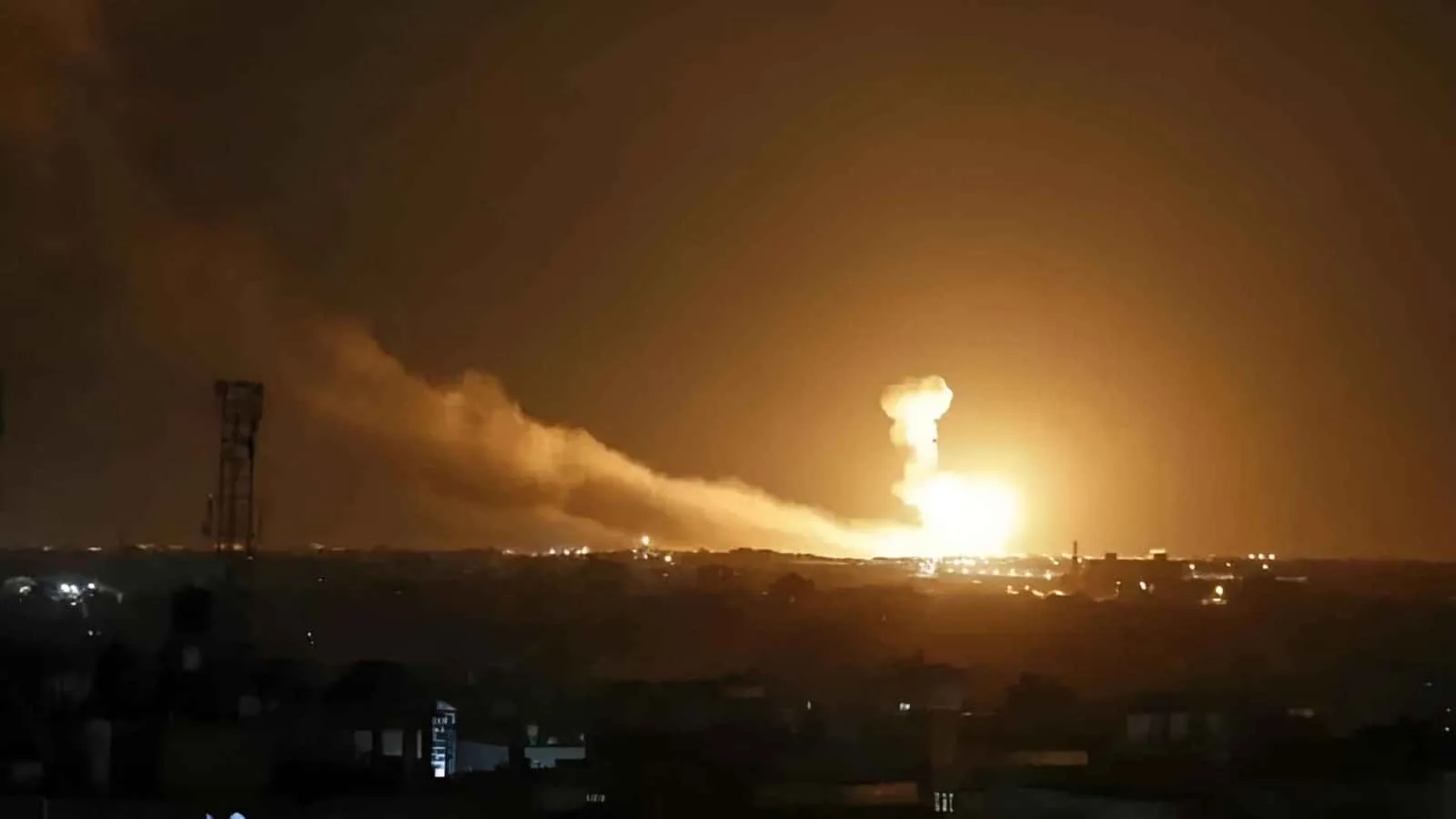
The newspaper's analysis highlights several attacks launched by Iran against the Kurdistan Region in northern Iraq the night before last, amid escalating tensions with the US, noting that these attacks are part of a continuous pattern since February.
The paper states that Iran has frequently targeted the Kurdistan Region, which includes the governorates of Erbil, Sulaymaniyah, Duhok, and Halabja, pointing out that since February, Iran and its proxies in Iraq have launched approximately 1,000 attacks using drones and missiles.
On Wednesday, Iran carried out drone attacks targeting sites belonging to the Iranian Kurdish Democratic Party (KDPI), an opposition group near Erbil; this attack comes amid renewed tensions between the United States and Iran over recent hours.
The Iranian Kurdish Democratic Party (KDPI) is one of the most prominent Kurdish opposition factions inside Iran; it has formed an alliance opposing the regime alongside six other factions. The party’s leader, Mustafa Haji, recently gave an interview discussing the importance of opposing the regime and building a democratic Iran.
In turn, Iran’s state-linked Tasnim News Agency, affiliated with the Revolutionary Guard, stated that the Islamic Revolutionary Guard Corps launched drone and missile strikes targeting American forces in Erbil.
The United States is working to withdraw its troops from Iraq, including from the Kurdistan Region, while Iran claimed it targeted a maintenance facility, according to the newspaper, which noted that Iran-backed militias have long targeted American forces in Iraq over the years.
National Threat
According to data collected by the Kurdish network Rudaw, the number of attacks exceeded 800 by late April, continued rising to more than 855 by May, and surpassed the 900 mark during the summer months.
Iran has justified many of these strikes by claiming that Iranian Kurdish opposition groups—such as the KDPI and Komleh Party, along with other organizations based in northern Iraq—pose a threat to Iran’s national security.
However, the attacks have far exceeded opposition camps; Iran-backed groups have repeatedly targeted areas around Erbil, Sulaymaniyah, and Duhok, including locations near American diplomatic and military facilities, energy infrastructure, and civilian zones.
The Israeli analysis notes that “Kurdish authorities have consistently emphasized that the Kurdistan Region is not a party to the conflict and has never permitted the use of its territory as a launchpad for attacks on Iran.”
Vulnerable Flank
Iranian attacks aim at a region in Iraq that Tehran assumes lacks sufficient protection, seeking to push the United States out of Erbil. Given Iran’s close ties with Iran-backed groups in Baghdad, it prefers targeting Erbil rather than Baghdad.
Iran also seeks to destabilize and weaken the Kurdistan Region, aware that it is a U.S. ally. Additionally, the Islamic Republic aims to send a message to Iranian opposition groups, warning them against contemplating an uprising within Iran.
U.S. President Donald Trump had previously mentioned via social media the possibility of an Iranian uprising; thus, Iran seeks to preempt such a move by shifting the conflict into Iraq, which it views as a direct neighborhood or sphere of influence and a buffer defense line.
This ongoing campaign has placed immense pressure on the Kurdistan Regional Government and simultaneously highlighted Baghdad’s challenge in controlling Iran-backed militias operating within Iraq.
The attacks have strained Iraq’s relations with the United States and neighboring countries, strengthening Prime Minister Ali al-Adhaimi’s calls to bring all armed groups under state authority.
For the Kurdistan Region, the conflict has revealed both its strategic importance and its vulnerabilities at once, especially as regional tensions continue to spread across Iraq’s borders.