·
·


World
Israel is building a large earth barrier separating more than 50% of Gaza Strip territory it controls, aiming to prevent infiltration and secure nearby Israeli areas.

The Israeli military is quietly and rapidly developing a new geographical boundary within the Gaza Strip by constructing a substantial earth barrier. This barrier divides over half of the Gaza territory under Israeli control from the rest of the enclave.
Recent satellite images have revealed the features of this new Israeli earth barrier in Gaza, which further entrenches the division within the small Palestinian enclave, according to the Associated Press.
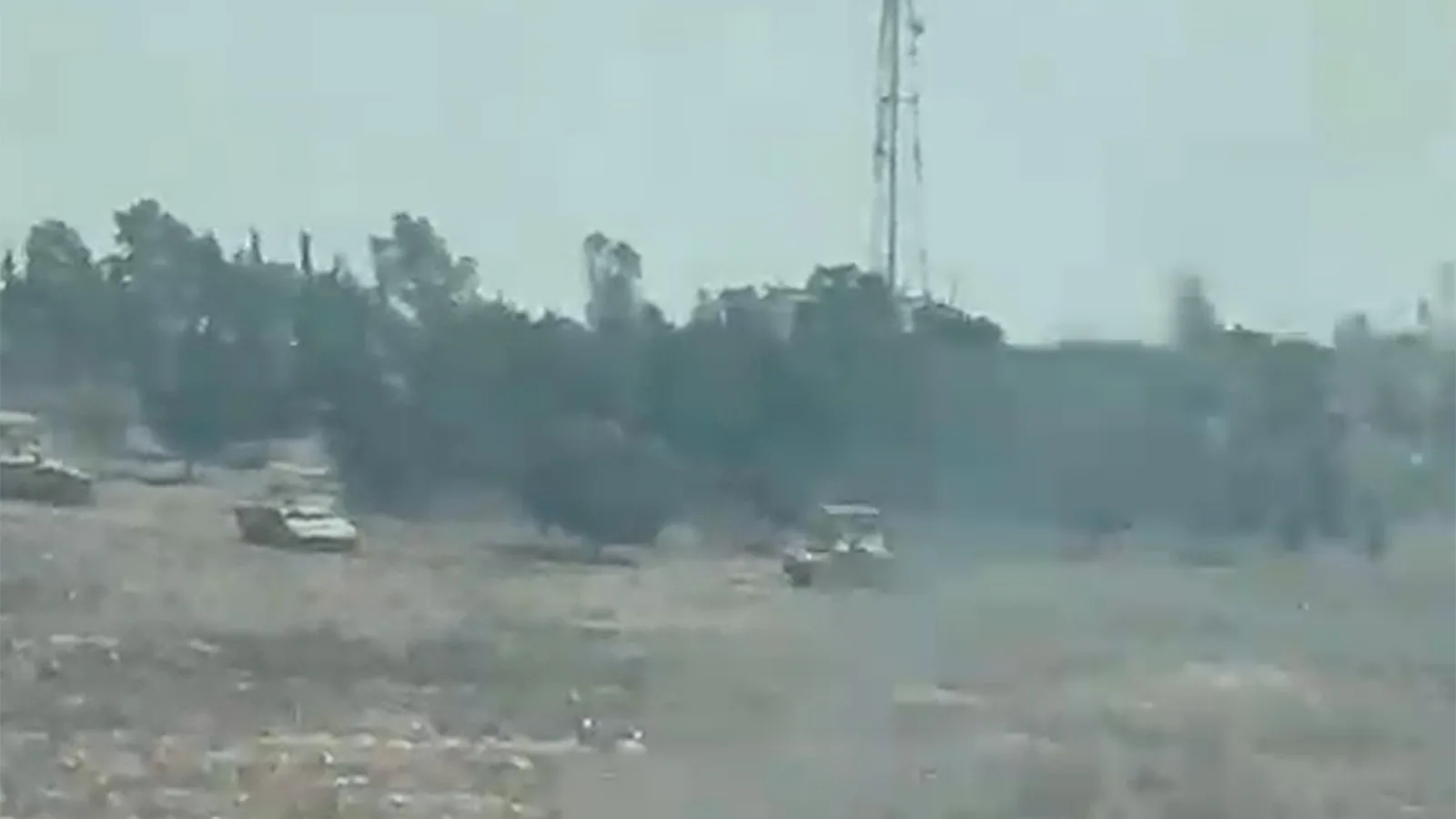
The Israeli army stated it had established a physical barrier along what is known as the "yellow line," the boundary to which Israeli forces withdrew under the ceasefire agreement with Hamas in October.
Israel justified the barrier's construction by stating its purpose is to prevent infiltration and to protect Israeli military forces and nearby Israeli residential communities close to Gaza.
In addition to the barrier, the Israeli military informed the agency that it created a "security zone" around the yellow line, equipped with intelligence and technological capabilities, but declined to disclose specific details about the barrier's route.
Neither the U.S. Central Command, responsible for monitoring the ceasefire, nor the "Peace Council," chaired by U.S. President Donald Trump and expected to oversee Gaza eventually, commented on the wall, according to the agency.
The agency reported that more than 23 kilometers (14 miles) of this barrier have been completed in recent months. It stretches across Palestinian residential areas that Israeli forces had previously destroyed.
This length represents more than half of the coastal enclave, which measures roughly 40 kilometers (25 miles) long and 11 kilometers (7 miles) wide, inhabited by over two million Palestinians.
The U.S.-backed ceasefire agreement designated the yellow line as a "temporary" boundary pending a broader Israeli withdrawal. However, with the truce stalled, Israel appears to be tightening control, raising Palestinian concerns that the contact line may become an official border.
Since the ceasefire took effect, Palestinians in Gaza have feared that Israel might not return areas under its control within the enclave.
Nonetheless, only a few seem aware of the earth embankments currently being constructed around them, due to the risks associated with approaching the area.
Satellite images from Planet Labs show that a section of the earth embankment network in southern Gaza was extended over two kilometers (1.2 miles) within two weeks this month.
Construction of the barrier began in February, and satellite images indicate that work to extend it southward is ongoing. Between June 21 and July 7, over one kilometer (0.6 miles) was added alongside an Israeli military base established on the ruins of the town of Bani Suheila in Khan Yunis.
In northern Gaza, several disconnected earth embankments extend outside the town of Beit Lahia, most of which has been destroyed. The height of these embankments at each site remains unclear. In some locations, the barriers appear to extend beyond the yellow line.
Residents of Gaza have concentrated in the coastal area west of the yellow line, where most live in tent camps lacking basic living conditions and depend on aid.
On the opposite side of the line, satellite images show Israeli forces have leveled the vast majority of buildings using bulldozers and explosives, effectively erasing entire towns and the city of Rafah, which once housed over a quarter of a million people.
The Israeli military has constructed new road networks and bases on the ruins of Palestinian towns, and agricultural lands have been destroyed. The army states it demolishes infrastructure used by Hamas.