World
The 100 Million Barrel Card Storms the Energy Market: A Seventh Move After 50 Years of Crises
G7 leaders plan to release up to 100 million barrels from emergency reserves under US pressure, with the IEA coordinating a four-month drawdown to curb fuel prices.

The G7's move to open emergency reserves reveals widening pressures on the fuel market, as the International Energy Agency becomes the hub for coordinating responses to alleviate supply shortages and contain energy disruption fallout.
G7 leaders intend to release up to 100 million barrels from their emergency stocks of diesel and crude oil, following pressure from US President Donald Trump to lower sharply rising fuel prices.
The International Energy Agency (IEA) will coordinate the drawdown process from these reserves belonging to some of the world's largest economies, with the operation expected to take place within four months, according to French President Emmanuel Macron.
Macron currently holds the rotating presidency of the G7—which also includes the United States, the United Kingdom, Germany, Italy, Canada, and Japan—and confirmed this step on Friday after a videoconference meeting of leaders.
Macron noted that the group's countries wish to "work in a coordinated manner to help lower petroleum product prices, particularly diesel."
How did Trump's pressure succeed?
European nations faced pressure from the White House in recent days to release emergency supplies or face a US ban on diesel exports; Trump stated he was considering halting diesel exports to help lower domestic fuel prices ahead of the US midterm elections scheduled for November.
A US export ban would have posed a significant challenge to Europe, which produces about 70% of its diesel needs locally but relies on imports to cover the deficit. Oil sector analysts also expressed concerns that competition for diesel shipments in the global market could push prices higher.
Trump said in a post on his Truth Social platform that he welcomes the release of more reserves, adding: "Europe has just agreed to release a massive quantity from its large diesel stocks. The process will begin immediately."
Does the reserve release decision solve the problem?
However, Walt Chancellor of Macquarie Group stated that releasing reserves will not address the fundamental issue in the United States.
CNBC quoted him saying: "The core problem facing the United States is not a diesel problem, nor is it a refined products problem, and perhaps not even an oil problem; it is a global energy problem."
He added: "So, what is the solution? In short: More oil through the Strait of Hormuz. Any action less than that is merely rearranging deck chairs [i.e., superficial measures that do not address the root cause]."
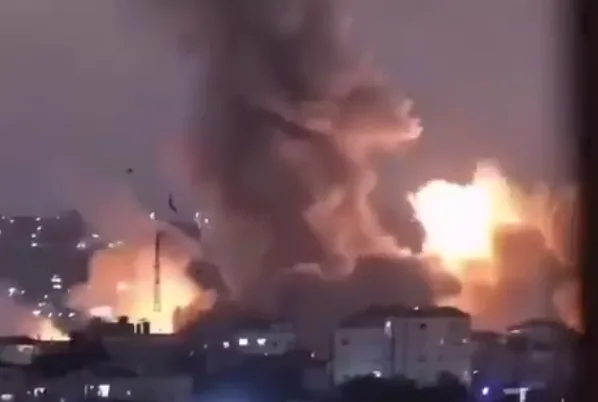
The International Energy Agency—the global body responsible for monitoring energy affairs—ordered the largest drawdown from government oil reserves in its history in March, agreeing to release 400 million barrels of emergency crude oil to help calm the price shock resulting from US-Israeli attacks on Iran.
This intervention represented one-third of the agency's total government stocks and was more than double the 182 million barrels released in 2022 following Russia's war in Ukraine.
What is the role of the International Energy Agency in case of severe oil supply disruption?
Ensuring energy security has been a central focus of the International Energy Agency since its founding in 1974, following the 1973 oil crisis. The global oil market remains today susceptible to a wide range of risks, including natural disasters, major technical accidents, and geopolitical tensions.
Given expectations that oil will remain a key component of global energy demand in coming decades—particularly in the transport sector—maintaining the agency's capacity to respond to emergencies will remain essential.
Where do additional oil supplies come from?
Under the International Energy Program (I.E.P.) agreement, each member country of the agency is committed to holding oil stocks equivalent to at least 90 days of net oil imports and being prepared for a collective response to any severe supply interruption affecting the global oil market.
Member states enjoy significant flexibility in how they meet stock-holding obligations; this can include stocks dedicated exclusively to emergencies and others held for commercial purposes (whether in the form of crude oil or refined products), as well as holding stocks in other countries under bilateral agreements.
Thus, each member state can determine the most suitable way to fulfill its obligation regarding agency stocks in accordance with local conditions.
In the event of a severe oil supply interruption, member states may decide to release these stocks into the market as part of a collective action.
What types of emergency oil storage systems are adopted in IEA member countries?
There are three methods countries can follow to hold emergency oil stocks to ensure overall inventory levels meet the requirement of covering 90 days' worth of needs: industry stocks, government stocks, and specialized agency stocks.
Some countries rely on only one category of these stocks, while most adopt a mix combining all three types. Alongside other emergency policies, stock-holding structures among IEA member states are subject to evaluation every five years within a peer review process.
Can the IEA's collective action include measures other than releasing emergency stocks?
The agency's collective response system is designed to mitigate negative economic effects caused by sudden oil supply shortages by providing additional oil volumes to the global market.
The system focuses on addressing short-term oil supply disruptions, whether through increasing supply (such as releasing emergency stocks) or reducing demand (such as implementing demand moderation measures).
The IEA's emergency response system is not a tool for price intervention or long-term supply management; these issues are more effectively addressed through other measures, such as reducing oil imports, diversifying energy supply sources, and developing alternative energy technologies.
In the event of an actual or potential severe oil supply interruption, the IEA Secretariat first assesses the potential impact of the interruption on the market and the need for a coordinated response.
The decision to initiate collective action is taken after evaluating the interruption and current market conditions, by estimating the size of the oil supply shortfall, available commercial oil stocks, spare production capacity that can be activated quickly, and in consultation with producing governments.
During this decision-making process, the agency's secretariat also benefits from industry expert opinions via the "Industry Advisory Board" (IAB). If the interruption is found to be large enough to significantly affect global energy markets, collective action by the agency may be recommended.
Consultations to determine the need for agency collective action and formulate subsequent recommendations occur within a few days. Once agreement is reached on the necessity of this collective action, each member state's contribution is determined in proportion to its share of total oil consumption among IEA member states.
When were collective actions implemented by the agency?
Since the establishment of the International Energy Agency, six collective actions have been implemented: prior to the Gulf War in 1991; following damage caused by Hurricanes Katrina and Rita to offshore platforms, pipelines, and refineries in the Gulf of Mexico in 2005; in response to the prolonged oil supply interruption caused by the Libyan Civil War in 2011; plus two actions during the 2022 energy crisis following Russia's war in Ukraine.
The sixth—and largest ever—collective action was announced on March 11, 2026, in response to disruptions caused by conflict in the Middle East.
Latest news

US Deploys Hundreds of Troops to Rio Grande Valley Amid Cartel Violence

Cucurella cites adaptation at Real Madrid before Nations League

Study links GLP-1 drugs to higher rates of hair and nail issues