Lebanon
Nasser al-Din: Health is a Right for Every Citizen and Patient Dignity Above All
Lebanese Minister of Public Health Rakan Nasser al-Din inaugurates the Arkan and Hind Al-Sablane Medical Center at Baalbek Government Hospital, emphasizing public-private partnerships and upgraded medical services.

Minister of Public Health Rakan Nasser al-Din affirmed that "the government hospital is no longer a place to provide low-quality services, but has become a provider of high-quality medical services comparable to the private sector, equipped with the latest equipment and advanced medical departments, thanks to genuine cooperation and partnership between the public and private sectors, the Ministry of Health, and civil society associations."
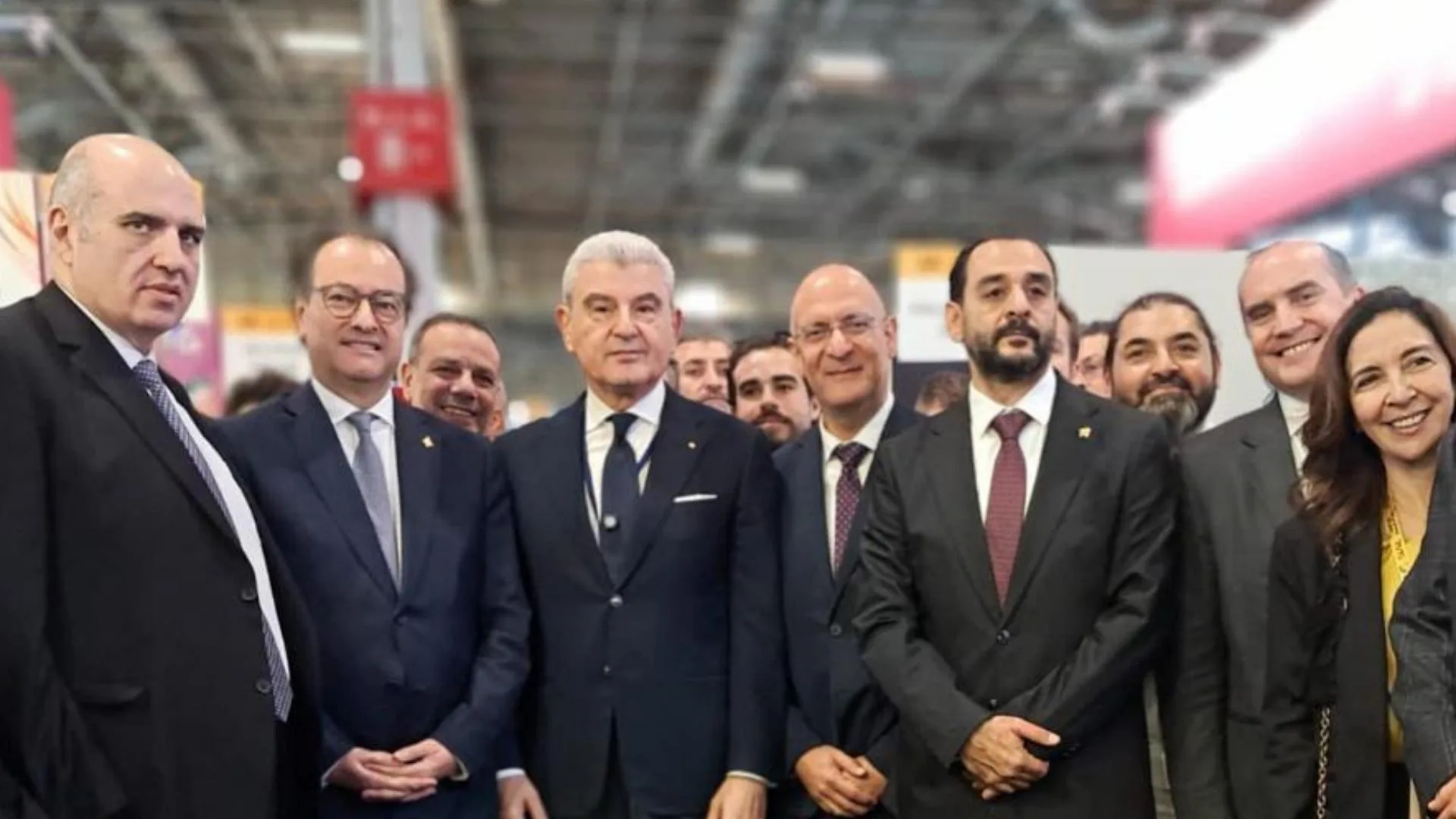
This came during his patronage of the opening ceremony of the "Arkan and Hind Al-Sablane Medical Center" and the Cardiac Rehabilitation Center at Baalbek Government Hospital, attended by MP Ghazi Zayter (member of the Development and Liberation bloc), Secretary General of the Council of Ministers Judge Mahmoud Makkiya, former ministers Dr. Hamad Hassan and Dr. Faiz Shukr, MP Michel Moawad represented by his wife Mirbal, Hermel Caza Governor Heba Zayter, Director General of General Security Major General Hassan Shaqir represented by Colonel Ghiyath Zayter, Brigadier General Abbas Munzir Yaghi, Head of the Hospitals Department at the Ministry of Health Hisham Fawaz, Director of Baalbek Government Hospital Dr. Abbas Shaker Shukr, Mufti of Baalbek and Bekaa Sheikh Khalil Shaqir, Mufti of Baalbek-Hermel Governorate Sheikh Bakr Al-Rifai, Mr. Faisal Shukr, Bishop Michael Farha of the Greek Catholic Archdiocese of Baalbek-Hermel represented by Father Marwan Maalouf, Abbot Charbel Tarad of the Convent of Our Lady of Auxiliaries in Baalbek, Nabih Moawad President of the Rene Moawad Foundation, Mayor of Baalbek Ahmad Al-Tufaili and his deputy Abdul Rahim Shalcha, Secretary General of the Lebanese Red Cross George Katani represented by the head of the Baalbek branch Dr. Hassan Al-Miqdad, and various health, political, military, security, religious, syndical, municipal, and social figures.
Nasser al-Din said: "We will not delve into political details today so as not to spoil your joy; rather, we have come to highlight the health aspect, the energies of hope, and the ongoing reform path in our health sector. Following a series of visits that included many government hospitals across different regions of the country—in Tripoli, Akkar, Nabatieh, Tebnine, Sidon, Batroun, Bwar, Hermel, and others throughout Lebanon—God willing, we will soon return to complete these tours by visiting the hospitals of Mays Al-Jabal and Bint Jbeil. We dedicate these visits to Baalbek Government Hospital, this medical edifice that represents a destination for all residents of Baalbek and the region, and a fundamental refuge for the poor and needy."
He extended "sincere thanks and appreciation to Mr. Arkan Al-Sablane and his noble family for their valuable donation, and to the Rene Moawad Foundation for its continuous support, so that this edifice becomes a symbol of national partnership and healthcare worthy of our people in Baalbek," noting financial challenges. He continued: "Some may ask where you obtained funds and financing given the limited budget of the Ministry of Health? The truth is that the path of partnership between the public and private sectors and associations began before we assumed ministry duties. Here, it is necessary to acknowledge the efforts of the former minister, Dr. Hamad Hassan, who put things on the right track despite funding obstacles and major crises facing the country. When we took responsibility for the ministry, we set supporting government hospitals as an absolute priority. Due to scarce resources and limited budgets, we worked hard and with maximum effort to secure health, hospitalization, and pharmaceutical coverage for patients as much as possible."
He added: "To finance and develop government hospitals, we relied on two main paths: World Bank loans dedicated to supporting the health sector, and Islamic Bank funds that were frozen, which we reactivated to pay dues and finance the sector. This work required significant effort and close follow-up behind the scenes and through various administrations; meetings and communications intensified to activate work, starting from the Prime Minister, to the Ministry of Finance, and institutions of the World Bank and Islamic Bank. All efforts combined so that we could reactivate this vital sector and reach the desired renaissance."
He noted that "Baalbek Government Hospital witnessed a qualitative leap through equipping it with the latest global medical equipment, most notably: a 128-slice CT Scan, the newest in Lebanon; advanced X-ray devices, Routine X-Ray (Digital Radiography) and Ultrasound imaging devices; Digital Mobile X-Ray; modern Endoscopy Towers; Laparoscopy operating rooms; C-Arm devices; advanced operating tables; modern lighting systems; and Defibrillators. The dialysis department was also equipped with the latest Reverse Osmosis water purification machines."
He continued: "Major achievements also included introducing advanced technologies for the first time in government hospitals, such as: MRI scanners, PET Scans for tumor and cancer diagnosis, a cardiac catheterization department, Bone Densitometry devices, and digital mammography devices for breast cancer diagnosis covered by the Ministry of Health year-round."
He clarified that "the total cost of these new facilities and equipment amounted to approximately $4,053,358 USD. If we add to this the total financial contributions allocated to Baalbek Government Hospital for 2025 and 2026 (amounting to about $1,717,000), the total investment in the hospital reached approximately $5,770,358 USD. In addition to several projects undertaken by the ministry through various associations and donations, including the equipping of the neonatal and pediatric department by Doctors Without Borders - Switzerland, and providing an ambulance for the hospital. Solar energy was also secured through the ministry, along with a large number of medicines and medical supplies throughout the year."
He stressed that "what we achieved is not just numbers to be mentioned, but a real investment in the health of our sons and daughters and protection of their future. Some may think the state is incapable, but the truth is: when the state wants, and sincere will exists, it can accomplish and achieve the impossible. The Lebanese health sector has gone through extremely complex and difficult conditions over the past seven years; starting from the Beirut Port disaster, passing through the Corona pandemic, reaching the financial collapse, migration of medical and nursing staff, successive attacks and wars, and the pager massacre. Despite all these harsh challenges, the role of the Ministry of Health in standing alongside the citizen did not retreat."
Minister Nasser al-Din concluded: "We sincerely and transparently believe that health must remain away from politics, as health is a fundamental right for every Lebanese citizen regardless of their affiliation or social class, and the dignity of the Lebanese patient is above all considerations. I invite you from here to participate on the thirty-first of this month in the foundation stone laying ceremony for Harbta Hospital, followed by actual operation, with generous contribution from the 'Kuwait Fund for Arab Economic Development,' and also in partnership with the 'Council for Reconstruction' whose commendable efforts we praise. This work adds to the many hidden efforts being made to activate projects; we completed the 'Deir El Qamar Hospital' project, and we look forward soon, God willing, to good news regarding Akkar Government Hospital. Thank you to all workers in the health sector, directors of government hospitals, and everyone who contributed to the success of this humanitarian and national journey."
The ceremony began with the national anthem and a speech by the master of ceremonies, Mufleh Shukr, and a detailed report on the newly established center.
For his part, Arkan Al-Sablane considered that "human value is not measured by what one owns, but by the good impact one leaves and the goodness one plants that remains after them. And here we stand before a living image of these meanings; regarding righteous offspring, God blessed us with a noble family that was support, aid, and a source of good and blessing. God also honored us with an educational institution and a family proud of their scientific and educational mission, and we are proud of their role in building generations armed with knowledge and adorned with moral virtues, to be a pillar in societal renaissance and shaping its future. Today, we take a new step on the path of giving by opening this medical center in the heart of the beloved Bekaa, to be a refuge for patients and a window of hope for everyone exhausted by pain and burdened by need."
He also considered that "what was achieved is not personal favor or charity from anyone, but a grace and success from God Almighty, and a responsibility we hope to live up to." He said: "We extend sincere thanks, gratitude, and appreciation to Dr. Abbas Shukr for his exceptional efforts and his great role in completing this project and bringing it to light in the form we are proud of today. We also express deep thanks to the Rene Moawad Foundation, headed by MP Michel Moawad, for supervising this project and undertaking its implementation, and a salute of appreciation and love from the loyal Bekaa to His Excellency Dr. Rakan Nasser al-Din in recognition of his humanitarian efforts and health services in various regions, and his standing alongside every patient and needy person. A salute of appreciation and reverence from us to all doctors, administrators, employees, and workers in this hospital, who place their knowledge, expertise, and effort in service of this humanitarian edifice to remain a safe haven for our people in the Bekaa and their support in facing the diseases and hardships of life."
Al-Sablane affirmed that "amidst difficult circumstances, and at a time when the state's ability to meet all citizens' needs has declined, the importance of initiatives that fill some gaps, preserve human dignity, and alleviate suffering emerges; solidarity is not merely a moral duty, but a national and humanitarian responsibility whose necessities grow as human needs increase."
In turn, Hospital Director Dr. Shukr spoke, saying: "This is a blessed gathering that brings us together under the blessing of white hands that wanted to lift chronic deprivation and contributed to the rebirth of Baalbek Government Hospital, to be strong support for the people of this patient region. For the first time in Baalbek Government Hospital, we open new departments with global specifications: a complete radiology center; from PET Scan to MRI, to CT Coro, and other modern devices. In addition to the cardiac rehabilitation department and the modern dialysis department. These departments will provide real care for all families without guarantor or sponsor who cannot afford treatment costs."
He added: "It was my honor to assume the trust of managing this hospital, and from the first day I promised God to be support for the weak and needy, and to preserve the dignity of my people and ours. Today, joint efforts with all sincere and honest people bore fruit, and we succeeded, thanks to God, in achieving these qualitative accomplishments, which included: rehabilitating and expanding several hospital departments and increasing capacity to receive all critical cases and others around the clock, developing the intensive care unit with the latest medical equipment, a dialysis center with the latest systems, and a cardiac rehabilitation department. All were dreams, and today they have come true after long waiting, thanks to the will and determination of His Excellency the dear Minister Dr. Rakan Nasser al-Din. Here I want to do justice to His Excellency Minister Dr. Hamad Hassan, because he who does not thank the creature does not thank the Creator; when we went to the ministry to accept the building reconstruction donation, Dr. Hamad was then minister, and had also started securing some devices for the hospital. With the end of his term, projects froze and dreams dissipated. Upon assuming office, His Excellency Minister Dr. Rakan saw ambitions and dreams materialize on the ground."
He indicated that "this center saw the light thanks to the generosity of the children of educator Arkan Al-Sablane, Ali and Muhammad, owners of white hands. To honor his noble family, we named it the 'Arkan and Hind Al-Sablane Building' in appreciation of them, and out of loyalty to the good character of their descendants. I specifically mention the Rene Moawad Charitable Foundation, and all charitable institutions that helped complete this project. We also named the cardiac rehabilitation center after the dear martyr brother Ali Allam, who deserved it due to his standing alongside Baalbek Government Hospital in the most difficult circumstances. Thus we immortalize the memory of the faithful who exerted all they could to lift injustice from all the oppressed."
Shukr saw that "this success would not have seen the light except thanks to true partners who knew well the meaning of humanity and giving. Here we raise the highest expressions of thanks and gratitude to His Excellency the Minister of Health, the loyal son of Baalbek-Hermel, who made medicine a sacred right preserving the dignity of every needy person, and refused to let the poor die at hospital doors, making the bold decision for free hospitalization for those without support."
After cutting the ribbon, Minister Nasser al-Din and the accompanying delegation, Dr. Shukr, Al-Sablane and his wife, and Moawad toured the center's departments.
Latest news
Pope Leo XIV Returns to Vatican After Cancer Tumor Removal Surgery
Video Shows Moment Child Falls From Amusement Park Ride

"Cassandra Project": How Hezbollah's Shadow Machines Operate in West Africa?