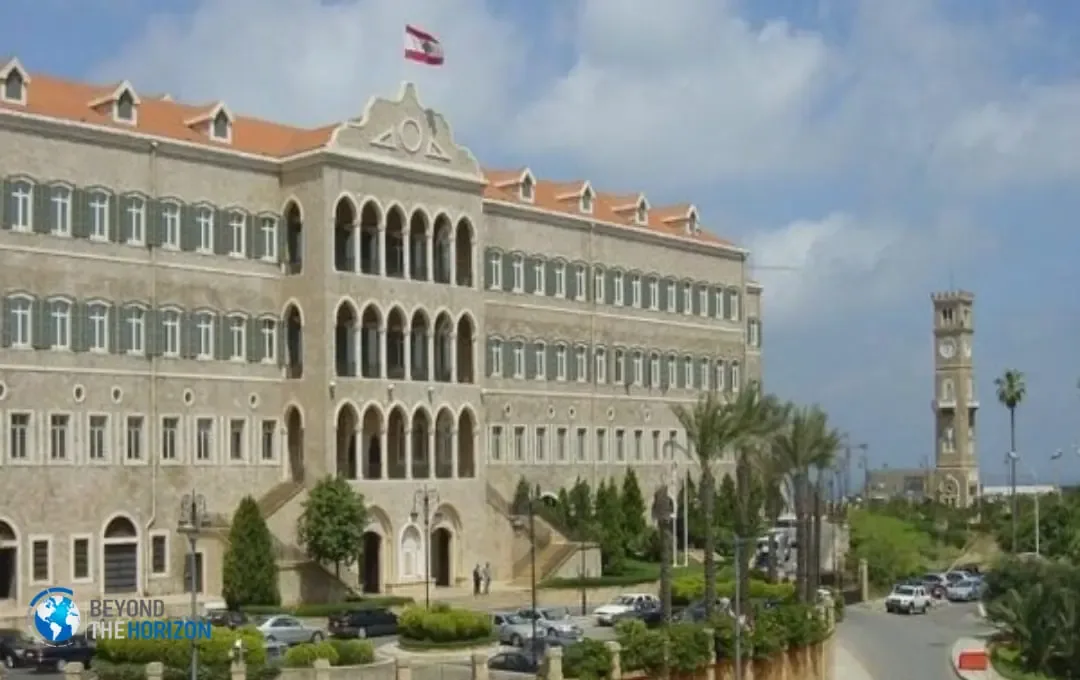
Lebanon
President Aoun: The Lebanese Have Chosen the State and Its Institutions Over All Others
Lebanese President Joseph Aoun affirmed that Lebanon and its people have chosen the state, with its military and security institutions bearing sole responsibility for protecting the country's sovereignty and stability. He called on Lebanon's friends and partners to support this choice, which is now gaining regional and international backing.

Lebanese President General Joseph Aoun emphasized that Lebanon and the Lebanese have chosen the state, and that safeguarding Lebanon’s sovereignty, stability, and security must be the exclusive responsibility of its military and security institutions. He urged Lebanon’s friends and partners to accompany this choice, which "we have begun translating into reality on the ground," noting it as "the first time the internal Lebanese will to build the state has received regional and international resonance and support." He added that "we must seize this opportunity wisely."
During the preparatory meeting for the International Conference to Support the Army and Internal Security Forces, held this afternoon at the "Anvalide" Palace in Paris as part of the Aqaba Initiative, President Aoun called for leaving the meeting with a clear roadmap and timeline for the conference, stating that "the Aqaba process provides us with an important framework to gather partners, coordinate efforts, and jointly define needs and priorities."
Noting the anticipated changes in the presence and role of UNIFIL in the south, he stressed that these developments must be carefully planned and organized, without creating any security vacuum, but rather strengthening the state’s presence and institutions on the ground—especially the army.
President Aoun reaffirmed the importance of linking international support with the highest levels of transparency and accountability, and emphasized that the Lebanese state, once it regains its financial capabilities, must assume an increasing share of funding for its security and military institutions.
He reiterated that the trilateral framework agreement reached with Israel aims to end the war and transition to a new phase of security and stability, stressing that agreements are not successful merely through signing, but through respect and implementation by all parties. He affirmed that Lebanon has honored its commitments, but completing their execution and consolidating stability cannot occur while Israeli attacks and violations continue and parts of Lebanese territory remain occupied. He called on Lebanon’s friends and partners to assist in fully implementing what was agreed upon, and to treat Lebanon’s sovereignty and territorial integrity as a fixed principle not subject to selectivity.
Attendance and Opening
The meeting included French President Emmanuel Macron and Jordanian King Abdullah II. Representatives attended from the United States, led by General Joseph Clairfield, head of the Special Military Coordination Group for Lebanon; U.S. Ambassador to Beirut Michel Eissa and French Ambassador Patrick Douril; representatives from Canada, several Arab countries, the European Union, and international organizations. Additionally, military commanders, chiefs of staff, ambassadors, and leaders from various nations were present.
Also attending were Army Commander General Rudolph Hikkel at the head of a military delegation, General Director of Internal Security Forces Colonel Rida Abdullah, and military leaders and chiefs of staff from several countries.
French President’s Speech
French President Emmanuel Macron opened the preparatory meeting, emphasizing the importance of extending the Lebanese state’s authority over its entire territory, noting that today presents an opportunity to restore security to Lebanon. He stressed the necessity of Israel respecting and implementing the Framework Agreement, and stated he would contact U.S. President Donald Trump and American leadership to ensure Israel adheres to its commitments.
President Macron affirmed that this means first, achieving a gradual withdrawal from territories occupied by Israel, allowing the Lebanese state to take full control. Second, simultaneously, creating conditions for the Lebanese Armed Forces and the Lebanese Army to assume leadership roles, and supporting them in doing so—particularly through enhancing their capabilities. He said: "Supporting the Lebanese Army and helping it succeed is crucial to replacing Israel’s illegal presence in southern Lebanon. We must also create favorable conditions in Lebanon for it to reclaim its sovereignty, rebuild the south, and allow Lebanese citizens to live in safety and dignity."
In his speech, President Macron addressed the post-UNIFIL phase, noting he has worked closely with Italy’s Prime Minister on this transition. He described the end of the international forces’ mandate in the south as a major mistake, stating that "we must prepare for the day after," and emphasized that "international forces cannot replace the Lebanese Army. Those present in the south later will be there to support the Lebanese Army as it fulfills its duties."
King of Jordan’s Speech
King Abdullah II delivered a speech stressing that the Lebanese Army is the cornerstone of Lebanon’s security and stability, highlighting that the Lebanese people’s trust in their army forms the fundamental unity needed for Lebanon. He noted a shared responsibility among attendees to strengthen and empower the Lebanese Army as quickly as possible to regain control over occupied southern Lebanese territories.
He called for bolstering the Army’s resilience, entrusting it with leadership, granting it freedom to address internal issues, and ensuring weapons are exclusively under the state’s control.
He praised the readiness of Lebanese military personnel, pointing out their need for resources to enhance security, secure borders, maintain equipment, and counter drones and monitor Lebanese airspace, stressing the urgency of addressing existing gaps as soon as possible.
He mentioned that the final review of progress will take place by year-end.
President Aoun’s Speech
Below is the full text of President Aoun’s speech:
"Your Majesty,
Mr. President,
Representatives of friendly states and delegations,
My friends,
I begin by thanking His Majesty King Abdullah II and the Hashemite Kingdom of Jordan for this initiative and for the role they play through the Aqaba Process in bringing together partners and enhancing coordination to support Lebanon’s security, stability, and legitimate institutions.
I also extend my thanks on behalf of all Lebanese citizens to President Emmanuel Macron and the French Republic for hosting this meeting and for their consistent support of Lebanon.
I thank all the friendly nations gathered here today, who have demonstrated, during the most difficult phases, their commitment to Lebanon’s security, stability, and sovereignty.
We meet today to prepare for the International Conference to Support the Lebanese Army and Internal Security Forces—a pivotal moment in Lebanon’s and the region’s history.
Lebanon is currently enduring a devastating war, with its people paying a heavy price: more than four thousand martyrs, including 399 women and 261 children, while its land, cities, and villages face systematic destruction.
Israeli attacks have not spared medical and humanitarian teams, journalists, state institutions, places of worship, and even United Nations peacekeeping forces—an open violation of international humanitarian law.
Yet alongside this grim reality, there is today a clear determination to rebuild the state, restore the role of its institutions, and advance the reforms the country urgently needs—a path that the state is committed to in all its components.
At the same time, the region is undergoing profound transformations that could offer, if handled wisely, a chance to build a different reality than what we have known over recent decades.
For the first time, the internal Lebanese will to build the state has found resonance and support at the regional and international levels.
This opportunity may not last long. Therefore, we must seize it wisely.
Our goal is not managing a new crisis, but seizing this moment to put Lebanon on a different path—one based on a strong state and effective institutions.
It is precisely here that the importance of the Lebanese Army and security forces becomes evident. Lebanon has made a clear choice: the choice of the state.
A state that extends its authority over its entire territory, protects its borders and people, makes decisions alone on matters of war and peace, and holds the monopoly on arms.
The Lebanese Army is the foundation for defending Lebanon’s sovereignty and the instrument the state relies on to enforce its authority across the entire country.
This is not a foreign-imposed demand on Lebanon. First and foremost, it is a Lebanese choice, a national interest, and a fundamental prerequisite for building a state worthy of the Lebanese people.
Lebanon has already begun translating this choice into reality on the ground.
The trilateral framework agreement reached with Israel under the sponsorship of the United States and with the support of friendly Arab and European countries aims to end the war and transition to a new era of security and stability.
But agreements and understandings do not succeed merely through signing—they require respect and implementation by all parties.
And Lebanon has fulfilled its commitments.
However, completing the implementation of these commitments and consolidating stability cannot be achieved while Israeli attacks and violations persist and parts of Lebanese territory remain occupied.
From our friends and partners, we call for a clear stance: assistance in fully implementing what has been agreed upon, and treating Lebanon’s sovereignty and territorial integrity as a fixed principle not subject to selectivity.
While making this appeal, we do so because the Lebanese people have repeatedly proven their ability to endure the harshest conditions. But endurance should not become an excuse for accepting suffering as normal.
It is only right that the Lebanese live in safety and peace, and that they have a state capable of protecting and serving them.
Today, the role of the army is expanding, and its responsibilities grow increasingly significant across Lebanese territory, especially in the south:
In the south, it must strengthen the state’s presence, extend its authority, and protect stability amid ongoing Israeli attacks and violations.
On the border, it must confront smuggling and all threats to Lebanon’s security and sovereignty.
Within the country, it must maintain security and stability, combat terrorism, organized crime, drug trafficking, and protect vital institutions and infrastructure.
With the anticipated changes in UNIFIL’s presence and role in the south, the army’s responsibilities are growing in complexity.
This transition must be well-planned and organized—not leading to any security vacuum, but rather reinforcing the state’s presence and institutions on the ground, especially the Lebanese Army.
These growing responsibilities are not new to the army. Over recent years, its role has gone far beyond traditional military duties, being present in wars, crises, disasters, emergencies, rescue and relief operations, protection of vital institutions and facilities, and support for citizens.
I know this institution well.
I spent many years within its ranks, lived through challenges and hardships with its officers and soldiers, and witnessed firsthand their sacrifices and dedication to serving their country and people.
The world today sees what the army achieves despite limited resources.
What it accomplishes with little could be multiplied many times over if adequate resources were available.
But this responsibility does not fall solely on the army. Internal Security Forces play a crucial role in maintaining security, enforcing the law, combating crime, and protecting citizens and institutions.
The army, Internal Security Forces, and other security agencies perform different but complementary roles. Strengthening state authority is impossible without strong, effective, and present military and security institutions across all of Lebanon’s territory.
Despite the severe crisis affecting their salaries and living conditions, our military and security institutions have demonstrated their ability to maintain cohesion, discipline, and the trust of the Lebanese people.
These institutions have endured. Our mission today is to enable them to move from endurance to building the capabilities required for the next phase.
Empowering these institutions is primarily a Lebanese responsibility—but it also requires sustained international support and accompaniment.
Lebanon does not come today to ask partners to shoulder its responsibilities.
We are taking responsibility: in political decisions, economic and financial reforms, and rebuilding state institutions to strengthen their presence and effectiveness.
What we ask of our friends is to accompany this path and support our military and security institutions with what they need to meet their growing responsibilities.
This is also an investment that goes beyond Lebanon’s borders.
Stability in Lebanon is part of regional stability.
Recent years have shown that the consequences of a weak state in Lebanon do not stop at its borders, and any security vacuum can quickly turn into a broader source of instability across the region.
My friends, today’s meeting is preparatory, but we demand concrete results.
The Aqaba Process offers us an important framework to bring together partners, coordinate efforts, and jointly identify needs and priorities.
I issue a direct appeal: let us leave the Paris meeting with a clear roadmap for the International Conference to Support the Lebanese Army and Internal Security Forces, and a precise timeline for its convening. Let this roadmap establish a long-term approach to supporting our military and security institutions.
Lebanon seeks not temporary or scattered aid or short-term fixes, but a long-term partnership—clear in its commitments and continuity—that enables our military and security institutions to plan and build their capabilities, rather than constantly managing one emergency after another.
We are determined that this support be linked to the highest standards of transparency and accountability.
We are ready to work with our partners on a clear and transparent mechanism that defines priorities, monitors implementation of commitments, ensures support reaches where needed, and allows for measuring outcomes and impact.
We want every partner to know exactly what is funded, why, and what has been achieved as a result of this support.
We also recognize that the responsibility to support our military and security institutions cannot rest solely on our friends.
The Lebanese state, once it regains its financial capacity, must assume an increasing share of funding for its security and military institutions.
Distinguished guests,
Lebanon stands today at a real opportunity to change the course of decades of instability and make peace and security a permanent choice, not just a truce between wars.
The Lebanese have made their decision.
They chose the state,
They chose its institutions,
They chose that protecting Lebanon’s sovereignty and stability be the exclusive responsibility of the state’s military and security institutions.
We did not stop at words—we have already begun making tough decisions and implementing them on the ground.
Today, we call on our friends and partners to stand behind this choice.
What we ask from you is not just support for an institution, but an investment in the success of the Lebanese state and regional stability.
Just as Lebanon’s success will not remain confined within its borders, so too the consequences of its failure will not stay within them.
If we fail to seize this opportunity together today, the same chance may not come tomorrow.
This is a moment of decision, not a moment of waiting!
Thank you."
Following this, participants discussed pathways to support the army and internal security forces, listening to practical reports and ideas.
Latest news

Bakery Workers' Union Calls for Reversal of Bread Loaf Price Increase
Sweden's Prime Minister Announces Resignation

Rai Follows Up on Conditions with Visitors from North to South