·
·


Tech & Science
BYD reveals its assisted driving tech reduces severe crash rates to one-sixth compared to human drivers, with widespread adoption across its vehicle range.

BYD Group senior vice president Yang Dongsheng detailed the company's swift deployment of assisted driving technologies throughout its vehicle portfolio, emphasizing the expansion of intelligent driving systems starting early 2025.
Yang, who leads BYD’s Automotive New Technology Research Institute, stated that Level 2 assisted driving features are now installed in nearly all BYD passenger cars. Data shared at the event showed that navigation-assisted driving functions have activation rates exceeding 50%, while parking-assistance systems are engaged in 86% of cases, indicating increasing consumer use of these automated features.
BYD reported that its parking-assistance technology has drastically lowered low-speed collisions, with scratches and minor parking accidents occurring at about one-fiftieth the frequency seen in human-driven parking maneuvers. The company attributed these results to its “God’s Eye” intelligent driving platform along with a parking-assistance guarantee program launched in July 2025, which aims to boost consumer trust in automated parking capabilities.
This system forms a central component of BYD’s broader strategy to enhance intelligent driving features across its vehicle lineup. The company’s recent statements come shortly before its scheduled intelligent-driving strategy event later in May, where further announcements about expanded God’s Eye system rollouts and deeper integration across more models are anticipated.
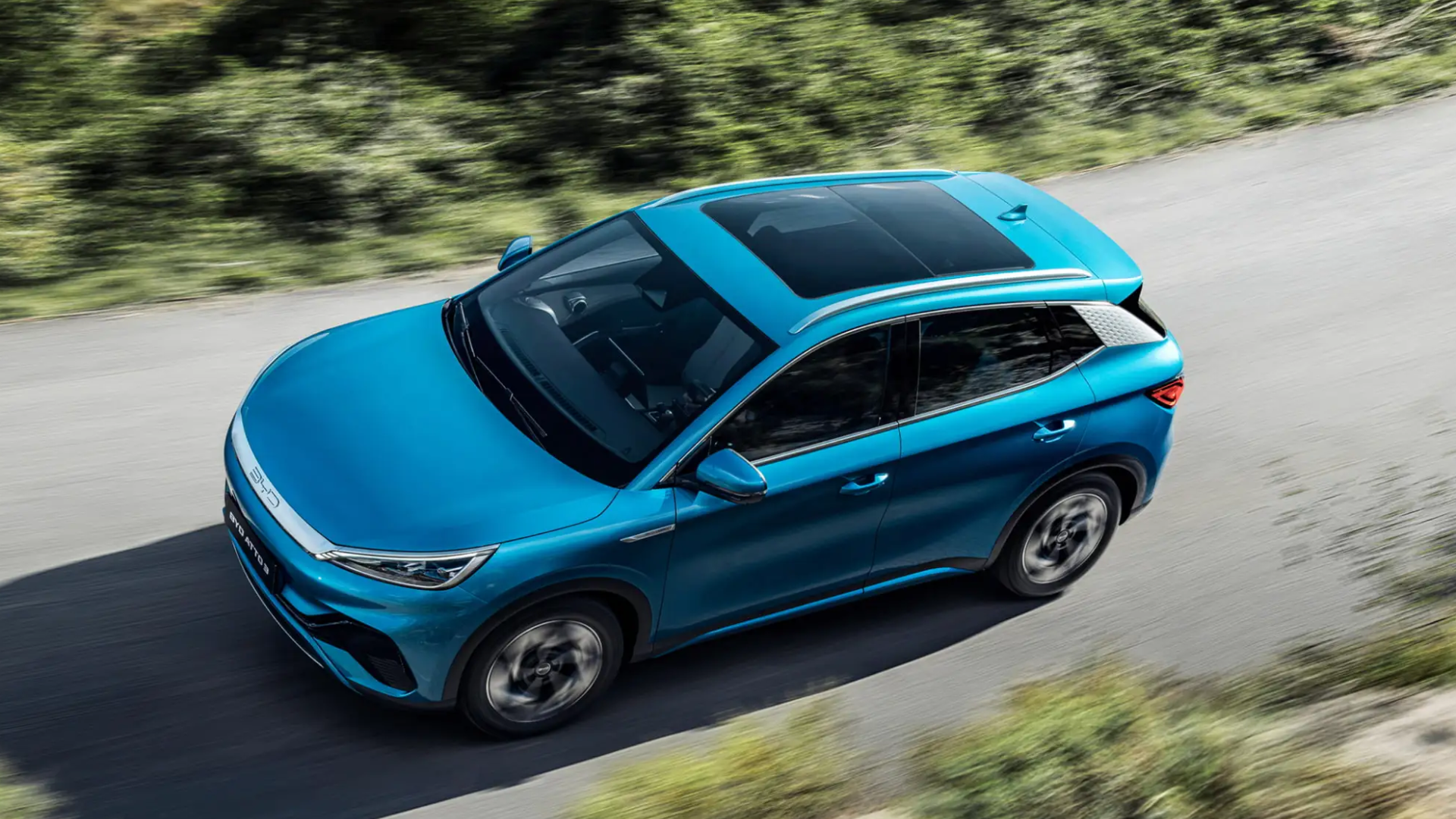
Yang highlighted that BYD’s rapid integration of intelligent driving technology is facilitated by its Xuanji Architecture, a vehicle platform that merges electronic systems with core electrification technologies. This architecture allows for accelerated coordination between software and hardware within BYD’s expanding range of smart vehicles.
BYD revealed that its assisted-driving systems are trained using cloud-based world models and reinforcement learning through extensive long-tail scenario simulations. The automaker generates approximately 118 million miles of driving data daily, enabling engineers to continuously refine algorithms at a rapid pace. Yang noted that BYD updates its driving algorithms every three days.
The company’s intelligent driving platform also integrates physical AI models within vehicles to support real-time predictive driving behavior and defensive-response calculations. This design aims to enhance the vehicles’ ability to anticipate traffic conditions and respond to potential hazards effectively.
Regarding parking, BYD explained that its technology combines visual occupancy network detection with lidar-based occupancy sensing to identify suspended or hollow obstacles that conventional parking systems might miss. This approach is intended to increase accuracy and safety during automated parking maneuvers.