·
·


Tech & Science
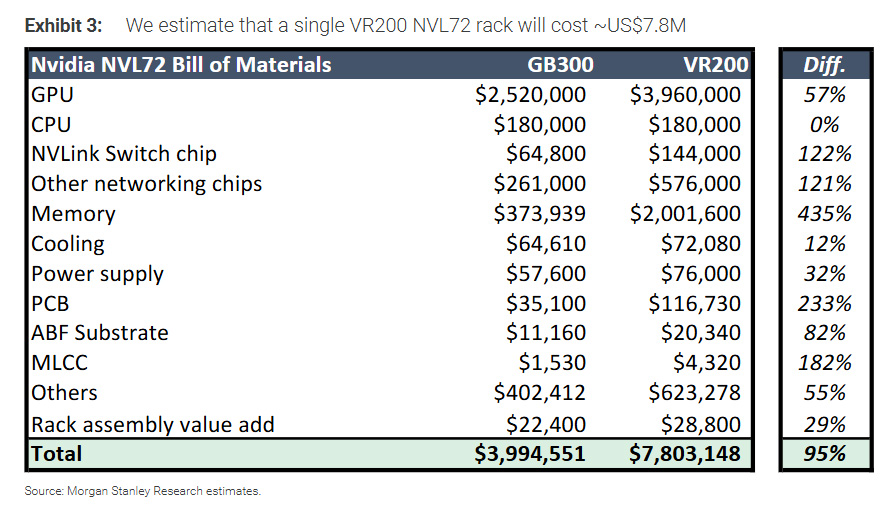
Nvidia's NVL72 AI server rack, featuring Rubin GPUs and Vera CPUs, carries a component cost near $7.8 million, limiting buyers to major hyperscalers and sovereign AI programs.

Priced at approximately $7.8 million per unit, Nvidia's upcoming NVL72 AI server rack is set to debut in the second half of 2026, targeting a select group of buyers such as US hyperscalers and sovereign AI programs. This figure, derived from a Morgan Stanley analysis, highlights the significant investment required for next-generation AI infrastructure.
The NVL72 rack integrates 72 Rubin GPUs alongside 36 Vera CPUs. Morgan Stanley estimates each Rubin GPU costs around $55,000, marking a 57% increase over the current Blackwell chips. The GPUs alone contribute roughly $4 million to the total component cost.
Memory expenses constitute a major portion of the price. Each Rubin GPU is equipped with 288 GB of HBM4 high-bandwidth memory, while each Vera CPU is paired with 1.5 TB of LPDDR5X. Altogether, a full rack contains 20.7 TB of video memory and 54 TB of system RAM. According to Morgan Stanley, memory costs have surged by 435% compared to the previous generation, largely due to the complexity of manufacturing HBM4 versus the HBM3e used in Blackwell systems.
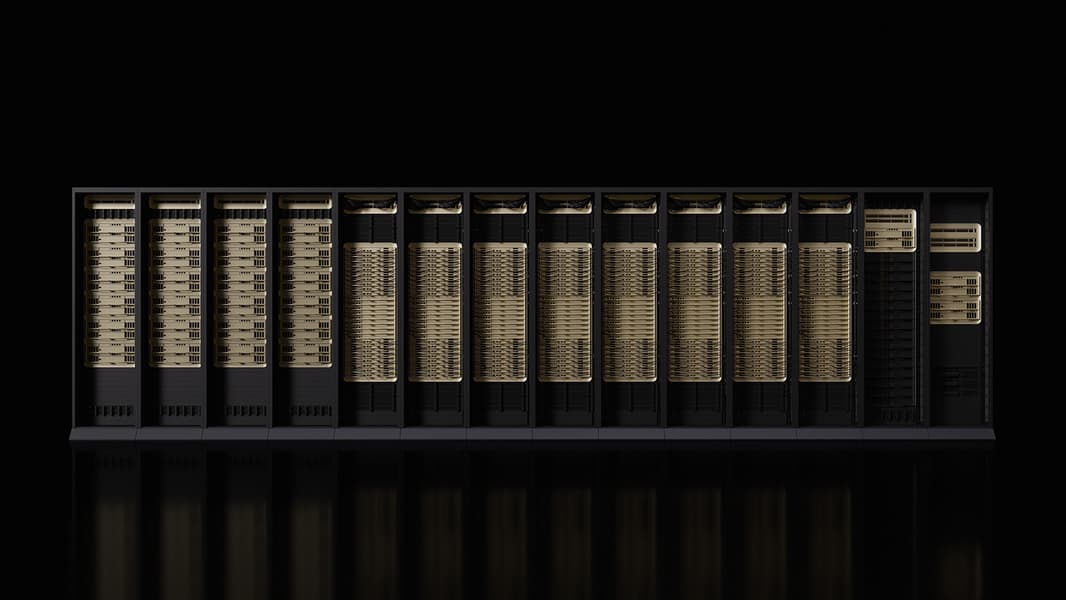
Printed circuit board (PCB) costs have risen by 233%, reflecting the stringent manufacturing tolerances needed to handle the data transfer speeds demanded by these systems. Nvidia is effectively establishing new production standards with each generation, which results in higher supplier charges.
Additionally, supply constraints for HBM4 memory are impacting production. Analysts at KeyBanc report that neither Micron nor SK Hynix currently meet qualification targets or volume commitments, which could reduce 2026 rack production from an anticipated 12,000–14,000 units to about 6,000.
Major cloud providers such as AWS, Google Cloud, Microsoft Azure, and CoreWeave have announced plans to deploy Rubin architecture in the latter half of 2026. The $7.8 million price tag is tailored for these hyperscalers.
OpenAI's April 2026 decision to pause its Stargate UK data center, citing energy expenses and regulatory delays, underscores the concentrated nature of this market. Electricity costs in the UK are roughly 4.4 times higher than in the US, and grid approval processes can extend project timelines by years.
The Rubin platform exemplifies the scale of investment flowing into AI hardware infrastructure. Compared to this, Nvidia's consumer and workstation GPU business remains relatively small. Morgan Stanley analysts emphasize that such elevated costs are becoming standard in the industry, indicating that affordable AI will continue to be driven primarily by software and cloud services rather than hardware affordability.