·
·


Tech & Science
European and Japanese engineers have started integrated commissioning of the JT-60SA tokamak, the world's largest operational fusion device, following a two-year shutdown that saw the installation of 8-meter ring-shaped coils wound directly inside the machine.

Integrated commissioning has kicked off for the JT-60SA tokamak, the largest operational fusion device on the planet, as European and Japanese teams test its systems ahead of a six-month plasma experiment run slated for late 2026. The upcoming campaign will push the machine to higher current levels, aiming to study long-pulse and steady-state plasma scenarios. More than 150 research proposals from scientists across Europe, Japan, and the ITER Organization are under review by the experiment team to prepare for these operations.
This commissioning phase marks the end of a two-year shutdown that began shortly after the machine achieved its first low-power plasma startup in late 2023. During that downtime, assembly teams installed new components, including a pair of ring-shaped coils designed to control plasma position at high speed. "They are 8 meters in diameter and were wound directly inside the machine, in a display of high-precision skills," said Fusion for Energy (F4E). The device was built under the Broader Approach agreement and is hosted by Japan's National Institutes for Quantum Science and Technology (QST).
The recent modifications zeroed in on components essential for achieving hotter plasmas and managing increased thermal loads. New diagnostics and cryopumps supplied by Europe were installed, along with additional heating systems. The interior of JT-60SA also received a fresh first wall and a divertor lined with carbon-based armour.
"We included diagnostics and cryopumps from Europe, as well as additional heating systems, key to achieving hotter, more powerful plasmas," stated Jerónimo García, JT-60SA Project Leader. The integrated commissioning serves as a gradual start-up to verify the upgraded machine's main systems. Operations began at room temperature and under non-vacuum conditions, focusing on the newly installed in-vessel coils connected to European power supplies.
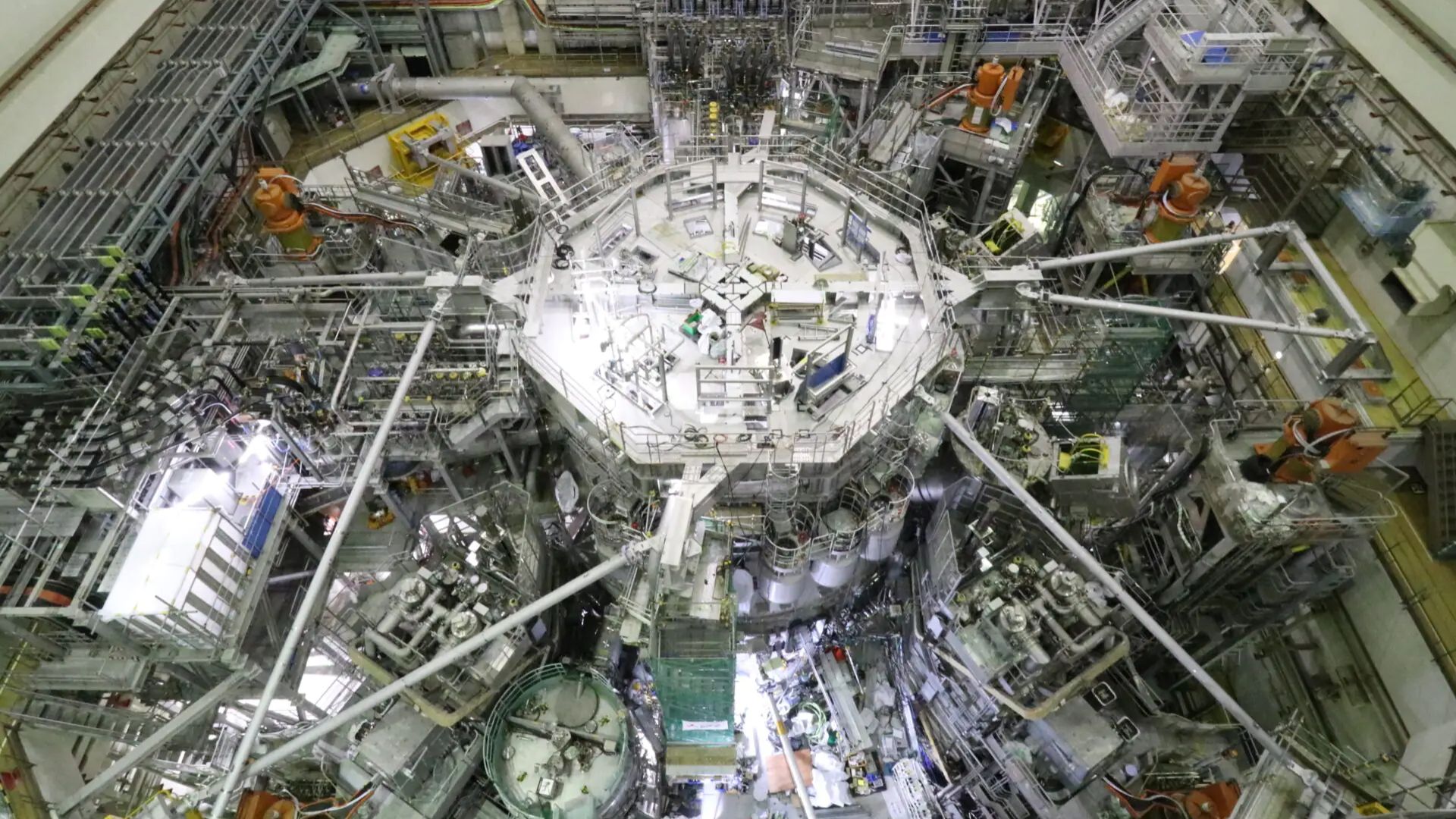
The next step requires pumping the cryostat and vacuum vessel to create high-vacuum conditions. After that, teams will cool down and energize the large superconducting magnets to validate the integration of all new components. This process will also test new artificial intelligence and high-performance computing tools designed to improve plasma simulations and operational efficiency.
F4E personnel are stationed in Naka to work alongside QST, providing technical expertise to help operate the technologies now coming online. Scientists from EUROfusion laboratories and the ITER Organization will also participate on-site during the campaign to gather data for ITER and future fusion reactors.
Valerio Tomarchio, Project Manager for F4E, stated that the start of commissioning represents the completion of the component delivery schedule. He noted that expectations across the fusion community are high as the teams prepare to deliver the experimental results. "JT‑60SA will conduct high‑temperature high pressure plasma experiments ahead of ITER, currently under construction in France, and in support of the development of DEMO reactor aimed at demonstrating fusion power generation," concluded QST.