World
3 Strike Groups in Middle East.. Washington Raises Deterrence Readiness Against Tehran
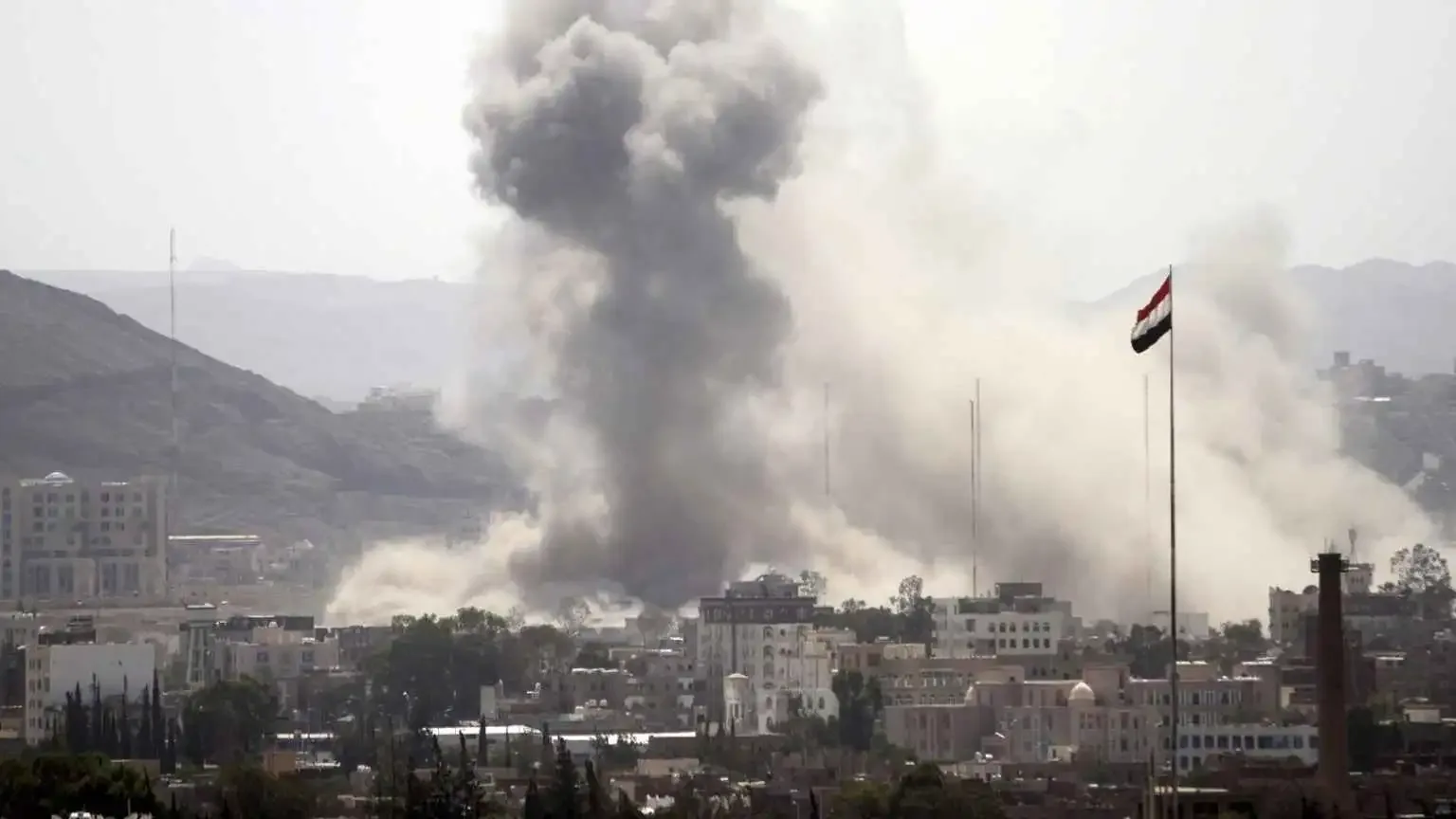
The movement of the US aircraft carrier Theodore Roosevelt to the Middle East has raised fears of renewed military confrontation with Iran, potentially giving President Trump three strike groups and broader military options.

The movement of the US aircraft carrier Theodore Roosevelt toward the Middle East has raised fears of a possible renewal of military confrontation with Iran, after satellite images showed it leaving the South China Sea and heading west towards the Strait of Malacca, paving the way for its arrival in the Arabian Sea late next week.
Experts speaking to "The National" newspaper believe that the carrier's arrival in the region may represent a key indicator of potential military escalation; as it will grant the United States three aircraft carrier strike groups, providing President Donald Trump with wider military options should he decide to resume operations against Tehran.
This move comes after the conclusion of the US Congressional midterm elections, and before the new Congress, dominated by Democrats, assumes office in January. Observers suggest that the coming two months present an opportunity for Trump to use military force to pressure Iran into reaching a nuclear deal and fully reopening the Strait of Hormuz.
Indicators of Potential Escalation
Megan Sutcliffe, Senior Analyst at Sibylline Intelligence, said that the carrier's movement is a major catalyst for escalation and an indicator of the possibility of returning to US and Israeli airstrikes against Iran.
She added that the United States does not typically gather three aircraft carriers in one area except prior to major combat operations.
However, Jonathan Hackett, a former US Marine, warned of the possibility that Iran might misinterpret this deployment, especially if the goal is merely to replace another carrier already present in the region.
He explained that Tehran considering the move as a sign of imminent escalation could lead it to take actions resulting in a spiral of confrontation that would not have occurred under other circumstances.
For his part, Tom Sharpe, a former Royal Navy commander, said the move aligns with expectations of escalation during November, following the midterm elections, noting that the presence of three aircraft carriers gives Trump multiple offensive options and significant firepower.
Extensive Air and Naval Power
The US force includes three aircraft carrier strike groups: Theodore Roosevelt, George Washington, and George H.W. Bush, providing up to 144 attack fighters of F-18 and F-35 models.
Accompanying the Roosevelt carrier are the guided-missile cruiser USS Chosin, along with two destroyers and a nuclear submarine, all equipped with Tomahawk missiles designated for land attacks.
The group also includes the unmanned Seahawk vessel, in the first deployment of its kind for an unmanned surface ship. It weighs 145 tons and is 137 feet long, designed for long-duration operations that may extend to several months.
Military options are not limited to air and missile strikes, as the Marine Expeditionary Unit present in the region, comprising approximately 2,200 troops, can be used to conduct landing operations on one of the small islands near the entrance to the Strait of Hormuz.
Risks of Ground Operations and Washington's Calculations
In contrast, Hackett described the option of seizing an island as costly and fraught with risks, noting that the Marine force might be able to hold out for about two weeks before needing reinforcements or relief.
He raised questions about the extent to which American public opinion is prepared to sustain the operation if forces begin to suffer casualties.
Despite the possibility of using the island as a bargaining chip or an advanced launch point for army troop flows toward a potential attack on Iranian territory, Hackett noted that military planners would strongly oppose such an option.
These calculations come amid reliance by US forces, since signing the memorandum of understanding with Iran in June, on more cautious methods to avoid losing aircraft and pilots, through the use of long-range munitions instead of penetrating Iranian airspace and dropping conventional bombs.
But these operations depleted part of the cruise missile stockpile, in addition to the loss of 45 Reaper drones and at least one unmanned vessel.
Sharpe wondered whether the results of the midterm elections had changed Trump's risk calculations, and whether he intends to use military force to the fullest extent to declare victory, then withdraw and leave Iran to manage the Strait of Hormuz.
Attack Possibilities and Additional Reinforcements
For her part, military analyst Lynette Nusbacher warned against interpreting the arrival of the Roosevelt carrier as definitive proof of an impending confrontation, pointing to the possibility that its deployment is merely a replacement operation for one of the two carriers already in the region.
Nevertheless, Nusbacher estimated the likelihood of the United States launching an attack on Iran in the coming weeks, with or without Israel's participation, as very high.
She added that Washington secretly conducted operations targeting the suppression of Iranian air defenses in recent weeks, which may indicate preparing conditions for any potential military action.
Additional indicators of escalation are expected if other US bombers head to Europe or Middle Eastern countries, coinciding with the arrival of refueling tankers; reflecting readiness to expand the scope of military operations against Iran.
Latest news

Inside the 'House of Horror': Shocking Details About a Chinese Billionaire Who Bought Children
After Midterm Renewal Losses, Prosecutor Who Oversaw Trump Investigations Resigns

Qatar's Prime Minister: US and Iran Will Not Be Able to Reach a 'Perfect' Deal