World
For the First Time: Israel Reveals a Serious Intelligence Operation Over Egyptian Skies
Israel has disclosed for the first time details of a high-risk intelligence mission conducted over Egyptian airspace during the 1973 October War, involving a young intelligence officer who survived a dramatic parachute jump after being shot down.

The official website of the Israeli military has revealed for the first time details of a serious intelligence mission above Egyptian skies during the 1973 October War.
Regarding the details of the mission, which were disclosed for the first time, the official Israeli military website stated that a young intelligence officer was summoned to the office of the head of military intelligence on the second day of the October War, October 7, 1973, as fierce battles raged in Syria and Egypt and Israel struggled for survival.
The officer had no idea why he was summoned, nor did it cross his mind for a moment that the request he was about to hear would become one of the most important memories of his life.
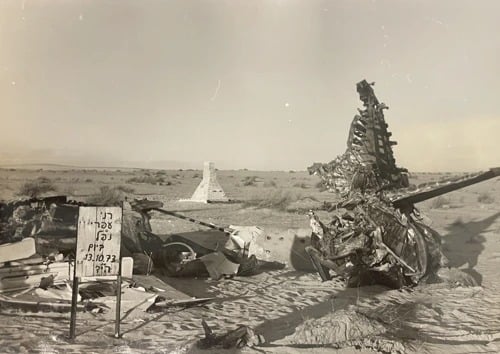
At the time, Major (Reserve) Yehuda Sheffer served as an assistant to an intelligence officer in the 252nd Brigade after spending two years as an intelligence officer in the 401st Battalion.
Thanks to his experience, Sheffer knew the canal line and Egyptian territory like the back of his hand through patrols, observations, conversations with tank crews, and continuous reports on every movement on the Egyptian side, where enemy shelters, tank positions, and preparations passed before their eyes and were immediately relayed to headquarters.
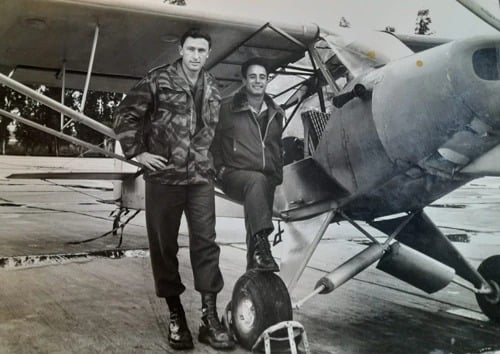
The official Israeli military website added that when Sheffer was summoned to the top office in the intelligence branch, he was certain there had been a lapse in his duty, as the location was crowded and he was led to speak with the Chief of Staff.
In those critical hours, conflicting intelligence reports poured in, making it extremely difficult for the Chief of Staff to form an accurate picture of the situation and determine what was real and what was false.
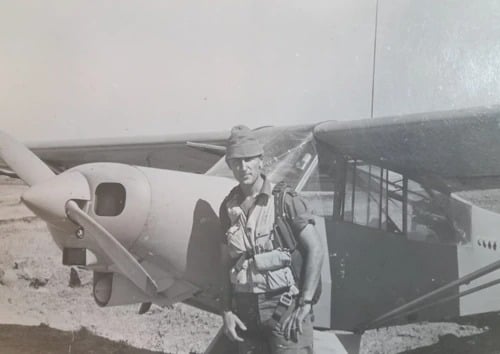
The crucial question on the table was whether the Egyptian armored formations had already crossed the canal or were still positioned deep within Egyptian territory.
The Chief of Staff tasked him with carrying out the same operation he had performed in the northern command in 1967, when Sheffer conducted aerial reconnaissance flights using heavy cameras to identify enemy positions, track fire, and transmit information via detailed diagrams.
After several days following that conversation, Sheffer joined a pilot and flew together over Egyptian skies, conducting a morning flight and an afternoon flight daily to build a clear picture of the battles and their outcomes, as requested by the Chief of Staff.
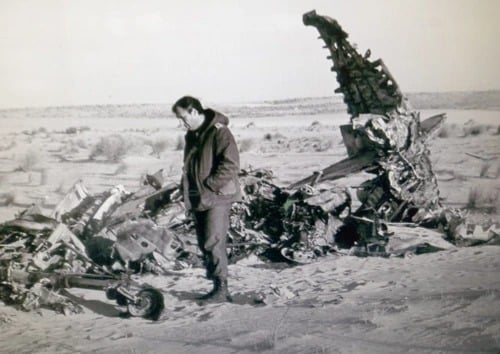
He noted that everything changed on the thirteenth of the month when the plane flew again over the Suez Canal in the morning hours to search for the formations he was supposed to monitor.
Suddenly, a cloud of dust rose from the ground, mixing with fuel due to the explosion, forming a massive black cloud from which something appeared like a needle transforming into a power pole, then into an anti-aircraft missile.
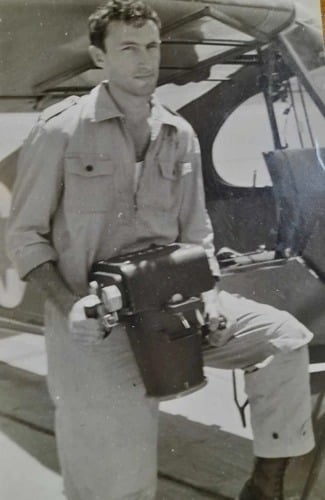
Sheffer alerted the pilot to the incoming missile from the left, then another from the right, and at the third missile, the explosion occurred.
Sheffer was ejected from the burning aircraft at 30,000 feet, his oxygen mask had detached, the sky and earth flipped, and he realized he was losing consciousness. The parachute failed to open, and he felt a temperature of minus 40 degrees Celsius as he passed through a tunnel filled with razor blades.
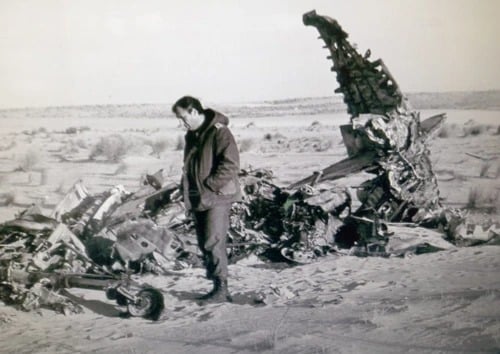
Sheffer described the shift from complete control over everything to tumbling helplessly through the air, utterly powerless. But when he realized he was the only one capable of saving himself at that moment, he reached toward his shoulder and manually opened the parachute with every ounce of strength remaining.
After completely losing consciousness, he awoke just moments before landing, realizing he had no choice but to escape, otherwise he would be captured by Egyptian forces.
Sheffer precisely knew the direction he needed to take after landing on a random sand dune in Egypt, possibly due to the injury to his eye—because he realized the direction in which the sun caused him the most pain was east, where his own forces were located, so he made sure not to lose sight of the sun and headed eastward.
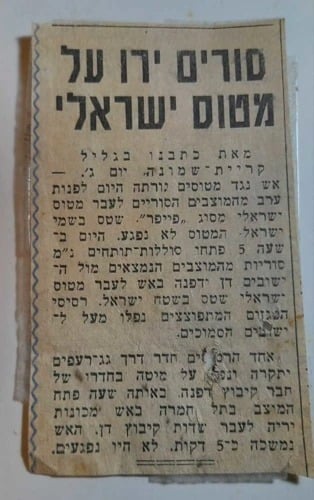
He heard voices approaching and was certain of his end, but fortunately, they turned out to be armored forces coming from the Golan Heights.
They insisted on evacuating him immediately to Tel Hashomer Hospital due to his severe injuries, but he insisted on delivering his testimony and terrified impressions to air force operations room officials before being evacuated to the hospital.
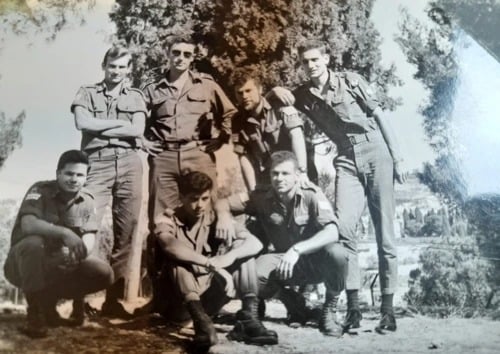
Sheffer expressed regret that his fellow pilot, Captain Rani Afri, did not survive the attack.
Fifty years have passed since this incident, and technologies and data collection systems have changed beyond recognition, yet Sheffer’s message to intelligence officers remains unchanged, echoing when we met him at a field intelligence officers’ conference.
This disclosure comes at a time coinciding with the passing of more than five decades since the 1973 October War, as the Israeli military institution periodically renews efforts to highlight what it describes as lessons from the past to justify current intelligence gaps or reinforce internal narratives of resilience.
Source: Israeli Military Website
Latest news

Partly cloudy with scattered rain in the north starting from noon

New York Climate Week 2026 Opens Amid Energy Crisis, 100,000 Attendees

First Meeting of the Executive Committee of the Governance in Education Sector Project