World
France: What Do the Protests Hide Behind Street Anger?
Political philosopher Khaldoun Al-Nabwani analyzes France's deep structural crisis, linking recent riots to economic pressures, social divides, and upcoming presidential elections.

France faces a crisis that goes beyond protests and riots to encompass economic pressures and a social rift intertwined with presidential election calculations, according to political philosophy researcher Khaldoun Al-Nabwani. He argues that while a policy of security firmness combined with dialogue may contain anger, it does not address its roots.
Speaking to Sky News Arabia, Al-Nabwani stated that the protests reveal a structural crisis hitting France and extending to other European countries, amid rising debt burdens, austerity, and energy costs, with middle and marginalized classes bearing the greatest cost.
He compared President Emmanuel Macron and his government's handling of the protests to the approach adopted during the "Yellow Vests" movement, combining the pursuit of those involved in vandalism with opening channels for dialogue, following a "carrot and stick" policy.
He noted that Macron used to travel between cities and municipalities to meet citizens during that crisis. However, he described the impact of this policy as a "topical treatment," allowing for the management of escalation without reaching the underlying economic and social causes.
According to Al-Nabwani, the security escalation reached a level this time that prompted the Interior Minister to submit his resignation on Monday, before Macron rejected it, insisting on maintaining security leadership and pursuing those involved in vandalism and theft.
Education Ignites Anger
Al-Nabwani attributed the start of the movement to teachers' protests over education conditions and allocations, before university students, unions, and other movements joined.
He listed problems including aging school buildings, some of which are over fifty years old, a shortage of teachers, and students feeling inequality in opportunities to enter universities via the "Parcoursup" platform.
He pointed out that education allocations were raised to $64 billion in the 2027 budget draft, questioning how this spending would reflect on the quality of educational services given ongoing complaints about staff shortages and delayed reforms.
He placed these conditions within an accumulated economic crisis exacerbated by the repercussions of the coronavirus pandemic. He described Macron's economic decisions during that phase as "catastrophic," considering that they contributed to increasing public debt.
The Middle Class Pays the Price
The researcher linked rising indebtedness to resorting to austerity, saying that middle and marginalized classes pay the biggest price, whether through reducing the number of teachers or delaying school repairs to save expenses.
He added that the energy crisis is a fundamental factor complicating the scene, noting that pressures extend beyond France to Belgium, Portugal, Greece, and Germany, in addition to the housing crisis in Spain.
On the security level, he believed that dealing with looting revealed gaps in controlling perpetrators and intelligence shortcomings in preemption, despite indicators and posts warning of escalation. He also linked the political crisis to tension between the state and civil society within the structure of the Fifth Republic.
Vandalism Does Not Represent Protesters
Al-Nabwani considered targeting luxury stores a reflection of a rift between the wealthy and marginalized groups in poor suburbs, including children of immigrants who cannot afford products from those shops.
But he stressed not holding students and protesters responsible for acts of theft, clarifying that groups exploit crowds to carry them out. He mentioned the participation of far-left groups and the exploitation of riot events by the far-right.
The Street Enters the Electoral Battle
The researcher said that the discrepancy between authorities' figures and union estimates, which spoke of around 750,000 demonstrators, reflects a political conflict accompanying the protests.
With presidential elections approaching, according to his assessment, he saw that political forces invest anger in their campaigns; La France Insoumise party led by Jean-Luc Mélenchon focuses on class division, while the far-right blames migrants and accuses the government of failing to protect the police.
He added that the instrumentalization of events went beyond France, pointing to Donald Trump and JD Vance using the French scene to attack Democratic immigration policies in the United States.
Latest news

Nawaf Salam: Women's Rights Are a Fundamental Standard for Building the State and Facing Economic Challenges
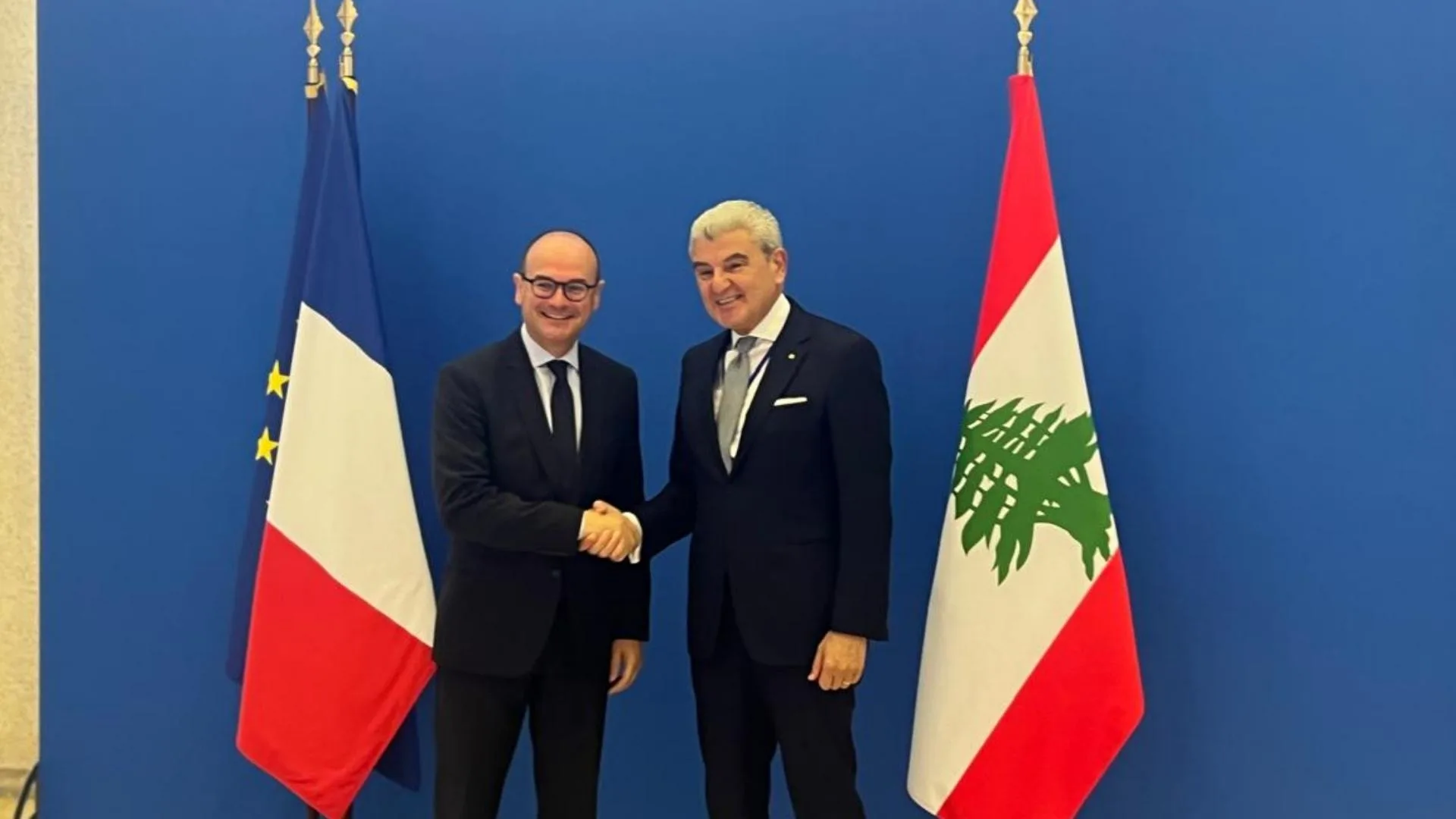
Isa Al-Khouri Invites French Counterpart to Visit Beirut to Explore Industrial Opportunities

Birth records identify Michael Bradley Do as father of Sahar Ray's daughter