World
Hostile Act
Trump warns of retaliatory tariffs if the EU grants Canada associate membership, escalating tensions with both Europe and Canada.

On Thursday, U.S. President Donald Trump threatened to label any move by the European Union to grant Canada associate membership as a "hostile act" against the United States, vowing to impose additional tariffs on the bloc.
Speaking to reporters in response to a plan unveiled by European Commission President Ursula von der Leyen, Trump said it was "laughable," adding, "If they go ahead and if I see any hostile action, I will impose very strict tariffs or stop trade with Europe."
He also hinted that the U.S. might halt trade with Europe in certain areas, calling Canada's potential accession to the EU "laughable" and describing its neighbor as a "very poor trading partner."
European Commission President Ursula von der Leyen had proposed granting Canada the status of the first "associate member" of the EU as part of an effort to deepen relations between the two sides.
Addressing Canadian Prime Minister Justin Trudeau, who was invited to Strasbourg to attend her annual State of the Union address, she said, "We want to elevate our relationship with Canada to the highest possible level (...) and therefore I would like to work with you to explore the possibility of Canada becoming the first associate member of the European Union."
Trudeau’s office stated in a statement, "In a world growing more dangerous and divided, Canada is strengthening ties with trusted partners."
Trudeau, the first foreign head of government to attend the State of the Union speech, is scheduled to deliver a speech before the European Parliament in Strasbourg on Thursday.
Canada, locked in a trade war with the United States under Trump’s leadership, seeks new partners.
In contrast, Europe, facing similar tensions with Washington, aims to rally support for its strategy of balancing between the two global powers—China and the United States.
Von der Leyen said, "We look at the world through one lens: from artificial intelligence to climate change, from the Arctic to geopolitical geography," urging Ottawa and Brussels to "build a shared future."
Trudeau’s office reiterated in a statement, "In a world growing more dangerous and divided, Canada is strengthening ties with trusted partners."
The European official added there was a "need to reshape our partnerships," calling for Canada to be granted associate status after Trudeau spoke of establishing a "unique alliance" across the Atlantic.
EU treaties do not legally define the status of associate member, but Germany recently proposed granting it to Ukraine, allowing Kyiv to attend some ministerial meetings or EU summits without voting rights.
German Member of the European Parliament Tobias Kremer, a leading supporter of a parliamentary resolution calling for enhanced cooperation between the EU and Canada, said, "We don’t yet know precisely what this means."
But he added that a closer alliance seemed "inherently logical."
Ottawa and Brussels are particularly seeking to strengthen their partnership in areas ranging from artificial intelligence to energy amid pressure from U.S. tariffs and Chinese competition.
After meeting with European Commission President von der Leyen, Trudeau traveled to London for his first meeting with UK Prime Minister Andy Burnham.
Trudeau told Burnham there was "an opportunity for us to build the right values in artificial intelligence," and to "enhance cooperation in defense and trade."
Trade volume between the EU and Canada has increased by 80% since 2016, thanks to the entry into force of a free trade agreement eliminating most tariffs.
This year, Canada became the first non-EU country to join the EU’s "PESCO" defense procurement program.
Canadian ambassador to the EU Jonathan Wilkerson told AFP this week that both sides would examine areas "where we have complementary capabilities and needs," which hold "strategic importance" for "ensuring our sovereignty," such as energy, artificial intelligence, and critical raw materials, especially rare earth elements.
Ottawa also hopes to secure an agreement allowing the European Investment Bank to finance Canadian projects related to strategic minerals, aiming to reduce reliance on China, according to Wilkerson.
Possible options include full implementation of the free trade agreement, which has not yet been ratified by ten EU countries—including France, Italy, and Poland—due partly to opposition from local farmers.
This limits the agreement’s scope, as provisions on investment protection and dispute settlement remain unimplemented.
Discussions are also underway to ease rules on labor mobility and expand student exchanges through the European Erasmus program.
Additionally, Canada is being considered for contributing to the EU’s €90 billion loan to Ukraine, potentially through participation in defense projects benefiting Kyiv.
Wilkerson said, "We are actually aiming to go beyond a mere free trade relationship and deepen this partnership across all areas."
Latest news
Reddish Lunula May Signal Underlying Health Conditions, Study Finds
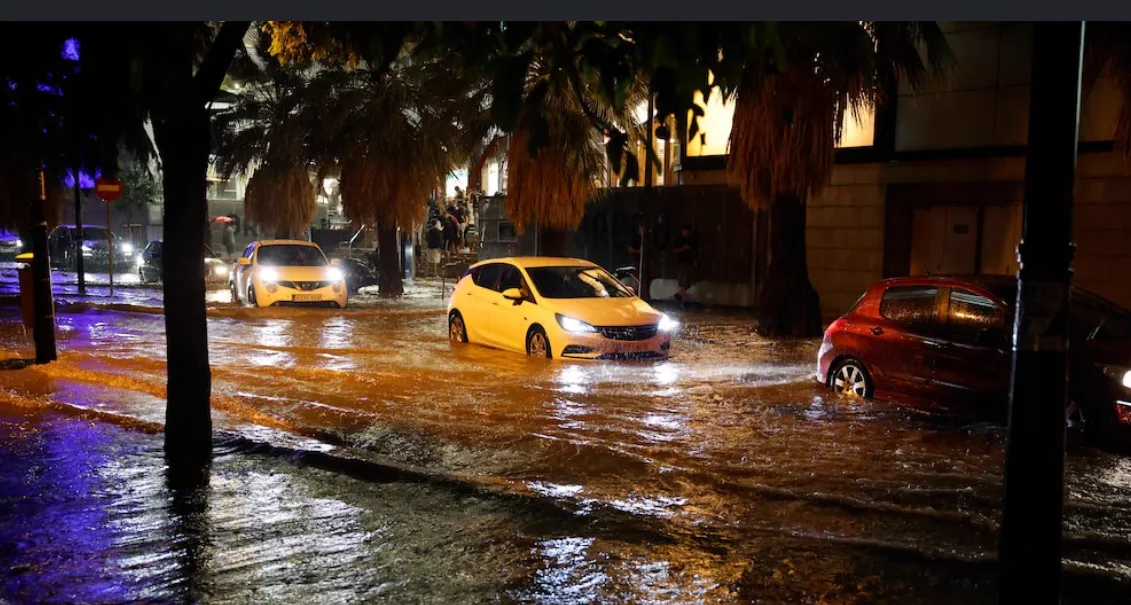
Deadly flash floods kill man, paralyze transport across eastern Spain

Russian Defense Ministry: Strikes Target Military Industry, Energy, and Transport Facilities in Kyiv, Zaporozhye, and Odesa