World
Trump Backs, Prison Looms: Secrets of the Brazilian Presidential Race
Brazilians head to runoff polls amid tight competition between Lula's leftist agenda and Flávio Bolsonaro's right-wing campaign backed by Donald Trump.

Brazilians will head to the polls on Sunday for the presidential election runoff, choosing between continuing the rule of left-wing President Luiz Inácio Lula da Silva for another four years or returning to a right-wing path led by Senator Flávio Bolsonaro, son of former President Jair Bolsonaro.
The election comes amid extremely close competition, according to recent opinion polls, after Flávio Bolsonaro topped the first round, ahead of Lula who seeks to overturn the results and win a fourth term.
This electoral battle is the last for the current Brazilian president, who is preparing to turn 81 next week.
Clash Between Left and Right
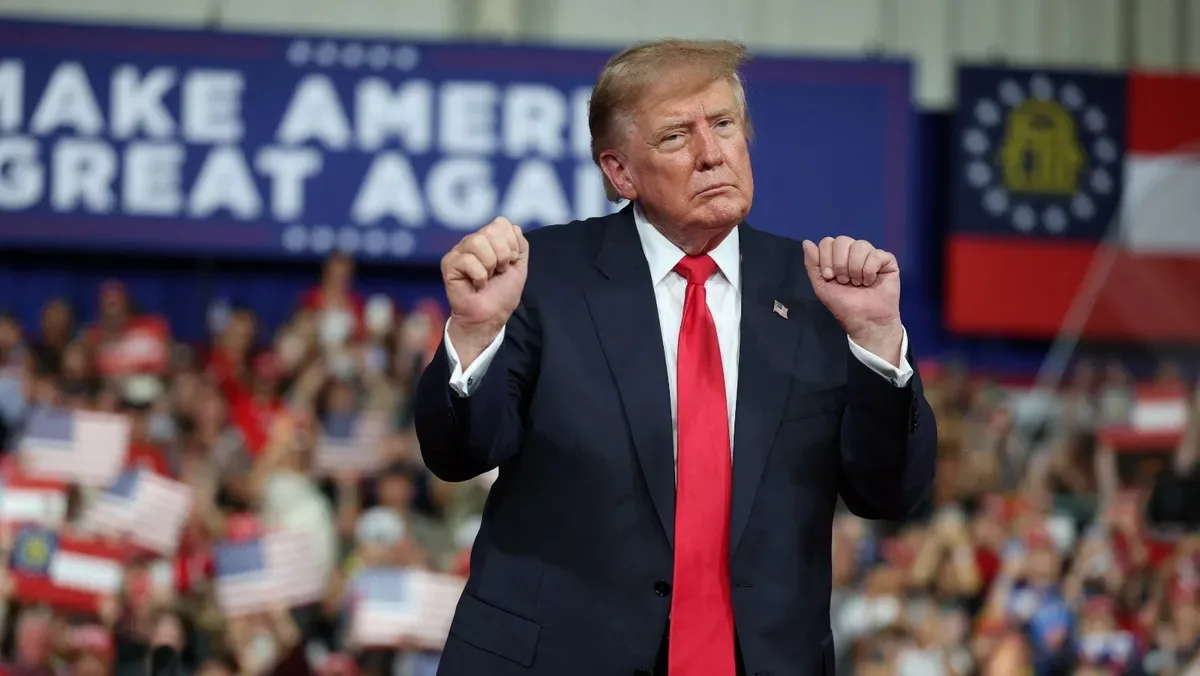
The runoff places Brazil before two distinct political choices: continuing the social and economic policies adopted by Lula, or returning to the right-wing approach supported by US President Donald Trump, a political ally of the Bolsonaro family.
Lula presented himself during his campaign as a defender of democracy and Brazilian sovereignty against US intervention, pledging to expand social protection programs and support the poorest segments.
In contrast, Flávio Bolsonaro, aged 45, focused on combating crime and reducing government spending, offering a political program also based on religious and conservative rhetoric, promising to change the approach that governed the country in recent years.
One of his supporters, João Paulo, said during a rally in Belo Horizonte that the country needs change after years of policies he believes have not achieved the desired results.
Flávio Bolsonaro sought to present himself as more moderate than his father, former President Jair Bolsonaro, who is serving a 27-year prison sentence after being convicted of attempting to overthrow the results of the 2022 elections.
Despite trying to highlight his difference from his father, Flávio pledged that his first action if elected would be to release Jair Bolsonaro, whose political legacy remained strongly present in the electoral campaign.
Conversely, leftist forces intensified their movements after Lula lost the first round, organizing massive rallies under the slogan "We will never allow Bolsonaro's return."
Participants in those rallies recalled criticisms directed at the former president's handling of the coronavirus pandemic, his environmental and social policies, particularly regarding deforestation and cuts to government programs and public services.
Economy and Crime
Lula enters the election relying on his legacy in social welfare programs that helped lift millions of Brazilians out of poverty, and on economic indicators recorded during his third term showing decreases in inflation and unemployment and improvements in food security.
But these achievements did not end dissatisfaction among sectors of voters due to rising living costs and persistent crime rates, as well as controversy over increased government spending.
Social support programs became one of the main points of disagreement between candidates, with Lula pledging to expand them while critics called for curbing public spending.
In northeastern Brazil, considered an electoral stronghold for the current president, Lula's supporters defend these programs, considering them essential support for families suffering from poverty and hunger.
Environment Present
On the environmental front, Brazil saw a decline in rainforest deforestation to its lowest levels in four decades during Lula's rule, according to data in the report.
However, climate change did not occupy a prominent position in the electoral campaigns, despite fires witnessed in the Amazon region in recent weeks, exacerbated by the El Niño phenomenon, which led to smoke spreading across several cities.
After finishing second in the first round, Lula changed his media strategy, intensifying his presence on social media platforms through video recordings, in an attempt to enhance direct communication with voters.
The competition extended to Meta, owner of WhatsApp, Facebook, and Instagram apps, after Lula's campaign accused it of favoring his rival through what it described as "algorithmic manipulation."
The company denied the accusations but acknowledged mistakenly stopping some ads belonging to Lula's campaign due to technical issues.
Political Challenges
Regardless of the runoff results, Brazil faces a complex political phase amid sharp division between left and right, and legislative gains achieved by right-wing forces.
Political analyst Thomas Traumann believes that Lula's victory would place him before an opposing Congress that could hinder his policies and increase pressure on his government.
If Flávio Bolsonaro wins, Traumann expects an escalation of confrontation with the Supreme Court, given ongoing disputes between the judiciary and supporters of the former president.
Flávio Bolsonaro had announced his intention to seek the impeachment of Supreme Court Justice Alexandre de Moraes, who led the case related to the attempted coup attributed to his father.
Between the continuation of leftist social policies and right-wing economic and security trends, the future of the Brazilian presidency is determined by the ballot boxes, amidst deep political polarization and growing internal and external challenges.
Latest news
Turkey and Libya Agree on Maritime Boundary Delimitation Amid Regional Concerns
Report: US Military Prepares Plans to Strike Iran After Midterm Elections
Britain Urges Citizens to Stockpile Food and Water for Emergencies