·
·


World
Washington is engaging with Baghdad on a new security initiative aimed at reorganizing Iraq’s military framework, including the Popular Mobilization Forces, under a unified ministry. This move seeks to consolidate armed groups under state control amid rising international pressure and concerns over regional instability.
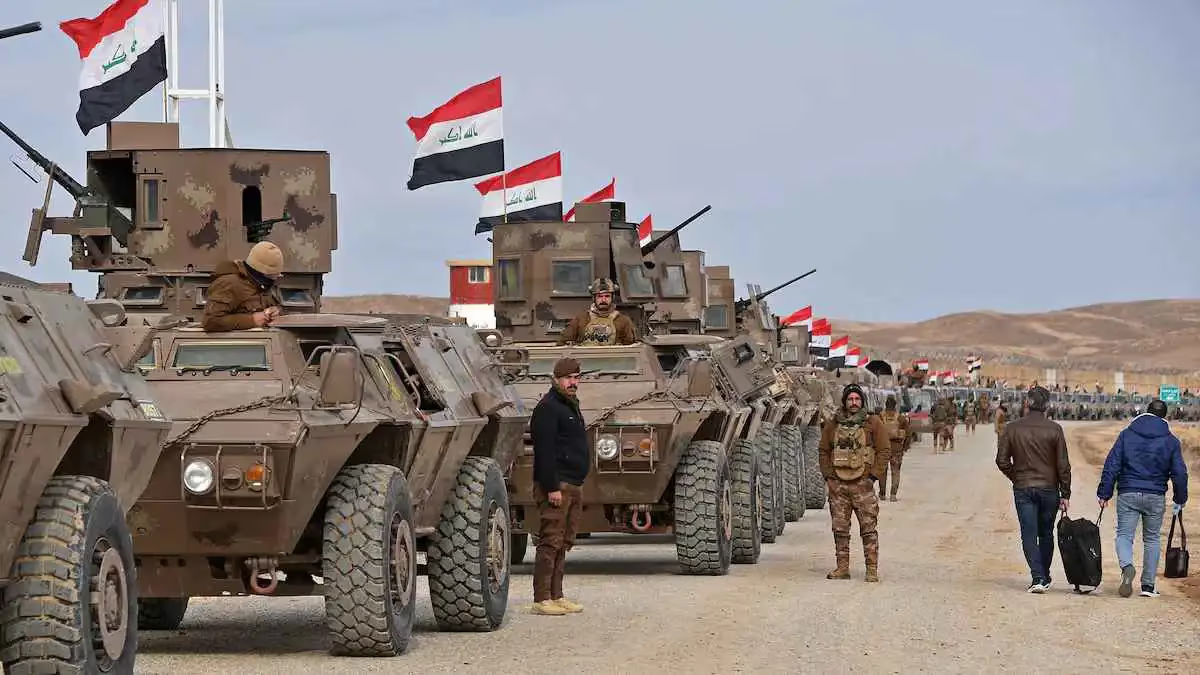
An Iraqi official has revealed details of a proposed security and military plan currently under discussion between Baghdad and Washington. The initiative envisions restructuring Iraq’s military apparatus by creating a new ministry that would encompass various security and military formations, notably the Popular Mobilization Forces (PMF). This effort is part of a broader strategy to regulate arms and redefine the relationship between the state and armed factions.
The proposal emerges alongside increasing American and Western demands on Iraq to address the presence of weapons outside state control. These developments coincide with ongoing political and security dialogues following the formation of Prime Minister Ali Al-Zaidi’s government, amid fears that Iraq could once again become a battleground for regional conflicts.
During a recent visit to Baghdad, General David Petraeus, former commander of U.S. forces in Iraq and ex-director of the CIA, delivered comprehensive proposals regarding the new security trajectory. These concepts were communicated to senior leaders within Iraq’s Coordination Framework, according to a source speaking to "Iram News."
The American plan includes establishing a new security or military ministry that would integrate key units such as the Federal Police, the Popular Mobilization Forces, and the Rapid Response Forces under a unified structure directly accountable to the state. Discussions are ongoing about whether to incorporate the Kurdish Peshmerga forces into this framework.
The core objective of this initiative is to reorganize Iraq’s military structure to reduce the number of power centers and eliminate the existence of separate groups with political or sectarian affiliations outside official institutions. The plan aims to bring all armed factions under a single, state-controlled command chain.
Prime Minister Ali Al-Zaidi is expected to brief U.S. officials on the progress of this project, either during an anticipated visit to Washington or through direct communications in the near future. The initiative remains a key focus for Washington, which has monitored this issue for several years.
Although General Petraeus’s official role within Iraq remains undisclosed, political circles speculate about his possible special assignment related to Iraq or appointment as a U.S. envoy to Baghdad.
Current discussions lean toward transforming the Popular Mobilization Forces into a military directorate managed by a general from the Iraqi army, distancing its leadership from existing militia commanders. The plan includes gradually severing ties between the PMF and other armed groups, restricting funding exclusively to official institutions, and sidelining militias that are not fully integrated into the state as an initial phase of a longer-term process.
The talks do not currently contemplate dissolving the Popular Mobilization Forces outright but focus on redefining it as a fully state-controlled military entity, similar to traditional armed forces in other countries.
This approach follows joint U.S.-Iraqi security evaluations that identified the persistence of multiple security decision centers as a threat to Iraq’s stability, especially after recent Israeli-Iranian conflicts and the resulting tensions.
The political-security committee responsible for disarming militias, which includes former Prime Minister Mohammed Shia Al-Sudani, Badr Organization leader Hadi Al-Amiri, and current Prime Minister Ali Al-Zaidi, has temporarily halted its meetings following the approval of the new government. This pause awaits clarity on the new understandings brought by Petraeus and assessments of militia leaders’ reactions, as some factions remain wary of any plan that might reduce their military or political influence within the state.
Future discussions are expected to resume with greater transparency but under tighter external pressures, reflecting a clear U.S. intent to comprehensively reorganize Iraq’s security sector.
In recent months, Iraqi political circles have increasingly discussed mounting American pressure to reform security and military institutions, alongside repeated calls to centralize arms under state control and end the proliferation of armed groups, especially following recent regional security developments.