Lebanon
Jaber Presents 2027 Budget to Finance Committee Within Five-Year Reform Vision
Finance Minister Yassin Jaber presented the 2027 budget draft to the parliamentary Finance and Budget Committee, framing it within a five-year medium-term reform vision aimed at restoring confidence and sustainable growth.

Finance Minister Yassin Jaber presented the draft of the 2027 budget before the parliamentary Finance and Budget Committee during its first meeting to begin discussions. He placed the project within a medium-term financial and reform vision spanning five years, combining the protection of financial and monetary stability, responsiveness to social and humanitarian needs, restoration of confidence, and preparing Lebanon for recovery and sustainable growth.
Jaber stressed that the 2027 budget is not an isolated measure but a station in a broader path to address the state's financial commitments, reform the banking sector, contribute to deposit recovery within an integrated framework, and restore financing to the economy, enabling a transition from crisis management to recovery, reconstruction, and leveraging regional opportunities.
He clarified that this path aims to achieve primary surpluses ranging between 2.5 and 3 percent of GDP, in line with the approach discussed with the International Monetary Fund (IMF), to establish a reliable financial base that allows for public debt restructuring, recapitalization of Banque du Liban, meeting obligations, restoring confidence, and opening the door to financing and investment. He affirmed that building this base does not mean ignoring social needs or sacrificing recovery, but rather securing the conditions for their sustainability.
Jaber addressed the delicate circumstances under which the project was prepared, amid the intersection of internal crisis repercussions with regional war, which caused material damages of no less than $12 billion since 2024, and an economic contraction of 5.2 percent that year, with an additional estimated contraction of about 7 percent in 2026. He also noted that inflation rose to 17 percent by the end of September, after having declined to 11 percent at the beginning of the year, coinciding with rising costs of energy, transport, and basic services, and expanding social and humanitarian needs.
He pointed out that financial and monetary stability, which withstood exceptional shocks, is not a guaranteed achievement but requires continued fiscal discipline, improved revenue collection, and prioritized spending. He affirmed that the governing principle of the project is that financial commitments must not exceed the state's capacity to bear them, adopting realistic spending ceilings and close coordination with Banque du Liban to manage liquidity and maintain exchange rate stability, preventing financial pressures from turning into new monetary pressures.
On the revenue side, Jaber presented the project's estimates totaling 628,868 billion LBP, approximately seven billion dollars, compared to six billion in the 2026 budget, based on a conservative growth assumption of 3 percent and inflation of 10 percent. He stressed that enhancing revenues relies on broadening the tax base, combating evasion, and improving compliance without imposing new taxes, and that these revenues remain a ceiling for public spending.
He indicated that revenues for the first nine months of 2026 increased by 20 percent compared to the same period last year, despite economic contraction, due to corrective fiscal policies, activation of collection and recovery, enhanced compliance, and follow-up on public institutions. He also outlined reform priorities, foremost among them updating the income tax law, closing tax gaps, shrinking the informal economy, developing electronic declaration and payment, and strengthening capacities in the tax and customs administrations through digitization mechanisms, collection, and fortified oversight operations.
On the social front, Jaber affirmed that fiscal discipline goes hand in hand with addressing citizens' burdens within available financing capacity. He explained that current expenditure allocations in the project amount to 570,299 billion LBP, including support for the continuity and operational capacity of the public sector, and covering the cost of twelve additional basic salaries approved by two decisions during 2026, including retirees and public institutions, with an annual additional cost approaching one billion dollars. He linked the sustainability of these expenses to public sector reform and achieving economic growth capable of bearing their burden.
He highlighted key social and health allocations, including those for the "Aman" program which reached approximately $70 million, plus 9,227 billion LBP for the National Social Security Fund. The project also includes, for the first time, an allocation of 2,118 billion LBP to support housing loans through the Public Housing Institution, and one trillion LBP to support solar energy loans and alleviate burdens on citizens.
In response to war repercussions, he presented the allocation of seven thousand billion LBP within the budgets of the South Council and the Supreme Relief Commission, to meet needs including shelter allowances and structural reinforcement for displaced persons and victims. He emphasized the importance of concessional external financing in expanding response capacity without depleting resources, including a World Bank loan worth $250 million, and a French Development Agency loan worth €70 million under the "LEAP" project.
On the investment side, Jaber stressed that sustainable recovery requires reliable infrastructure, a more efficient energy sector, and transport and communication facilities that support production and trade, and that meeting immediate pressures must not come at the expense of necessary investment for growth. He explained that capital expenditure allocations in the budget draft amount to 58,569 billion LBP, prioritizing the acceleration of project implementation and utilizing the World Bank's development loan portfolio, totaling approximately $1.4 billion, available for execution and disbursement according to project requirements in sectors such as energy, water, agriculture, reconstruction, digitization, and social protection.
Jaber linked these priorities to a broader vision for repositioning Lebanon economically as a transit and trade hub on the Eastern Mediterranean connected to the regional economy, noting that enhancing regional connectivity could add at least two percentage points to economic growth if Lebanon prepares adequately.
He clarified that seizing this opportunity requires rebuilding confidence in a sound banking sector that attracts deposits and finances economic activity, addressing public debt and financial commitments within a sustainable path, investing in ports, airports, roads, and railways, reforming the energy sector, improving governance, strengthening regulatory bodies, and preparing the environment for private investment.
In this context, he affirmed the importance of continuing work with the IMF and completing agreed-upon reforms, addressing the financial gap, restructuring banks, protecting small depositors, complying with international financial standards, and exiting the grey list, considering these essential conditions for restoring confidence, accessing financing, and restoring credit to the private sector.
Jaber concluded that the 2027 budget combines protecting stability, safeguarding citizens' rights, restoring confidence, and preparing the economy for growth, within a five-year path contrary to what some try to portray, aiming to move beyond crisis management toward recovery, reconstruction, and building a more open and productive economy.
Latest news

30 Dead in Sri Lanka Prison Riot Leads to Transfer of Detained British Woman

Makki Launches Seminar on the Impact of Service Reengineering and Digital Transformation in Lebanon
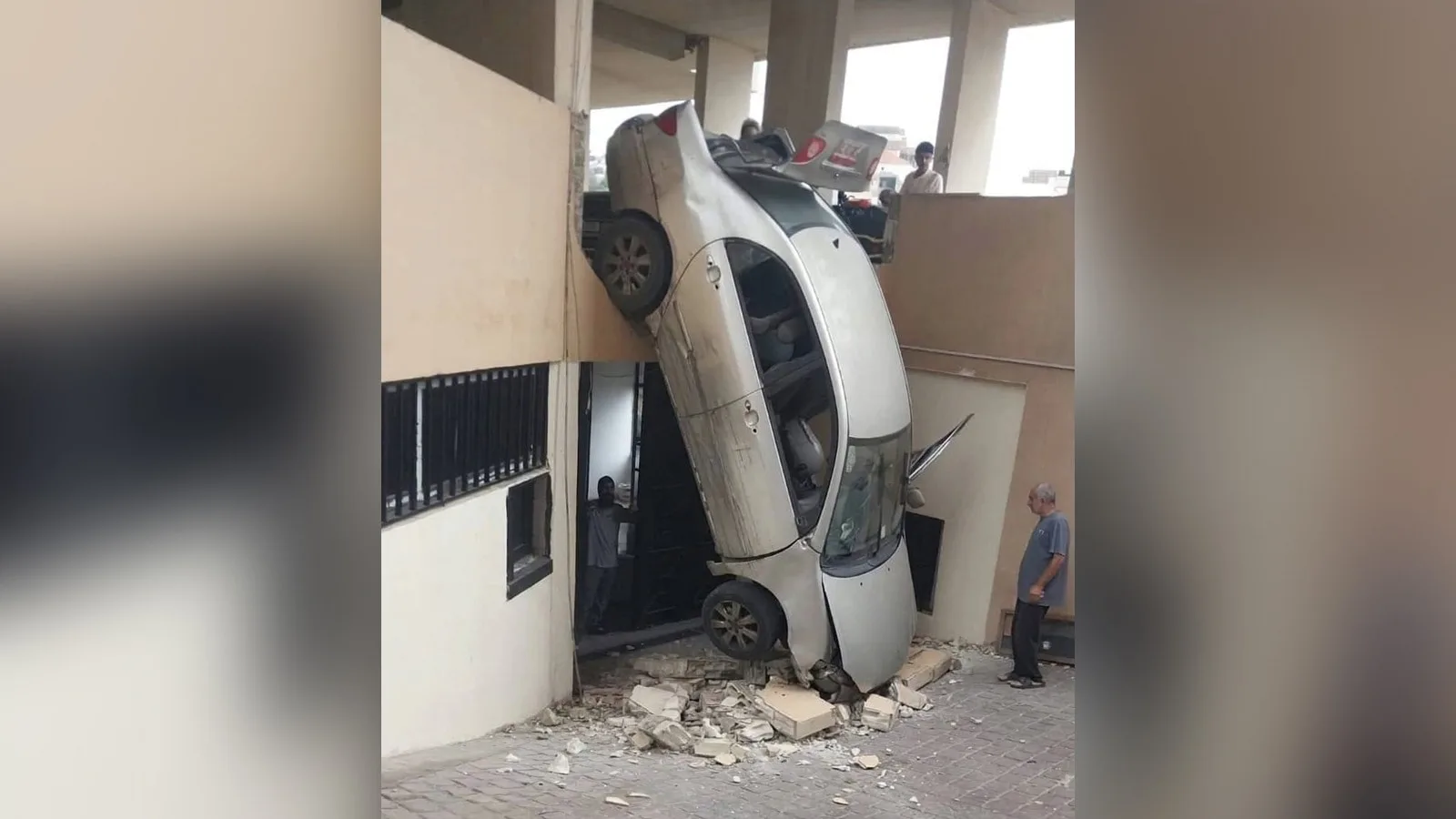
Photo: Strange Car Crash Inside Residential Building Garage