

Lebanon
Rai Warns Against Squandering Land: What We Lose Today May Be Irretrievable for Our Children Tomorrow… Disarmament Is a Condition for a Just State
Maronite Patriarch Cardinal Bechara Boutros Rai presided over Mass in Aaqoura, emphasizing the necessity of state monopoly on arms and warning against land sales that threaten Christian presence.

On Sunday morning, October 25, 2026, Maronite Patriarch Cardinal Bechara Boutros Rai presided over the Divine Liturgy at St. George Church in Aaqoura, marking the centenary of the beatification of the Martyred Masabki Brothers, coinciding with the Feast of Christ the King. He delivered a homily with spiritual, national, and social dimensions, stressing the need to restrict weapons to the state, secure borders, protect the land, curb youth emigration, and address living crises, affirming that the Christian presence in Lebanon and the East is a responsibility, a mission, and a partnership in building the future.
The patriarchal procession departed from Bkerke at 9:45 AM, accompanied by the two Vicars General, Bishop Hanna Alwan and Bishop Elias Nassar, the Secretary General of the Maronite Patriarchate Father Fadi Tabet, the Private Secretary Father Camille Mekhayel, and the Media Officer of the Patriarchal Palace Walid Ghiyad. They arrived in Aaqoura at 10:50 AM, where they were welcomed by the Bishop of the Maronite Eparchy of Jbeil, Michel Aoun, parish priests, and a crowd of believers, while cavalry escorted the procession from the town entrance to the church square.
His Beatitude presided over the Mass with the participation of Bishops Michel Aoun, Shepherd of the Eparchy of Jbeil, and Antoine Nabil Andari, former Shepherd of the Eparchy of Jounieh, along with the parish priests. The ceremony was attended by a group of bishops and regional priests.
MP Simon Abi Ramia attended representing the President of the Republic, Brigadier General Metri Al-Najjar representing the Army Commander, a Brigadier General representing the Internal Security Forces Commander, and MPs Ziad Hawat and Chawki Daccache, alongside political and military figures. At the beginning of the Mass, Bishop Aoun welcomed His Beatitude, who had previously served as the shepherd of the Eparchy of Jbeil before his election as Patriarch, expressing gratitude for the love and affection he holds for the people of Aaqoura.
After the reading of the Holy Gospel, the highlights of His Beatitude's homily included:
One State and One Legitimate Weapon
Patriarch Rai warned of the danger of attempts to smuggle explosives, weapons, and prohibited materials across borders, considering that any gap in their control could turn into a direct threat to citizens' security and the country's stability.
His Beatitude affirmed that "restricting weapons to the state and its legitimate institutions is an essential condition for establishing a capable and just state that assumes sole responsibility for security and peace," stressing that it is impossible to demand the state provide safety while simultaneously accepting multiple security authorities.
He added that the state desired by Lebanese people is not one that is strong against the citizen but weak against chaos, but rather a state that protects the citizen, secures its borders, applies the law to everyone, and safeguards sovereignty and rights without exception.
The Land is Identity and Future... Emigration Threatens Christian Presence
Patriarch Rai addressed the phenomenon of selling land, warning against squandering it and rushing to sell it, because it is not merely real estate ownership but memory, roots, identity, and future, affirming that what children lose today may not be recoverable by future generations.
Regarding youth emigration, he called for building a homeland where young people can work, start families, and find a dignified future, recalling Pope Leo XIV's emphasis on the necessity of preserving the Christian presence in the East and supporting Christians to remain in their land as witnesses to unity and peace.
He stressed that this presence "is not a privilege or self-isolation, but a responsibility, a mission, and a partnership in this land and its future."
Hunger is Not Just Hunger for Bread... But Hunger for Work, Safety, and Justice
Drawing from the Gospel of the Last Judgment "I was hungry and you gave me food," Patriarch Rai paused at the economic and social suffering experienced by Lebanese people amid rising cost of living, declining purchasing power, and shrinking job opportunities.
He questioned what is offered to families unable to meet their basic needs, to youth seeking a future, and to citizens burdened by accumulating hardships, warning that the citizen alone should not pay the price of crises.
He affirmed that responsibility is shared between the state, the church, private institutions, civil society, and those with resources, calling for cooperation to ensure treatment for the sick, education for students, employment for youth, and a dignified life for the elderly.
He stressed that "hunger is not just hunger for bread; there is hunger for work, for safety, for justice, and for the feeling that the human being is not left alone."
He also called for accelerating the reconstruction of what was destroyed and ensuring the return of families to their homes and villages with dignity and safety, affirming that displacement must not become a permanent reality, nor should the citizen be left alone facing ruin, poverty, and fear.
The Masabki Brothers: Holiness Lived in the Heart of the World and Crowned with Martyrdom
In the spiritual dimension of the homily, Patriarch Rai recalled the lives of the Saints Masabki Brothers, Francis, Abd al-Muti, and Raphael, whose family roots trace back to Aaqoura, although they were born and lived in Damascus, where they were martyred on July 10, 1860, after refusing to deny their faith in Christ.
He noted that they were not monks or priests, but laypeople who lived holiness in family, work, prayer, and service to the needy, affirming that their holiness did not begin at the moment of martyrdom but was the fruit of daily fidelity to Christ.
He pointed out that the Church declared them Blessed on October 10, 1926, before declaring their sainthood on October 20, 2024.
He affirmed that Christ the King does not establish his kingdom on power and authority, but on love, mercy, and service to humanity, and that the final judgment reveals the truth of the life lived by the human being and the good and love they showed towards others.
At the end of his homily, His Beatitude called for holding fast to freedom of faith, safeguarding human dignity, rejecting violence and fanaticism, and remaining steadfast in the land, confronting injustice and need, and enhancing justice, brotherhood, and coexistence.
Consecration of an Altar for the Masabki Brothers and Procession of Relics
At the conclusion of the celebration, words of thanks were directed to the parish priest Monsignor Rizkallah Abi Nasr, before Patriarch Rai proceeded to consecrate one of the altars of St. George Church in the name of the Martyred Masabki Brothers, to immortalize their memory and root their spiritual presence in their mother town.
The Mass concluded with a procession of the saints' relics amidst an atmosphere of prayer and reverence.
Thus, the centenary of the beatification of the Masabki Brothers from Aaqoura carried a message that transcends the boundaries of ecclesiastical celebration, confirming that loyalty to the martyrs lies in steadfastness in faith and land, protecting human dignity, and building a just and capable state that preserves its sovereignty and borders, safeguards freedom, pluralism, and coexistence, and restores Lebanese confidence in their homeland and future.
Latest news

Hajjar Affirms Lebanon's Solidarity with Saudi Arabia in Call with Saudi Counterpart
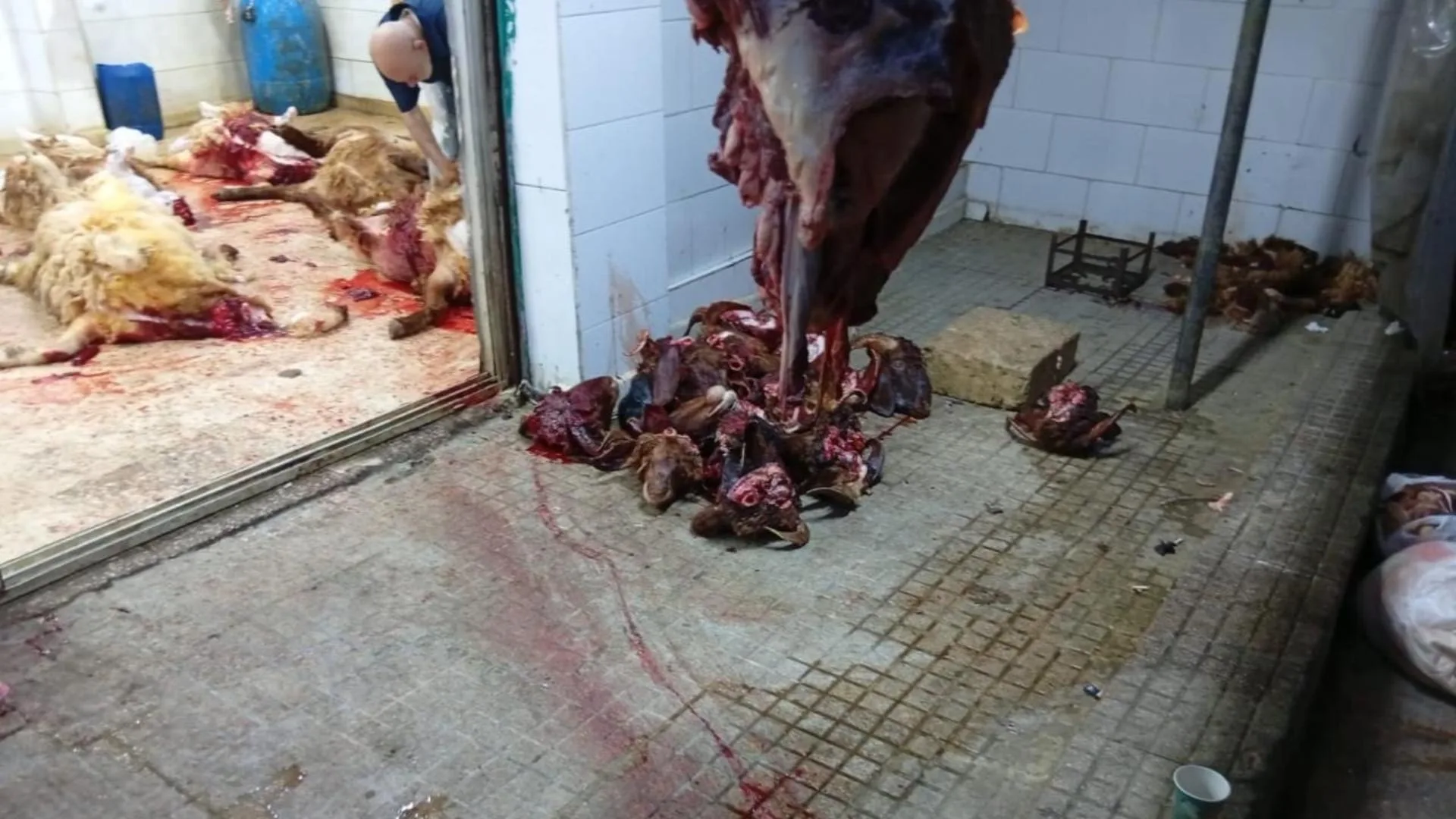
Terrifying Images: Slaughterhouse in Wadi al-Musaytba Closed by Order of Beirut Governor

Dönmez’s social media dance clip attracts significant viewer interest
