·
·


Tech & Science
DNA from elephant dung showed Angola’s high-elevation “ghost elephants” form a distinct lineage most closely matched with elephants in Namibia.

DNA from elephant dung has linked Angola’s high-elevation “ghost elephants” to a distinct genetic lineage whose closest known match is with elephants in Namibia.
For more than 10 years, conservation biologist Steve Boyes followed reports of the nighttime animals, said to live in a remote high-altitude wetland in eastern Angola. A motion sensor camera finally photographed them in 2024, after which Boyes asked Stanford scientists to help answer a deeper question: who they are and where they came from.
Dmitri Petrov, the Michelle and Kevin Douglas Professor in the School of Humanities and Sciences, led the genomic analysis. “DNA is the molecule of life, and people have figured out how to read it faster and faster,” Petrov said. “It’s very powerful.”
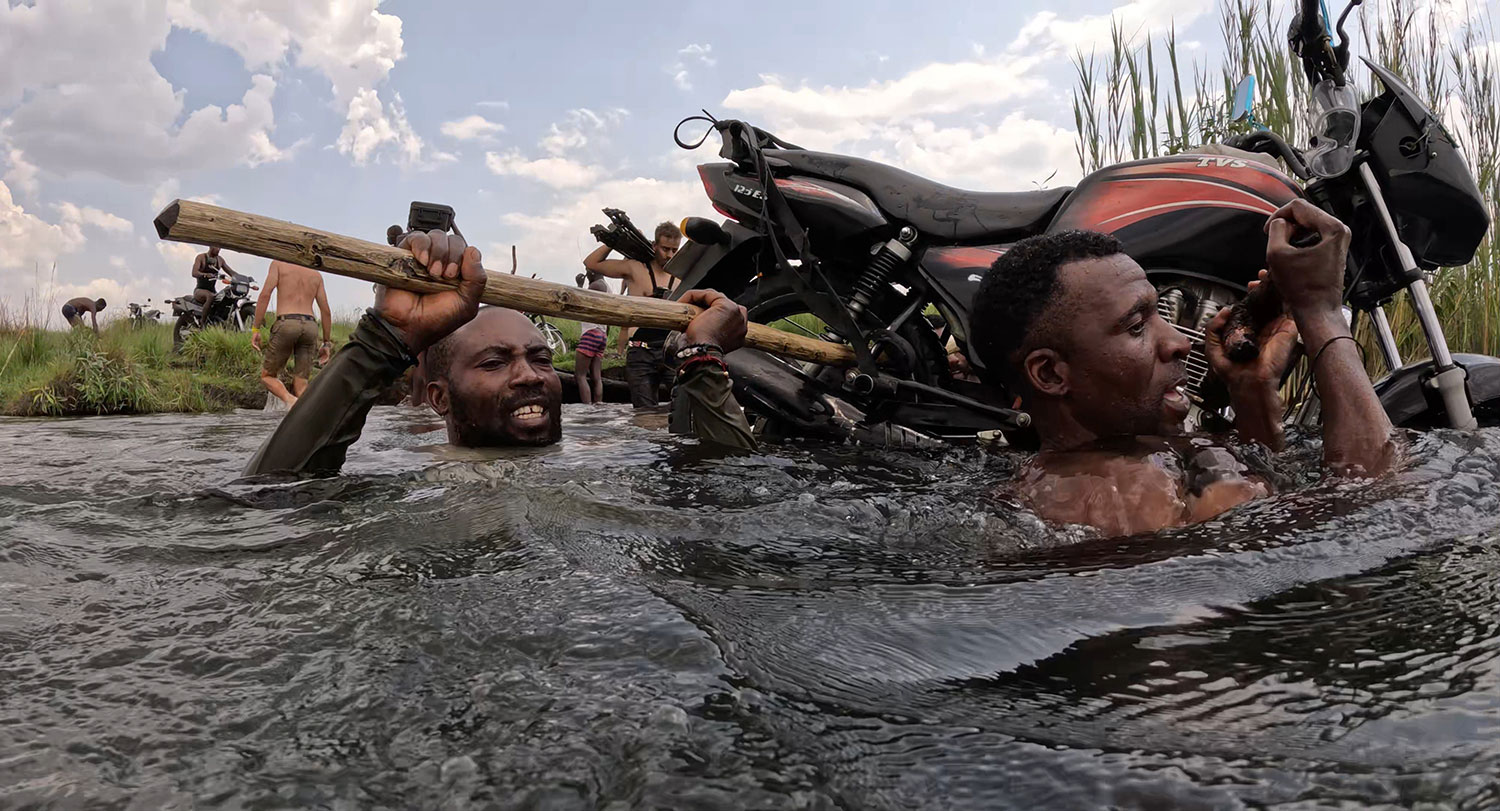
The search for the elephants, and the Stanford science behind it, are part of a new National Geographic documentary by Werner Herzog. The film follows Boyes, a National Geographic Explorer, as he travels to Lisima Ly Mwono, a high-altitude wetland so isolated that the team had to carry motorbikes across rivers to reach it.
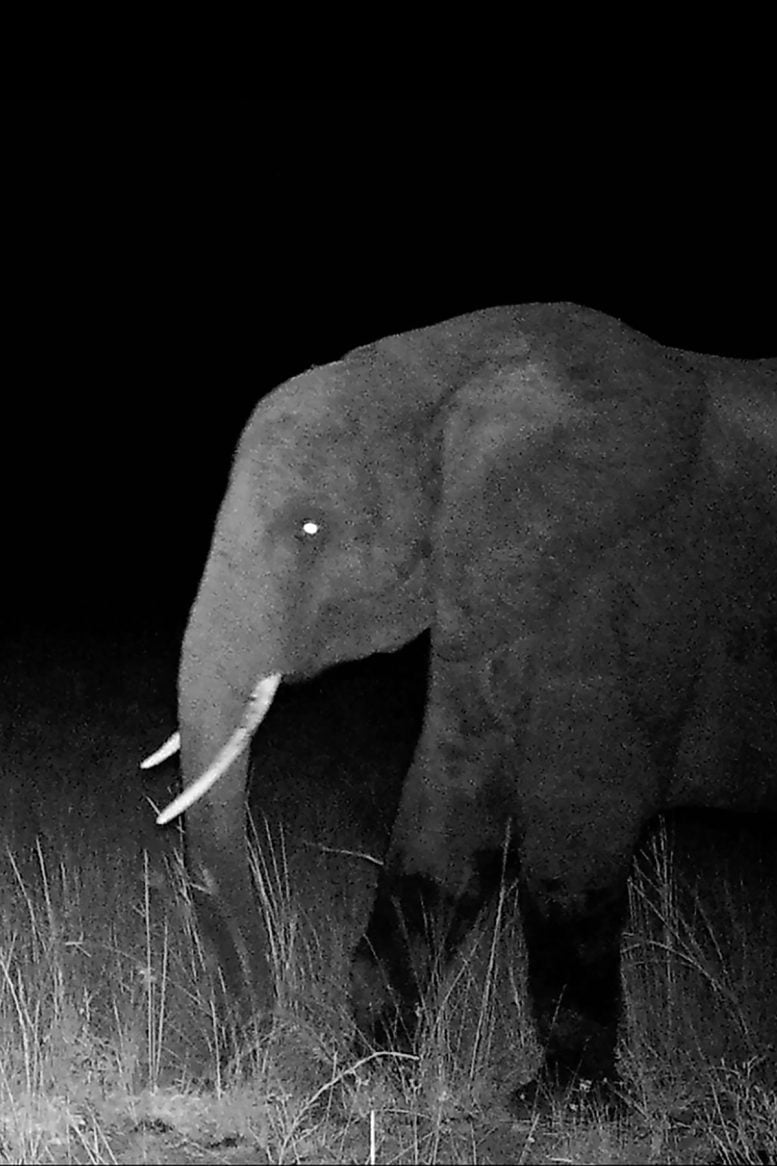
The elephants are larger than others in the region, active at night, and were previously known only through local sightings. Boyes thinks they could be living descendants of the largest living land mammal ever recorded, an elephant named “Henry,” which was killed in Angola in the 1950s and whose remains are at the Smithsonian National Museum of Natural History.
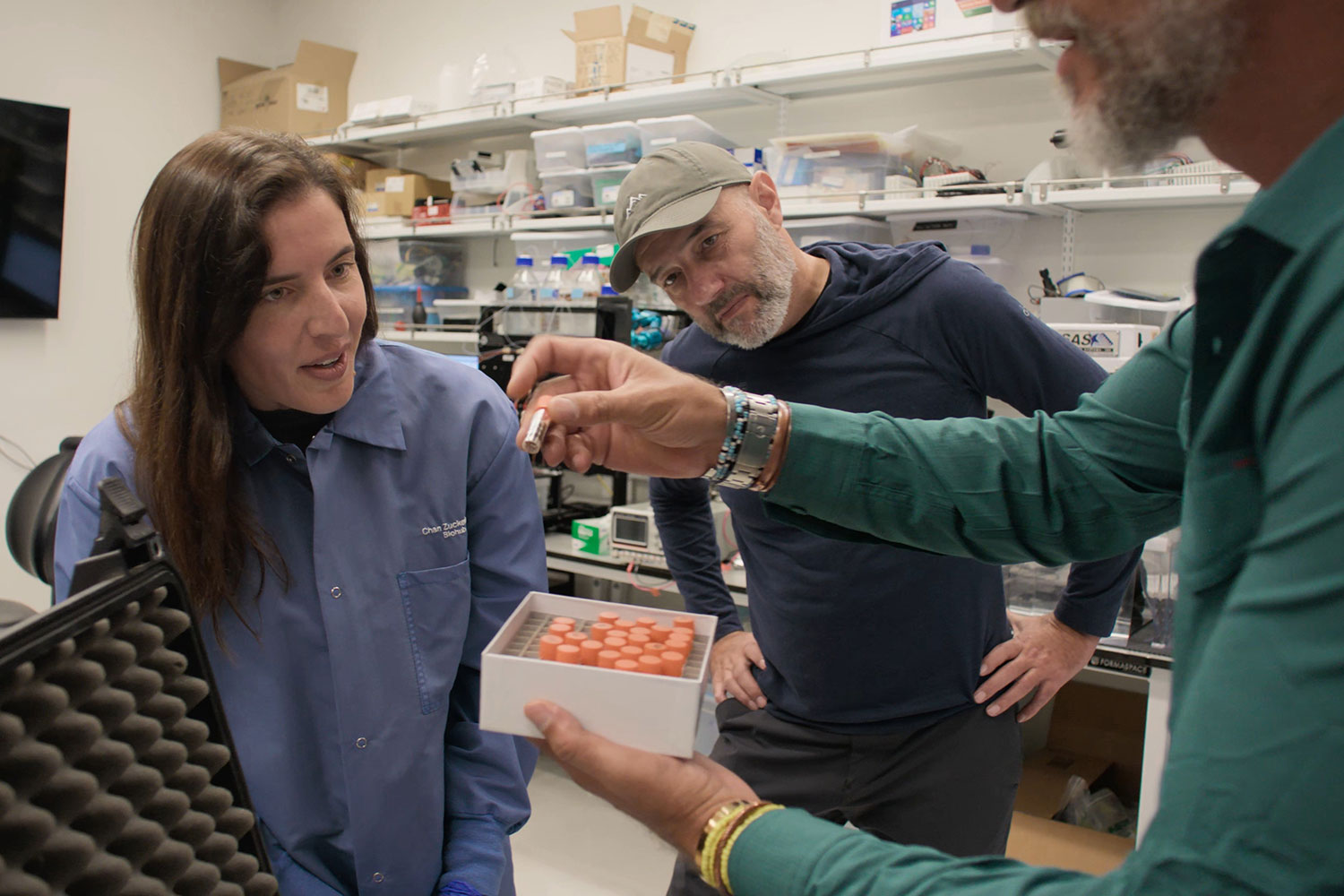
Boyes brought dung samples to Petrov and Katie Solari, a senior scientist in the Petrov Lab and associate director of the Program for Conservation Genomics at Stanford. Former Stanford researcher Jordana Meyer, the senior scientist on the project, was the key connection that brought the work to the Petrov Lab, and Ellie Armstrong, another former Stanford researcher, also contributed.
In the lab, the researchers placed the samples in a “bead basher,” a machine that breaks open cells so DNA can be released, and then sent the extracted DNA to a sequencing machine capable of reading the full genome. “This was a really great example of using non-invasive samples because you can’t even see the animal,” Solari said. “The best we can do is get their feces and then throw all our genomic techniques at it to get tissue-level information.”
After the team obtained the ghost elephants’ genome, they shared the data with Carla Hoge, a postdoctoral fellow at the University of Chicago in the lab of John Novembre, so she could compare it with sequences from other elephants. The effort quickly ran into a limitation: “Surprisingly, when we started this project, there wasn’t a lot of genetic information available for elephants,” Solari said. “There were a few captive individuals that had been sequenced and aren’t helpful for this use case.”
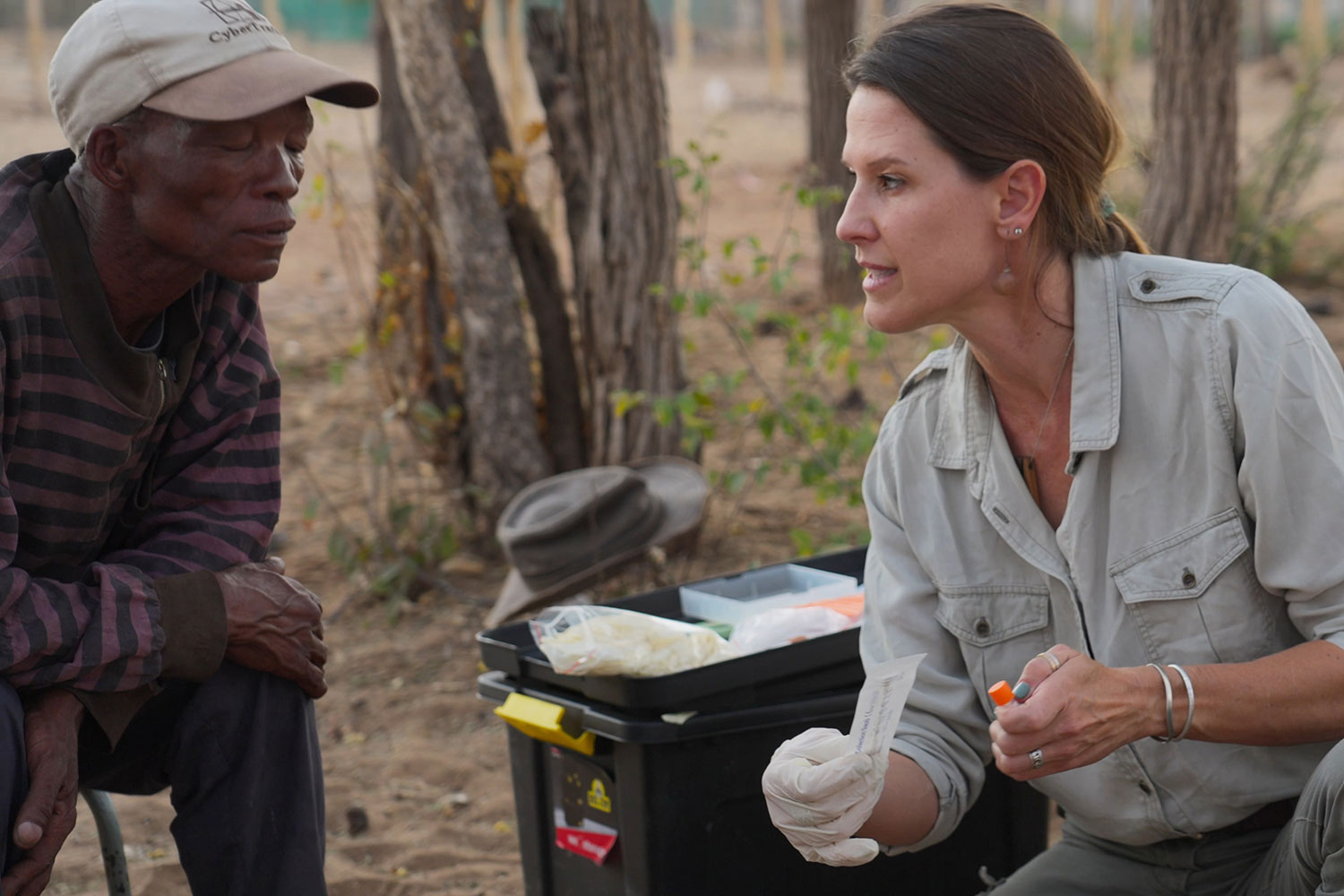
Because the original ancestry of captive elephants is often unclear, Petrov and Solari needed genomic data from wild elephant populations near the ghost elephants to determine whether the groups were related. Meyer and Solari spent months collecting blood and tissue samples from other elephants in the region where the documentary was filmed so the comparison could be completed.
“Carla’s analyses have shown that the ghost elephants are actually quite distinct from anything that we have sequencing for,” Solari said. “We’ve been able to tell that they’re most genetically similar to elephants in Namibia, rather than in the Okavango Delta of Botswana, which is surprising.” The researchers were not able to prove a genetic link between the ghost elephants and Henry.
For now, the only strong genetic evidence from Henry is mitochondrial DNA, which is inherited only through the mother, and it does not connect him to the ghost elephants. Solari said additional data could eventually resolve the question.
The ghost elephant dung samples have already provided more than ancestry clues. They enabled Hoge to identify individual elephants, determine their sex, and assess whether any were closely related.
“The fact that we can see distinct individuals is really important,” Petrov said. “It’s a very established method, which we’re now using to understand how big the population is. It’s great that we can get all this information without ever disturbing the animals.” “A lot of these populations we work on are endangered, so the question of conservation becomes central,” he continued. “We try to figure out how we can go into nature and learn about how these ecosystems work so that ultimately we can protect them.”
Solari has used the same fecal DNA method to count snow leopards in Pakistan, another elusive species that cannot be studied well through observation alone. Stanford scientists have also used environmental DNA, or eDNA, in related research at the Jasper Ridge Biological Preserve (‘Ootchamin ‘Ooyakma), an accessible living laboratory.
eDNA is genetic material that organisms leave behind in water, soil, or air, and it provides a noninvasive way to monitor ecosystems. Petrov said he appreciated the project’s storytelling dimension, as well as the chance to work with the Film and Media Studies Department on a campus screening of the movie last October.
The screening included a panel discussion with Herzog, Petrov, Solari, and Pavle Levi, the Osgood Hooker Professor in Fine Arts. According to Petrov, the discussion gave scientists and artists a chance to consider how data and storytelling can meet. “It added poetry to the whole process,” he said. “I think there are very few places where you could have that conversation other than here at Stanford.”
The film documents one stage of the work, but the scientific questions continue. Researchers still want to understand why the ghost elephants seem to trace back to Namibia rather than to a population closer to the Angolan highlands. “You solve one puzzle, and another puzzle shows up, and then we solve that one,” Petrov said. “It’s fun.”
First Photo of a Ghost Elephant Captured by a Motion Controlled Camera
Katherine Solari and Dmitri Petrov Inspecting DNA Samples
Master Tracker Xui Receives Instructions on Collecting DNA Samples From Jordana Meyer
Luchazi Tribal Hunters Carry a Motorcycle