·
·


Tech & Science
NASA commemorates America's 250th birthday with four cosmic images highlighting stellar explosions, star clusters, and dark matter evidence.

To honor the 250th anniversary of the United States, NASA has released a series of four space images rendered in red, white, and blue, showcasing various phenomena across the cosmos. These visuals combine data from multiple space observatories to highlight the universe's dynamic features.
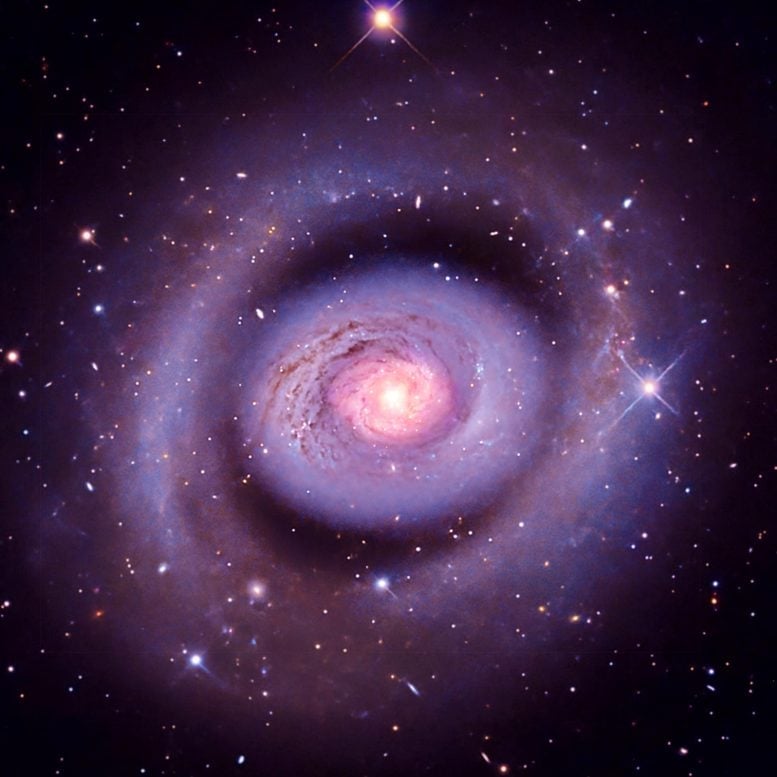
NGC 4736 US 250
One of the images displays Cassiopeia A, the remnant of a supernova explosion. This composite merges X-ray data from the Chandra X-ray Observatory, depicted in blue and purple, with infrared observations from NASA’s James Webb Space Telescope, shown in red and white. The X-ray data reveals the blast wave and scattered elements such as iron, calcium, and oxygen, while the infrared view captures the expanding shell and cosmic dust within the remnant.
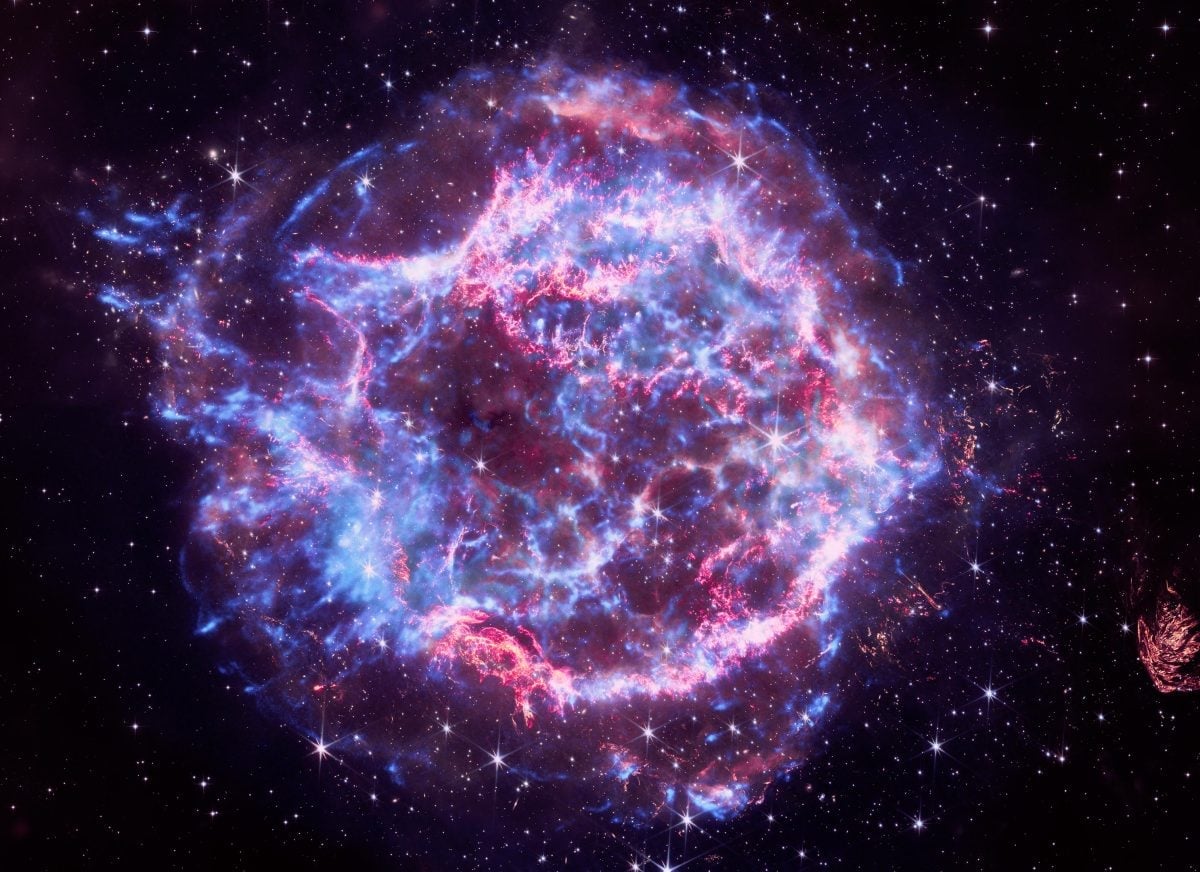
Cassiopeia A US 250
Another image focuses on NGC 3603, a nebula within the Milky Way containing one of the galaxy’s largest young star clusters. Chandra’s X-ray observations in red and white expose diffuse emissions and numerous point-like X-ray sources, while NASA’s Hubble Space Telescope provides optical, infrared, and ultraviolet data in red-orange, green, blue, and yellow. Together, these data sets create a patriotic-colored composite highlighting the dense star cluster and surrounding dust and gas.
The collection also includes a depiction of Messier 94 (NGC 4736), a spiral galaxy known for its bright starburst ring where active star formation occurs. This image combines Chandra X-rays at various wavelengths (red, orange, and blue) with visible light captured by ground-based astrophotographers (red, green, and blue). The starburst ring is thought to be fueled by gas flowing inward along the galaxy’s oval-shaped structure.
The final image features the galaxy cluster ZwCl 0024+1652, which has contributed to the study of dark matter. Processed Hubble data in blue reveals dark matter effects, while another Hubble image shows the cluster’s galaxies in yellow and white. Chandra’s X-ray data, shown in red, indicates a vast amount of superheated gas within the cluster. This gas holds more mass than all the cluster’s galaxies combined, illustrating one of the largest structures in the universe.
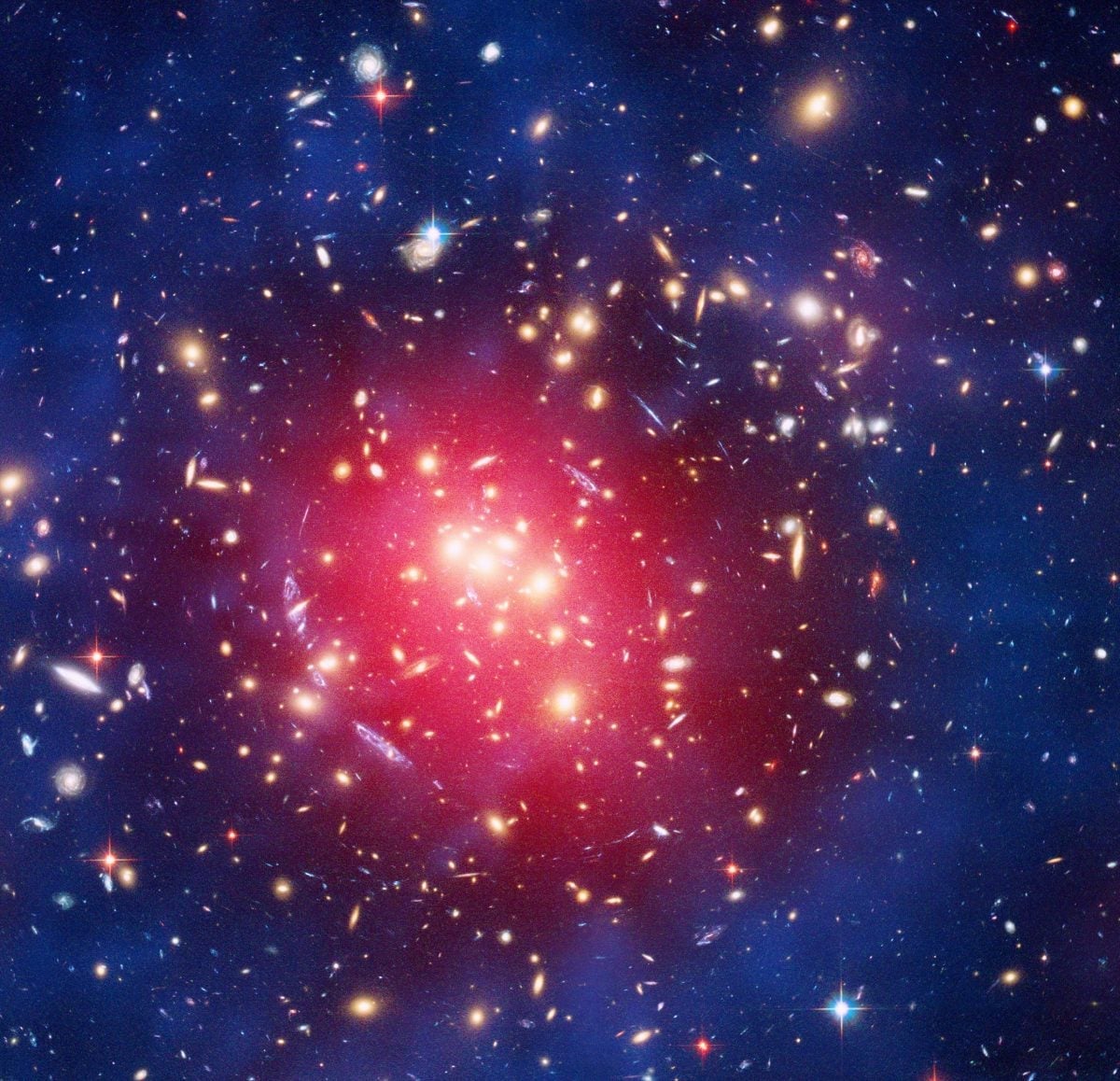
ZwCl 0024+1652 US 250