·
·


Tech & Science
A recently studied exoplanet named GJ 3378b, located 25 light-years away, exhibits characteristics that make it a strong candidate for hosting life.

Scientists have renewed the long-standing question of whether humanity is alone in the universe with each discovery of a new Earth-like planet. A recent study has brought this question closer to an answer by identifying a planet just 25 light-years away that possesses features making it a leading candidate for potential habitability.
The exoplanet, designated GJ 3378b, orbits a red dwarf star known as GJ 3378 and was initially discovered in 2024. Classified as a "super-Earth," it is a rocky planet larger than Earth but smaller than gas giants.
New research reveals that GJ 3378b is closer to Earth in mass and composition than previously thought. The study’s lead author, astronomer Paul Robertson from the University of California, described the planet as "one of the most Earth-like exoplanets in our cosmic neighborhood," emphasizing that its distance of 25 light-years makes it a "cosmic neighbor" within the Milky Way galaxy.
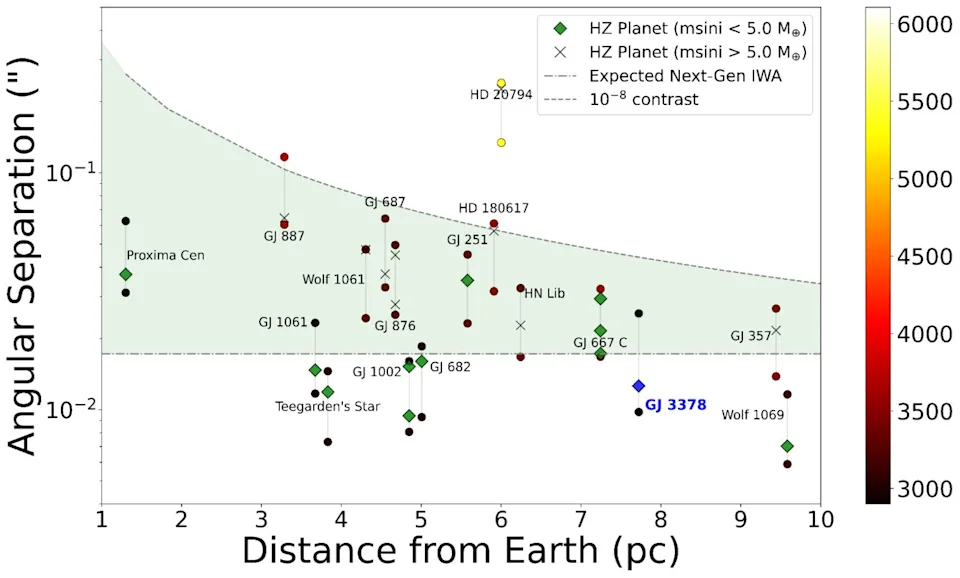
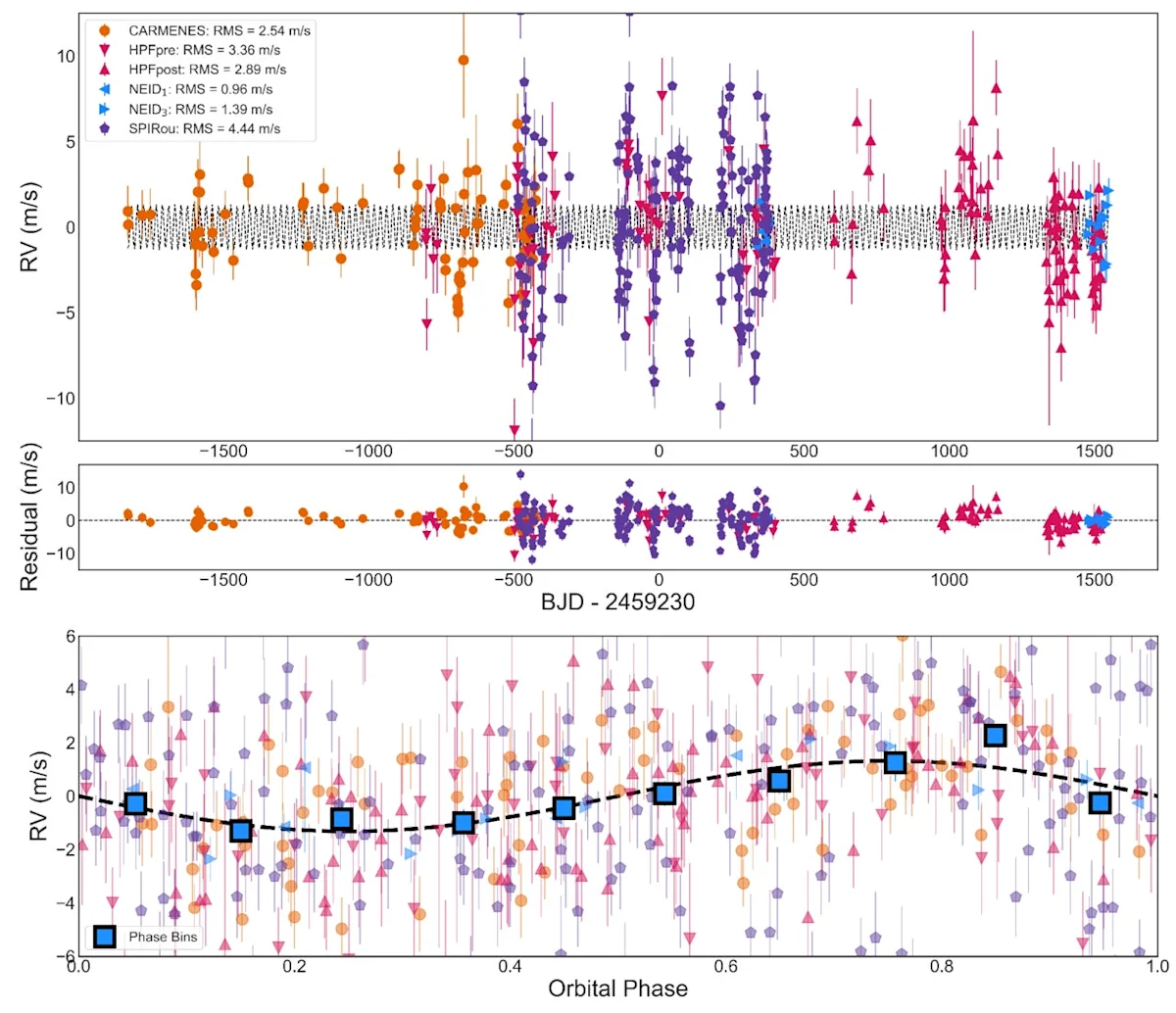
Recent measurements indicate the planet’s mass is approximately 2.3 times that of Earth, a significant revision from earlier estimates of 5.3 times Earth’s mass. This change is important because planets with masses below five times that of Earth tend to be rocky, whereas more massive planets are generally gaseous and less likely to support Earth-like life, according to Science Alert.
The study also recalculated the planet’s orbital period, finding that GJ 3378b completes a full orbit around its star every 21.45 days, rather than the previously believed 24.73 days. Despite the short orbital period, the planet remains within the habitable zone—the range of distances from a star where temperatures could allow liquid water to exist on the surface if other conditions are met.
GJ 3378b receives about 90% of the radiation Earth receives from the Sun, placing it in an optimal temperature range. However, scientists caution that habitability has not yet been confirmed. The presence of liquid water also depends on the planet having an atmosphere capable of retaining it, and currently, there is no method to determine whether GJ 3378b possesses such an atmosphere.
Researchers consider GJ 3378b a prime target for future telescopes to search for biosignatures like oxygen and methane in its atmosphere. Detecting these gases could provide the first evidence of life beyond Earth.

The study team emphasizes that discovering this planet represents a step forward in addressing one of science’s greatest questions: whether Earth is unique in hosting life or if other neighboring planets share this distinction.