·
·


Tech & Science
Researchers at Castillo de Huarmey have identified the first physical remains of Peru’s hairless dogs, including bones from 19 animals and a mummified skull.

Bones from 19 hairless dogs have now provided the first physical evidence of Peru’s legendary breed at Castillo de Huarmey, the only Wari Empire site found to date.
The site lies in a Peruvian desert on the Pacific Coast, where the Wari civilization established its center of power about 1,200 years ago. Covering 111 acres and built on a rocky hill, the necropolis was not studied until 2010, and excavations have continued since then. Archaeologists have described it as a “unique” culture.
Attention on the site increased after a royal tomb was uncovered in 2012 and 2022. That burial contained 58 elite females, 1,300 artifacts, six human sacrifices, and the burials of elite craftsmen alongside gold, silver and bronze tools, while the remains of at least 20 puppies and dogs were also found, partially preserved and mummified.
In a study published in the Journal of Anthropological Archaeology, an international team used traditional zooarchaeological analysis and isotope studies to examine the Peruvian Incan Orchid, also known as the hairless dog. The breed had not previously been physically found, and the research focused on its diet, mobility and origins.
The team recovered 341 bones from 19 hairless dogs, including a puppy estimated at 6 to 8 weeks old that was buried with one of the elite craftsmen. An adult dog was found in the palace, and a puppy was recovered with a male guardian, who was likely sacrificed to accompany him in the afterlife.
Hairless dogs appear widely in ancient Andean coastal pottery and were declared a national symbol in 2000, but Dartmouth said in a press release that these are the only physical remains of the breed known to exist. The study also said the breed is integral to Peruvian identity in pre-Incan Andean societies.
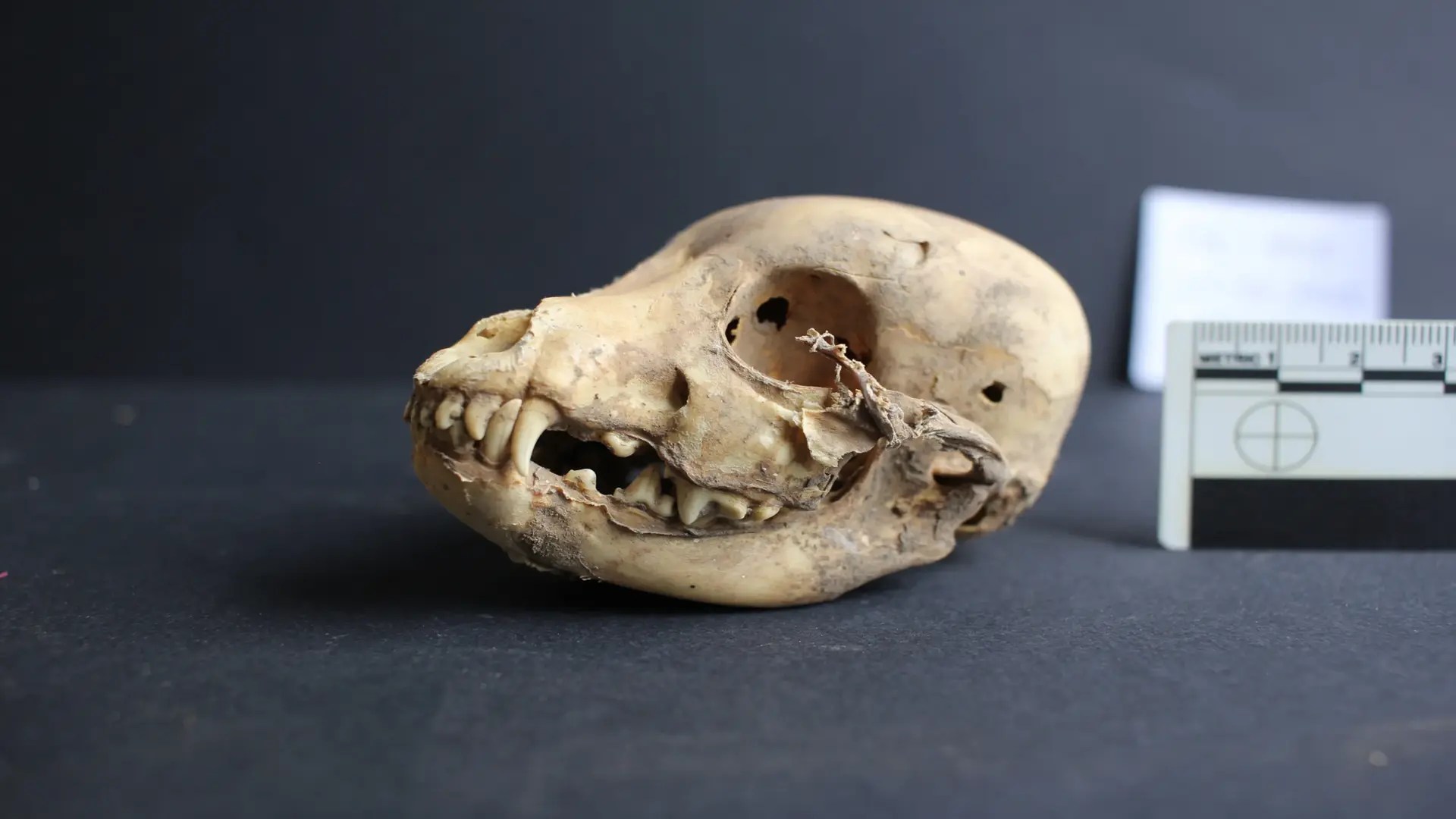
Researchers said the site’s deeper layers, untouched by looters, contained mixed human and dog remains. In the northern section of the ceremonial area, they found three sets of hairless dog skeletal remains, which became the most striking discovery.
The first find was a naturally mummified dog skull with visibly hairless skin and cinnabar, a pigment typically used on deceased humans, suggesting elevated status. A larger dog skull and a naturally mummified skeleton were also identified; both were hairless and lacked their first premolars.
The researchers found in scientific literature that the same gene linked to hairlessness in these dogs is also tied to a reduced number of teeth. Isotopic analysis showed that the dogs shared a similar diet with humans, mainly maize, while their diet as puppies closely resembled that of children.
“While we will never know if any of the three dogs were pets or how people treated them, it is evident they received different treatment than other dogs,” archaeologists said in a press release.
The investigations and analyses pointed to a close relationship between humans and dogs in Andean societies in Peru, with the hairless dog occupying a unique role as both a practical and spiritual companion, Heritage Daily concluded.